


Disposing of tyres incorrectly could impact the local environment and land you with a hefty fine - or even a court appearance. Find out how to dispose of tyres safely and legally in the UK - with our helpful guide.
The UK goes through an inordinate number of tyres each year.
With more than 41 million registered vehicles on our roads, around 164 million tyres are gradually wearing themselves away against the tarmac at any one time.
A back-of-an-envelope sum suggests that, if each tyre lasts 10 years, you’re looking at 16.4 million tyres that need to be disposed of annually.
And that’s without considering that some of these vehicles are actually lorries and buses, which have more and/or bigger tyres - which often need to be replaced more regularly than those of cars.
The bottom line is that we get rid of a lot of tyres each year - and we need to ensure they are disposed of correctly.
In this guide, we’ll explore how to dispose of tyres safely and responsibly.
Tyre disposal UK: What you mustn’t do
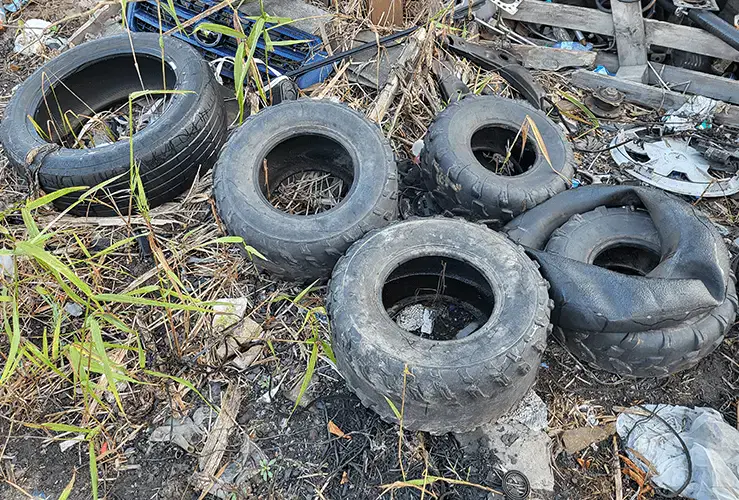
It goes without saying that you mustn’t be tempted to dump (fly tip) your old tyres. Doing so can have a very negative impact on the soil and the water table.
This is because tyres are composed of rubber, steel, textiles and chemicals that degrade and leach into the ground, essentially poisoning soil and harming plant life, and potentially finding their way into rivers, streams and coastal waters.
if tyres are dumped in places like back alleys, they create an eyesore for the local community - and an unwieldy problem for the local council.
Preventing tyre fires
In addition, tyres pose a fire hazard. Burning tyres release toxic chemicals into the air, threatening the health of nearby people, animals and plant life. What's more, burning tyres are extremely difficult to extinguish, and tie up the fire service’s valuable resources.
Fly-tipping: What are the penalties?
Fly tippers can be fined by councils on-the-spot, with penalties of between £150 to £1,000, depending on the severity.
And if it goes to Crown Court, prosecutions can result in prison terms of up to 5 years, and seizure of any vehicles used in the fly-tipping.
When it comes to illegal tyre disposal, UK legislation takes the issue pretty seriously - as evidenced by the Environmental Protection Act 1990 (Section 33); the Clean Neighbourhoods and Environment Act 2005; and the Waste (England and Wales) Regulations 2011.
Disposing of car tyres the legal way
Here are your main options:
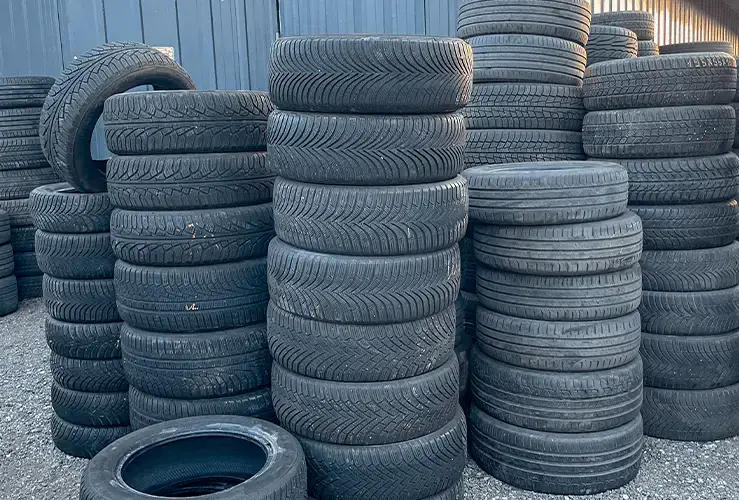
1. Leave them with the tyre fitter
Most garages and tyre shops will take your old tyres when you buy new ones — often included in the price or for a small disposal fee (typically £1–£2 per tyre). They’ll send them to licensed recycling or recovery facilities.
2. Use a council recycling site
Some local authority recycling centres accept tyres, though you may be limited to a certain number and might have to pay a small charge. Always check your local council’s website before turning up with a boot full.
3. Hire a licensed waste carrier
If you’re disposing of a large number of tyres — for example, from a commercial premises — you’ll need to use a registered waste carrier. They’ll collect and process the tyres according to environmental regulations. If disposing of car tyres regularly or in large volumes, this is a prudent option.
Note that while licensed waste carriers can be a little more costly than the other options on this list, they do come to your location to collect the tyres, and will dispose of them safely and legally.
A note on unlicensed waste carriers
Don’t be tempted to pay an unlicensed waste carrier to take your old tyres.
Recycle tyres: How old tyres can be reused
It’s often possible to recycle tyres. They can also be repurposed in creative ways.
Here are a few possibilities:
Recycled into new products
Tyres are commonly shredded and used to make:
- Playground surfaces
- Road-building materials
- Athletic tracks
- Fuel for industrial processes (known as Tyre-Derived Fuel)
Upcycled for DIY projects
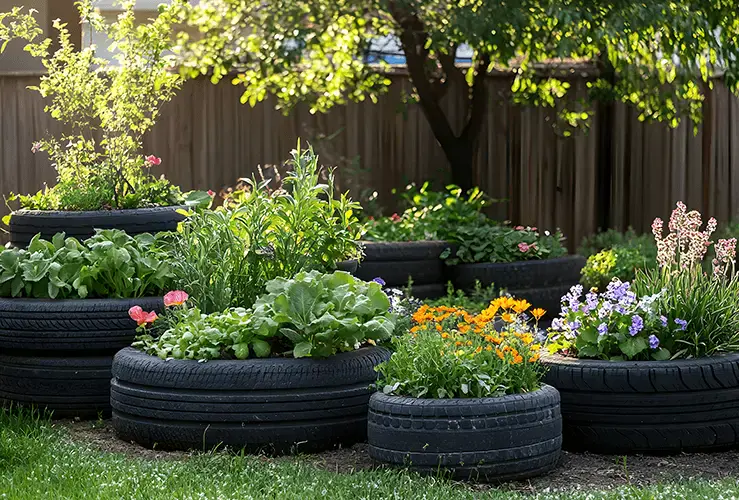
With a bit of effort and imagination, used tyres can be transformed into:
- Unique planters for your garden
- Outdoor furniture
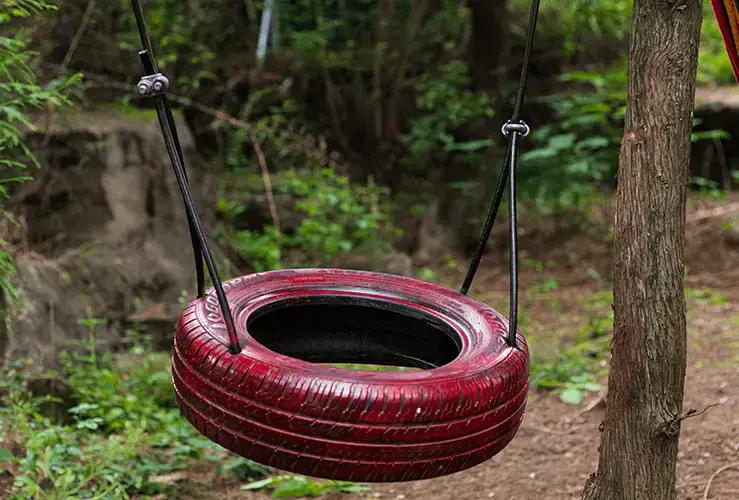
- Kids’ swings
- Garden steps or retaining walls
If you decide to recycle tyres in some of the above ways, be sure to clean them thoroughly and consider sealing or painting them if used decoratively. This helps prevent any of the tyre materials from leaching into the ground.
If you don’t need or want to reuse old tyres yourself, consider using Facebook or other social media channels to offer them up to the community.