


Experiencing loud or unusual sounds from your vehicle when you press the accelerator is never normal. Car noises can indicate underlying issues that, if ignored, may lead to costly repairs or even unsafe driving conditions. Understanding the type of engine noise or other sounds your car makes can help you pinpoint potential problems before they get worse.

Common Car Noises When Accelerating
When your car makes noise under acceleration, it could be linked to several components. Here’s a quick guide to the most common sounds and what they might indicate.
Lawn mower sound from exhaust system
A car that resembles a lawn mower when accelerating often has an exhaust issue. A leak in the exhaust system, perhaps due to corrosion or damaged components can cause this loud noise.
The exhaust system is crucial for controlling emissions and reducing engine noise. Beyond the irritating sound, a damaged exhaust could leak carbon monoxide into the cabin, posing a serious health risk. If your car makes noise like this, get it inspected immediately.
Rattling exhaust system
A rattling noise from your exhaust could also be associated with a damaged exhaust system and might be heard together with the above 'lawn mower' sound.
A rattling exhaust could also mean the system has become misaligned and is vibrating against another part of the car. A loose mounting, support bracket, or clamp may be the culprit.
It could also mean that your catalytic converter has failed or is in the process of doing so.
Ticking, clicking, or knocking from engine
Your car's engine has many moving parts - and when any of these go wrong, an unusual sound may occur when you depress the accelerator pedal.
- A ticking noise from your engine suggests the bearings may have worn out.
- A clicking sound could mean the valves have become worn.
- A heavy knocking noise is likely to relate to damaged/worn pistons - although you'll hear this all the time when running, not just when accelerating.
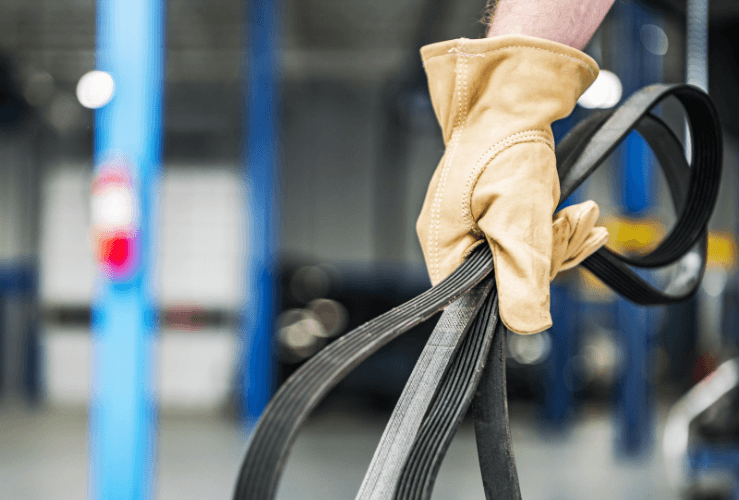
Squeaking or whining - Serpentine belt
If your vehicle squeaks or whines when you turn or accelerate, your belts may be worn out, or a tensioner may have become loose.
Clicking or rattling - Serpentine belt
This could mean there's a problem with one of the pulleys that the serpentine belt needs to function properly.
Your car's serpentine belt transfers power to the engine accessories - including the alternator, power steering pump and air conditioning system compressor.
Needless to say, this is an essential component and you should get it checked over if you suspect a problem.
Grinding, humming or whirring from wheels
If the bearings inside your wheels become faulty or loose, they can spin inside the wheel and cause a noise that sounds like gusts of wind, humming or whirring. The noise gets worse as you accelerate because the bearings are spinning faster.
Loose bearings could also cause your wheels to wobble.
Flapping noise - Tyres or fan belt
A flapping sound could mean your tyres are underinflated.
If this isn’t the issue, the noise may well relate to a broken fan belt.
Can I Drive if My Car is Making a Knocking Noise?
If your car makes a knocking or heavy engine noise, it’s unsafe to continue driving. Knocking often indicates serious internal engine problems, such as worn pistons or bearings. Driving under these conditions can worsen the damage, potentially leading to engine failure. Always have a professional mechanic inspect your vehicle before driving further.
Protect Yourself with Breakdown Cover
Any unusual sounds are a warning. Whether it’s rattling, ticking, squeaking, or grinding, your car is trying to tell you something. Ignoring these noises can lead to severe mechanical problems, safety risks and larger repair bills.
With reliable breakdown cover, you can get roadside assistance if your car breaks down due to engine noise or any other fault. Don’t wait—secure your peace of mind and ensure you’re never stranded.