


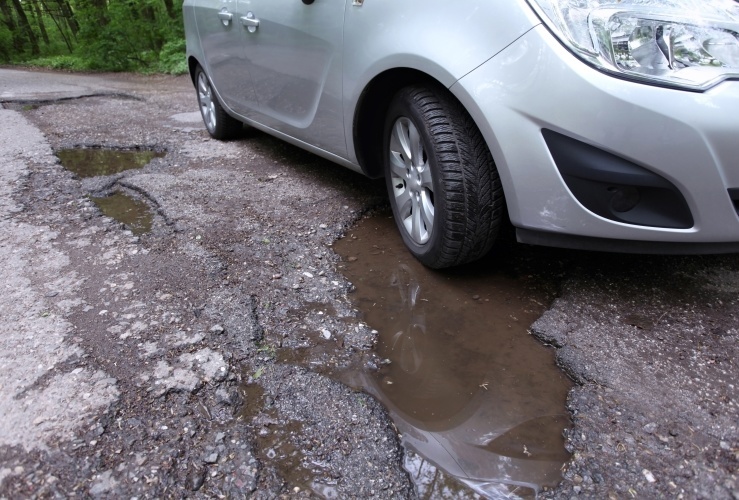
Potholes are unsightly and hazardous, with as many as one in ten mechanical failures in UK cars being caused by these craters every year, costing motorists as much as £1.7 billion annually!
Pothole damage can affect your tyres, wheels, suspension and steering, making it important to recognise the risks and know how to avoid pothole damage whenever possible.
Potholes are created when moisture seeps into a crack in the road, which then expands upon freezing, causing the hole to appear. Many can start out small and gradually increase over time as cars drive over them, damaging the structure of the road beneath its surface layer. The weather can make potholes grow, as a repeated cycle of freezing and thawing leads to further corrosion.
The rise in the number of potholes on UK roads is not just down to bad weather, as local councils appear to have adopted a 'patch and dash' approach to save money. Instead of resurfacing entire roads, damaged areas are often filled individually. These temporary repairs can deteriorate quickly, particularly on busy roads, allowing potholes to reappear and increasing the risk of pothole damage to cars.
Unfortunately, until cash-strapped councils begin investing in plans that will keep roads pothole-free in the long term, they will continue to be a nuisance to motorists.
Here are a few tips on how to avoid damaging your car tyres and body while driving on crater-filled roads.
Quick Checklist: How to Avoid Pothole Damage
- Slow down when it is safe to do so.
- Leave plenty of space between your vehicle and the one ahead.
- Watch for potholes hidden by puddles.
- Avoid harsh braking while driving over a pothole.
- Hold the steering wheel firmly and maintain control.
- Have your vehicle inspected if you suspect pothole damage.
1. Stay alert for potholes while driving
One of the easiest and most simple ways to protect you and your motor against potholes is to keep your eyes peeled when driving and watch your speed. This is particularly important when it's pouring down with rain, as deep cavities can be hidden under the cover of puddles.
2. Keep your distance from other vehicles
It's important that you keep plenty of space between you and the car in front so a pothole doesn't suddenly appear and take you by surprise. Maintaining distance between the driver ahead of you will mean you're more likely to see potholes in advance and can take evasive action if necessary.
3. Keep your eyes peeled
Before taking action to avoid a crater, you need to make sure you're checking around for pedestrians, cyclists, motorcyclists and other cars, as you don't want to cause an accident when you move to avoid a cavity.
4. Don't be a speed demon
Hitting a pothole when driving at fast speeds will mean more damage will be caused to your car. If you see one ahead, take your foot of the gas and slow down.
5. Avoid heavy braking over potholes
Avoiding unnecessary braking will also help you avoid putting a dent in your motor. If possible, refrain from applying your brakes as you go over the pothole, as this will tilt the car forward, placing more pressure on the front suspension.
6. Drive with care
If you can't avoid driving over a pothole, do so with care. You should allow the wheel to roll freely into the hole and pass over it.
7. Hold your steering wheel correctly
You must ensure you are holding the steering wheel properly - at 'ten' and two' - when travelling down a road that is littered with craters. Failure to maintain this position can lead you to lose control of the vehicle, which could cause more damage to your car or even an accident involving someone else.
8. What to do if a pothole damages your car
If the worst happens and the pothole knocks something off your vehicle, such as a hub cap, stop at the nearest safe place before you get out and attempt to retrieve the detached part. Otherwise, you may be putting yourself at unnecessary risk.
9. If you need to Inspect the damage
The same applies if you want to get out and have a look at the damage the crater could have done.
10. Have your vehicle checked by a professional mechanic
You should also seek a professional opinion from a garage or mechanic if you suspect that your car has been scuffed, scratched or worse because of a pothole. Ask them to verify if there could be any issues other than what you can see on the body, such as tracking and wheel alignment or the suspension.
A professional inspection can identify hidden pothole damage to your car before it develops into a more expensive repair.
Common Types of Pothole Damage
Driving over a pothole can cause anything from minor cosmetic issues to serious mechanical problems. Common types of pothole damage include punctured or bulging tyres, bent alloy wheels, damaged suspension components, misaligned steering and wheel tracking issues. Severe impacts may also affect the brakes or underbody of the vehicle.
Pothole tyre damage is one of the most common problems, even if there are no immediate signs. A damaged tyre may develop a slow puncture or weakened sidewall, so it is important to have it checked if you hit a deep pothole.
Signs Your Car Has Been Damaged by a Pothole
Not all pothole damage is immediately obvious. After hitting a pothole, look out for warning signs such as:
- The steering wheel pulling to one side.
- Unusual vibrations while driving.
- Knocking or clunking noises from the suspension.
- Uneven tyre wear.
- Visible damage to tyres or wheels.
- A loss of tyre pressure shortly after impact.
If you notice any of these symptoms, arrange for your vehicle to be inspected as soon as possible to prevent further damage.
Can You Claim Compensation for Pothole Damage?
If your vehicle has been damaged by a pothole on a public road, you may be able to make a pothole repair claim through the local authority responsible for maintaining the road.
Successful pothole repair claims usually require evidence such as photographs of the pothole, details of the location, repair invoices and proof that the authority failed to maintain the road within a reasonable timeframe.
While compensation is not guaranteed, reporting the pothole promptly and keeping detailed records can improve the chances of a successful claim.