



In the UK, the 50cc+ motorcycle minimum tread depth is 1mm, but you might want to consider getting new tyres at 2mm - particularly if you often drive in wet or unpredictable conditions. Learn more about motorbike tread depth, with our helpful guide.
Your motorbike’s tyres are the only point of contact between you and the road - so keeping them in good condition is critical for staying safe. Tread depth can directly impact grip, braking, handling, and control in general. In the UK, there are specific legal requirements in relation to motorcycle tyre tread depth - knowing these will help you both stay safe on the road, and avoid hefty financial penalties or points on your licence.
What is tread depth?
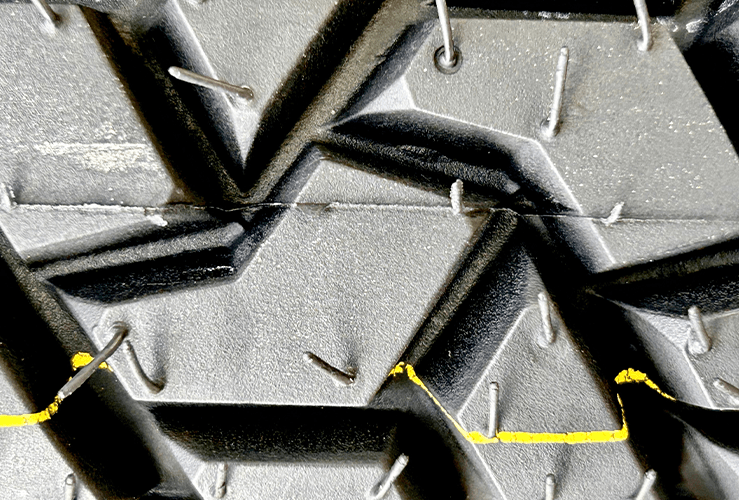
Tread depth refers to the vertical measurement between the top of a tyre’s rubber tread and the bottom of the deepest grooves. This tread pattern is designed to help your tyres disperse water, maintain grip in various conditions, and handle different surfaces as efficiently as possible.
Tyre tread depth on motorcycles decreases with use. Once it reaches a certain point performance drops off noticeably, especially in wet or slippery conditions, and the risk of aquaplaning or losing control increases.
Motorcycle safety in the UK
Sadly, motorcyclists account for around 20% of road fatalities, even though they represent just 1% of road traffic, so it's crucial to do everything you can to enhance your safety. That being said, motorcycle fatalities fell from 585 in 2004, to 315 in 2023, but the fact remains that using a motorbike comes with extra risks.
Motorcycle minimum tread depth in the UK
The UK government has clear and long-established regulations regarding tread depth on motorcycle tyres, outlined in the Road Vehicles (Construction and Use) Regulations 1986. These rules differ slightly depending on the engine size in question.
For motorcycles over 50cc:
- Minimum legal tread depth is 1.0 mm
- This must be present across at least ¾ of the breadth of the tread
- The remaining ¼ must have visible tread pattern
- This applies to the entire circumference of the tyre
Put in simpler terms: if you ride a motorbike with an engine capacity greater than 50cc, your tyre tread must be at least 1mm deep across most of the tyre’s width, and the rest must not be bald.
For Motorcycles 50cc or Under:
- There is no specific depth requirement*
- However, the tyres must have a visible tread pattern
- The tyre must not be excessively worn, bald, or unsafe
*The absence of a tread limit on scooters and mopeds is due to the lower speeds and lighter weights involved - meaning they are much less likely to aquaplane or otherwise lose control.
However, while scooters and mopeds under 50cc aren’t bound by a minimum measurement, they still need tyres that show a clear tread pattern, and of course must be otherwise roadworthy.

Tread depth on motorcycle tyres: How to check yours
Checking your motorcycle’s tread depth is quick and easy. You can use:
- A tread depth gauge (this is accurate and low-cost) and/or:
- The wear indicators built into most tyres (these are small raised areas within the tread grooves - if your tread is flush with them, it’s time to invest in some new tyres)
Note that the “20p coin test” used for checking car tyres is not reliable for motorbikes, since the coin’s border is about 1.6mm deep (the minimum tread depth for cars).
Be sure to check multiple points around the tyre’s circumference and across the full width to ensure even wear. Tyre wear can vary. For example, long rides on relatively straight roads can wear out the centre, while a lot of aggressive cornering or leaning into bends can lead to edge wear. Incorrect wheel alignment, suspension issues, or harsh braking, can cause feathering or scalloping.
While any tyre tread depth issues will be picked up during your motorbike’s annual MOT (if over three years old), it’s critical you regularly carry out inspections yourself.
The risks of worn motorcycle tyres
Riding on tyres with worn treads, even if they meet the minimum tread depth on a motorcycle, can be dangerous. Here’s why:
- Reduced grip in wet or uneven conditions
- Longer stopping distances
- Poor cornering performance
- Increased chance of punctures
- Greater risk of aquaplaning
There are also substantial penalties if you're caught with tyres below the legal minimum. You could face:
- A fine of up to £2,500 per tyre
- Three penalty points per tyre
- A possible MOT failure

When should you replace your motorcycle tyres?
Even if you haven’t reached the legal minimum tread depth for a motorcycle, it’s often recommended to replace tyres at 2.0 mm, just to be on the safe side. This is especially true if you frequently ride in wet or variable conditions (which of course are not uncommon in the UK, even in summer time!).
You should also consider replacing tyres if:
- There are cracks or bulges in the sidewall
- The rubber looks aged or dry
- You experience unusual handling or vibration
- The tyre has sustained any puncture or structural damage
How often should I check my motorbike’s tyre tread depth?
- Weekly as part of your regular maintenance
- Before long journeys
- Before and after winter storage
- If you notice handling issues, like slipping or wobbling
- After riding in gritty, rough, or potholed terrain
Final thoughts
Sufficient motorbike tyre tread depth is more than just a legal requirement - it’s a major safety factor. For motorcycles, where balance and grip are key to safe riding, having the right tread depth can make the difference between a smooth ride and a serious accident.
It’s important to make it a habit of checking your tyres regularly and replacing them before they reach the legal minimum. It’s a relatively small effort that can have a big impact on your safety, and your peace of mind.