



As our cars become more advanced and supply chains get more fragile, sourcing replacement car parts - and getting them to work - has become increasingly tricky. Learn why this is happening, and what you can do to avoid car replacement part availability issues.
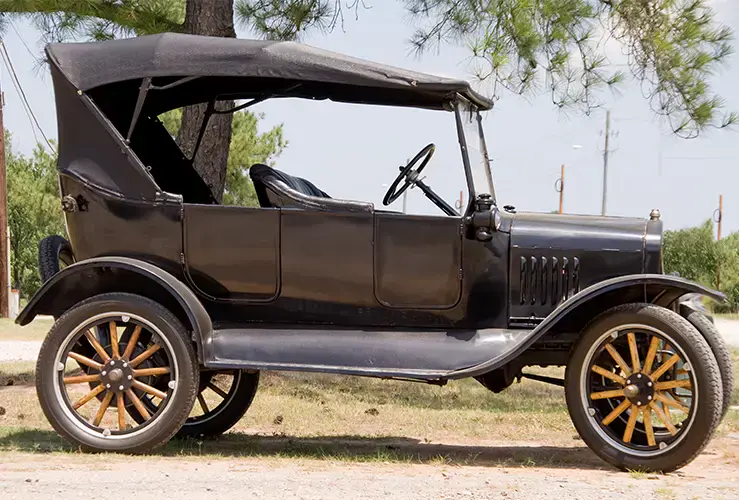
118 years ago, Henry Ford unveiled the Model T.
It became hugely popular, and was much simpler to repair compared to modern-day cars.
The Model T had standardised, interchangeable parts that were manufactured on a vast scale.
So getting a new spark plug, fan belt, or brake band was easy - as was finding a mechanic to install it.
In 2026, replacing car parts can be much more challenging. But that’s only half the story: once a part has been sourced, it may need the right software to work, and then to be calibrated and authenticated.
And of course, you also need to find a mechanic with the equipment, skills and experience to fit it.
Here we examine why some car parts are getting so difficult to find and replace.
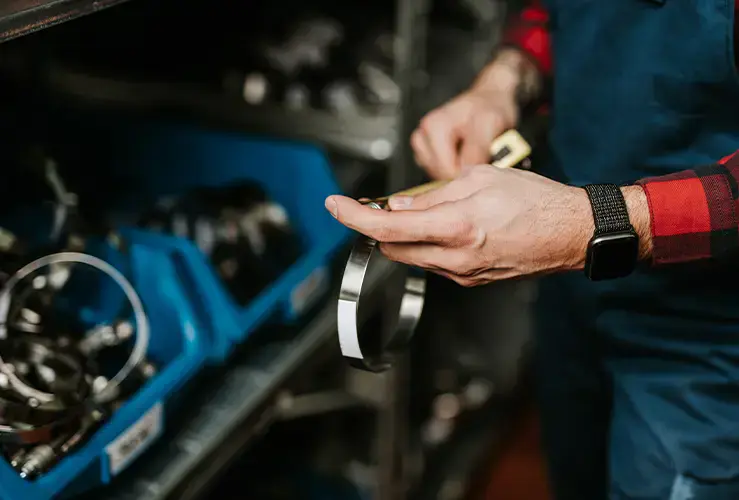
A single missing part can make a car inoperable or unroadworthy
If you can’t find a specific-to-your-model car replacement part, it may be impossible - or too dangerous - to drive it at all.
For example, famous auto journalist Honest John found himself with a broken windshield on his old Rover 75. The part was simply not made anymore - so he could not drive his otherwise roadworthy vehicle.
Honest John encountered a similar issue with his discontinued Saab 9-3: He couldn’t find a replacement Column Integration Module (CIM) - making passing the MOT all but impossible.
And in 2025 one of Honest John’s readers lost the key to their Vauxhall Ampera. However, Vauxhall had discontinued the Ampera in 2015, and could no longer supply the customer with a replacement.
But it’s not just discontinued models that have parts-availability issues. The Jaguar i-Pace (a lack of car body replacement parts), the BMW 7-Series (column control module), and the Hyundai Ioniq 5 (various parts) - are all still on our roads but have all gone through periods when critical parts were not available.
And as we shall see, getting new parts fitted can be a two-fold issue: You have to source it, then you have to get it to actually work.
Problem 1: Finding the part in the first place
Running a car bought in the UK in 2026 relies on long and fragile supply chains. A modern vehicle can depend on components coming through several tiers of suppliers - whether that’s a car body part replacement, or something more complex like an ECU.
For example, the UK-made Nissan Qashqai contains 3,379 parts - 83.6% of which are provided by British firms. However, those firms in turn depend on components, chips, and materials from overseas. If any of those supply-lines get disrupted, it can impact production.
The same is true for spare parts - they come from suppliers across the UK and by extension, the globe: the associated supply chain is susceptible to disruption, which can result in long waiting times for essential replacement parts.
Semiconductor shortages, for example, have shown that a problem at one supplier can ripple through the vehicle industry.
Then there's the issue of low-volume parts: Manufacturers may produce thousands of a particular model but only a relatively small number of replacement components. This makes getting hold of, say, a new headlight assembly more challenging even before any supply chain issues are taken into account.
And if you happen to own a discontinued car like a Saab 9-3, like Honest John, you would be relying on remaining inventory, specialist suppliers, or even cannibalising old Saabs.
Parts consolidation is another issue. Manufacturers increasingly use the same electronic components across multiple models, so a shortage of one component can affect many vehicles.
Global logistics can play a role too. The part you need may be lying in some warehouse thousands of miles away, but it could take weeks to reach you and your mechanic.
And even if you can find a part locally, you may discover that it is counterfeit - which can have ramifications in terms of quality, reliability, and even safety.
What about electric vehicle parts?
EV parts can be especially challenging to source. Battery components, power electronics, sensors and specialised electronics aren't necessarily stocked like traditional mechanical parts are.

Problem 2. Getting the part to work
Finding a car part is one problem. Getting it to work is quite another.
After physical installation, a new part may need to be coded, software paired, authenticated and calibrated. All of which needs a skilled technician with the right kit.
And Advanced Driver Assistance Systems (ASAS) are a problem unto themselves. This includes things like adaptive cruise control, lane keeping, automatic emergency braking and blind-spot monitoring. For ADAS to work, all the requisite sensors, radar and cameras need to be pointing in exactly the right direction.
Getting new Electronic Control Units (ECUs) to work can also be tricky. If you have a relatively modern car, it will likely contain multiple ECUs, each controlling one of the car's functions. Think engine, transmission, airbags, brakes, body electronics and driver assistance.
Fitting security system parts also come with challenges. Whether it’s an immobiliser, body control module (BCM), keyless-entry system, steering-lock module or key fob - they all need to be programmed, coded, paired and registered.
On top of all this, technicians need to have ther right manufacturer diagnostic equipment - and access to particular proprietary software and information.
What can you do to avoid parts availability issues?
In order to minimise the chances of experiencing parts shortages, you really have to start off by purchasing a car with a large installed base - i.e. a popular car.
Cars sold in their thousands will have better access to aftermarket parts, independent specialists, and mechanics who know what they’re doing. Whether you need to replace car body parts or something more complicated like an ADAS sensor, it should be much easier with a common model.
You should also buy from a carmaker who’s part of the Motor Ombudsman's New Car Code. Marques covered by this scheme should ensure parts are made available for a long time after launch - usually at least 10 years.
Also think about buying a car with a strong independent aftermarket - this might be more important than where a car was built. Alongside basic service parts like air filters and brake pads, ensure there’s a good supply of aftermarket headlights, sensors, keys and batteries.
And be wary of models that are famously reliable, but for which it’s difficult to get new parts: there’s no point having a dependable car if you can’t get essential components for it!
Last but not least, don’t be tempted by dubious replacement car parts - they could be a false economy, or even impact your on-the-road safety.
Go with the herd?
When it comes to buying an easily-repairable and maintainable car, we should perhaps remind ourselves of Henry Ford and his hugely popular Model T: To avoid car part replacement headaches, going with the herd might be your best bet.