



Car air conditioning not getting cold? Here we explore some of the most common issues with vehicle A/C units, and what you can do to get your system running again.
If you’re like most UK drivers, the term “air conditioning" will have little relevance between October and May. But in warmer months it can be a blessing, ensuring commutes and road trips in the summer heat are as pleasant as possible.
But what if your car’s air conditioning is not getting cold? From turning up to work like you’ve just made a pit-stop at a sauna, to having to deal with over-heated children or pets on a long journey, the value of your car’s A/C system will likely be drawn into sharp focus when it doesn’t work anymore.
The rise of air conditioning
In recent decades, UK summers have gotten warmer (2025 was the warmest summer on record), and temperatures have risen at a rate of approximately 0.25 °C per decade.
This means vehicle air conditioning has become more important to UK drivers than ever. Indeed, back in the 1980s and 90s, A/C was found mostly in luxury cars, even when it had become a standard feature on family cars in other (warmer) countries.
The Dacia Sandero Access, discontinued in 2022, was one of the last cars to be sold in the UK without air con.
So what should you do if your A/C is on the blink?
It’s no fun when your air conditioning is not blowing cold air into the car’s cabin. Here, we explore some of the most common air-con faults, and steps to getting them fixed. We’ll also look at longer-term A/C maintenance, so you’ll have less chance of a problem next summer.

First steps: What to do if your A/C fails while you’re driving?
If your air con stops working while you’re on the road, it could be down to a number of things.
In the first instance, try switching to recirculated air - this can sometimes improve airflow and make your journey bearable. Even if the cooling is gone, the fan may still function.
If that doesn’t work, there could be a problem with the refrigerant, compressor, or electrics - which we’ll look at in a moment.
But first, in order to stay cool, you’ll want to:
- Open front windows slightly on both sides to create cross-ventilation.
- Open rear windows a crack to help reduce turbulence.
- Remove as many layers of clothing as possible
- Use wet wipes, damp cloths, or a spray bottle with cool water.
- Drape a wet towel around your neck or over your lap.
- Use a clip-on USB car fan, or a similar device for use in a car, if you have one.
- Shut vents aimed at your feet.
- Avoid using the radio, seat heaters, or unnecessary electronics that warm the cabin.
If the heat becomes too much to handle, pull over at a service station or other location that promises shade or cool interiors. Driving while overheated can affect your physical condition, mental alertness, and driving ability - so take a break if necessary.
Air conditioner is not cold in my car: More short-term options
If it’s unbearably hot or unsafe (e.g. young children, elderly, or pets are in the car):
- Consider rerouting to a town or garage.
- In some cases, mobile air-con repairers can re-gas or diagnose on the spot.

How to fix my car’s air conditioner: Diagnose or book a repair
If you’ve been Googling “how to fix my car air conditioner”, it’s important to understand that, unless you have the expertise and equipment, you’re best off taking your car to a professional to get it fixed. That said, there are clues that can help you understand what the issue might be.
Check for obvious issues (if it’s safe to do so):
- Common clues include a blown fuse, strange sounds from the fan, or A/C light flashing.
- These indicate that the issue could be low refrigerant, a broken compressor, or an electrical fault.
Call for mobile A/C repair or book a garage
- Many garages are able to re-gas or check your system in under 1 hour.
- For extra convenience, mobile air-con services may come to you at home or work (typically ~£60–£150).
No cold air in car A/C: What are the common causes?
Below are the most common causes of a faulty vehicle air conditioning system. While it’s possible to tackle some of these if you have the know-how and equipment, your local mechanic is by far your best bet for a quick, effective fix.
- Low refrigerant (gas leak)
– This is the most common issue when the aircon in a car is not cold; the A/C system simply can't cool without gas. Refrigerant should be checked (and topped up if need be) when you get your car serviced. Note that gas levels are not checked when you get your MOT done, so regular service checks are essential. - Faulty compressor
– This is the "heart" of the A/C; if it fails, no cooling happens. - Broken compressor clutch
– Prevents the compressor from engaging properly. - Condenser blockage or damage
– Heat can’t escape; cooling efficiency drops. - Leaky or damaged hoses
– Hoses or seals may degrade, especially in older cars. - Electrical issues (fuses, relays, wiring)
– A blown fuse or corroded connection can stop the system. - Faulty A/C pressure switch
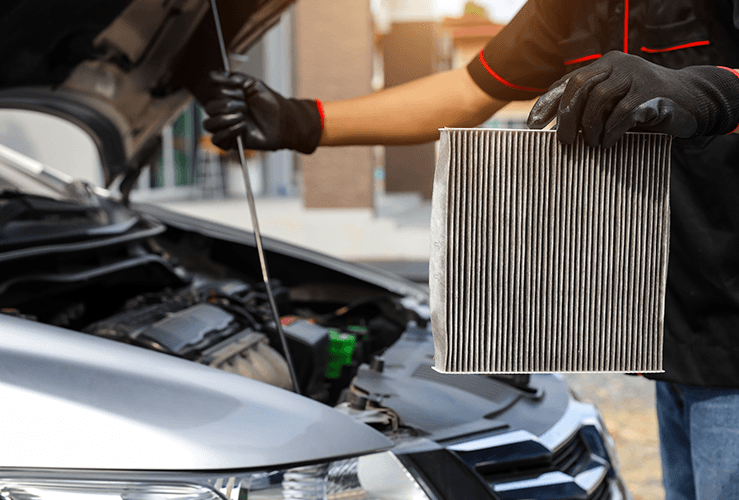
– Prevents the system from running under incorrect pressure. - Clogged cabin air filter
– Reduces airflow; may feel like A/C isn’t working well. - Evaporator problems (leaks or ice blockage)
– Hidden inside the dash; issues can cause weak or no cooling. - Climate control or thermostat fault
– Wrong signals sent to the system; fan or temp behaves erratically. - Faulty blower motor or fan
– Without this, the cool air won’t reach you and your passengers.
Preparing for summer heat
You should ensure you have plenty of drinking water before embarking on any summer journey. It might also be a good idea to avoid the sunniest hours (11am – 3pm), and always park in the shade where possible. Taking these steps should mean that, even if the aircon in your car is not cold, you’ll be better prepared for the heat.
Keeping your car’s A/C in good working order
Aside from regular and comprehensive service checks done by a reputable garage, keeping your A/C in working order also means running it often - ideally for 10–15 minutes once a week - even in winter.
Doing this keeps the compressor seals lubricated, prevents gas leaks and helps the system stay in good working condition year-round. Crucially, it means you're less likely to face a problem when temperatures rise in summer.