



Changing the oil on a car is a relatively straightforward, yet very important, maintenance task. In this article we explain how to change your oil and filter without the help of a garage. As well as being satisfying, it should save you money.
Today’s synthetic and semi-synthetic engine oil lasts a long time - but it doesn’t last forever. Eventually, you’ll need to swap it out for fresh oil. If you don’t, you run the risk of damaging your engine’s components, which could be much more costly to repair than spending a few pounds and an hour on changing your oil.
Without the protective lubrication provided by engine oil, critical components will start to wear against each other and potentially cause irreparable damage.
Oil also helps to cool the engine, prevent rust and corrosion, and remove debris and particles (which can combine with the oil to form sludge).
Do most people go to a garage to change engine oil?
Yes, most UK drivers enlist a professional to change their oil. It’s quick, convenient, and doesn't involve crawling under your car and getting covered in oil. Additionally, you won’t have to worry about disposing of the old oil (which must be done safely and legally).
But can I change engine oil myself?
Absolutely. A minority of car owners carry out their own oil changes because it gives them some satisfaction and/or saves them money. It might also be “quicker” if the facilities, tools and materials are already to hand.
Oil changes are one of the more ‘doable’ car maintenance tasks. However, it does require a little preparation and knowledge.
How do I know if I need to change my oil?
Before we cover how to change your oil on a car, it’s important to determine when it needs to be done.
Many modern cars have an oil change reminder light which, assuming it’s working properly, is the easiest way to know you need fresh oil.
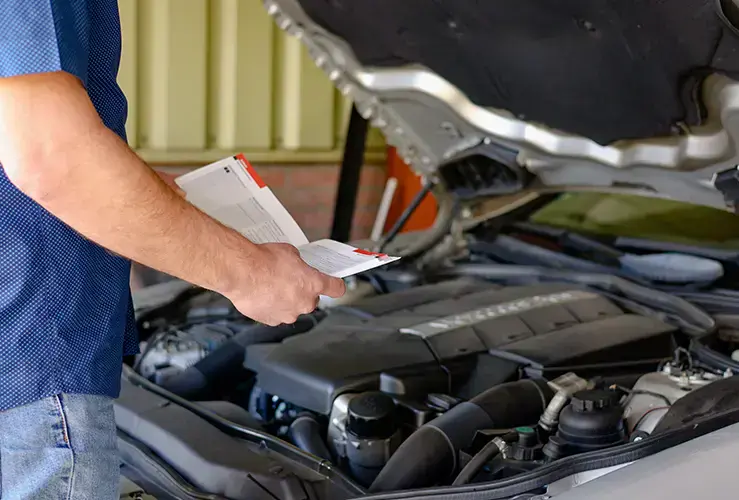
Your trusty owner’s manual will also tell you when you need to change your oil. Most modern cars need oil changes once every 8,000 to 10,000 miles, or once a year (whichever comes first). Some premium models can actually go much further on a single oil change - up to 20,000 miles in some cases.
However, if you have an older car, or use mineral oil (as opposed to synthetic or semi-synthetic oil), you may need more frequent oil changes. Again, refer to your user manual, or if you’ve lost it, look for information online.
If you do a lot of start-stop driving or short trips, you may need more regular oil changes. Conversely, frequent motorway trips should mean your oil change lasts longer.
How to change the oil on your car
In this step-by-step guide we explain how to change the oil in your car correctly and above all, in a way that safeguards yourself and the environment.
What you’ll need
Before you begin, you’ll need the right tools and materials:
- The correct grade and amount of engine oil (check your owner’s manual)
- A new oil filter
- A spanner or socket set
- An oil filter spanner
- A funnel
- A drain pan
- A new plug washer (if required)
- Rags or paper towels
- Jack and axle stands (if needed)
- Gloves and safety glasses
Make sure your car is parked on a flat, level surface. Let the engine cool down for about 10 to 15 minutes if it’s been running - you want the oil warm, but not hot enough to burn you.
Step 1: Raise the car (if necessary)
If you can easily reach the oil drain plug and filter without lifting the car, all the better. If you can’t, use a jack to raise the front of the car and then secure it with axle stands. Never rely on the jack by itself. It’s not safe to crawl under a car that isn’t properly supported.
Step 2: Drain off the old oil
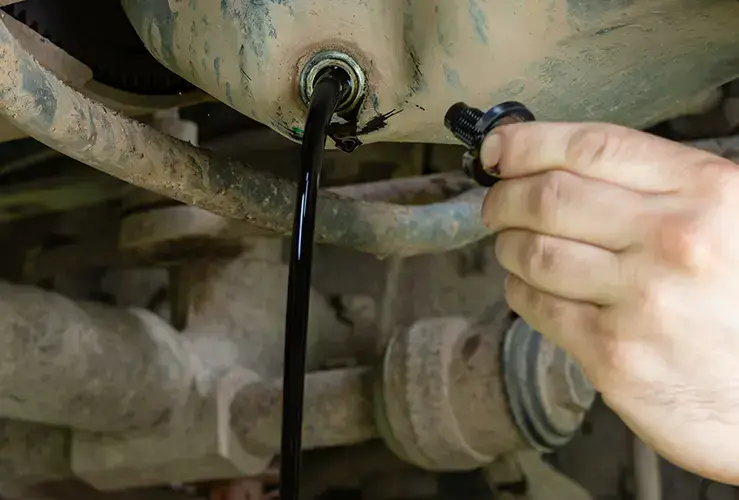
Find the oil drain plug underneath the engine. Position your drain pan right underneath it. Using the right sized spanner, slowly loosen the plug in an anti-clockwise direction. Once it’s loose enough, remove it by hand and let the oil drain out completely - this is likely to take several minutes.
While it’s draining, make sure you don’t drop the plug into the hot oil. Once the flow has reduced to a slow drip, wipe the plug clean and check the washer (swap out for a new one if it’s damaged).
Step 3: Replace the oil filter
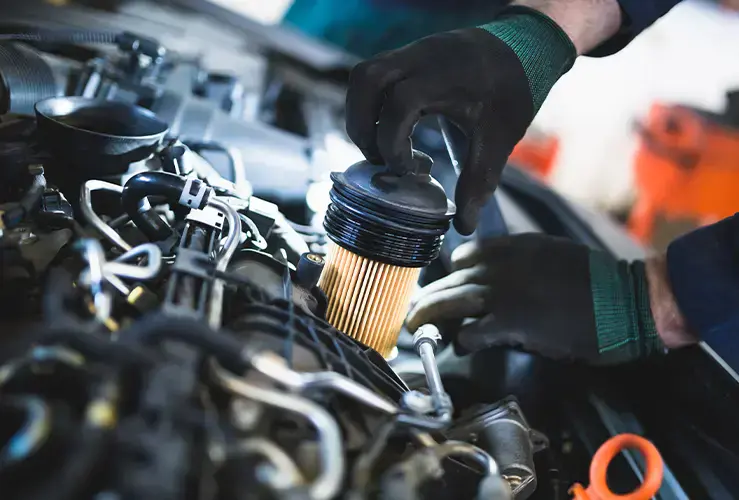
Now it’s time to change your oil filter. Depending on your particular car, it might be underneath too, or accessible from the engine bay. Use your oil filter spanner to loosen and remove it. Be ready for a bit more oil to spill out (keep your drain pan handy).
Before installing the new filter, dab a little fresh oil on the rubber gasket at the top of the new one. This helps it seal properly and makes it easier to take off next time. Screw the new filter on by hand until it’s snug, and then tighten it another three-quarters of a turn (but not too tight).
Step 4: Refit the drain plug and add new oil
Reinstall the drain plug securely (but, again, not too tight). Move the drain pan out of the way and lower the car (if it was raised up).
Now open up the bonnet and find the oil filler cap - this will be on top of the engine. Unscrew it, place your funnel in the opening, and pour in about three-quarters of the oil quantity recommended by your car’s manufacturer. Then replace the filler cap, start up the engine, and let it run for around 30 seconds. Now, switch it off and wait a couple of minutes as this allows the oil to settle.
Check the dipstick: pull it out, wipe it clean, reinsert it, then pull it out once more to check the level. Top up the oil as required until it reaches the “Full” mark.
Step 5: Dispose of the old oil
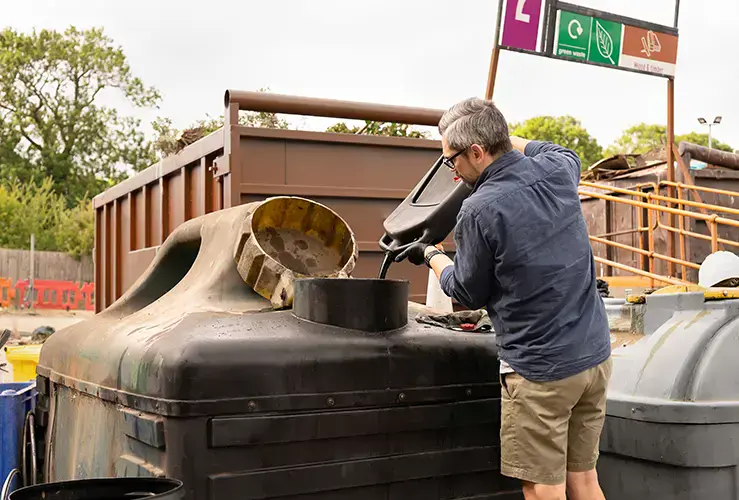
Never pour old oil down the drain or into the ground - it’s toxic and illegal to dispose of it in the wrong way. Many garages, recycling centres, or car parts shops accept used oil and filters for recycling. (Finding a location to dispose of your old oil is perhaps one of the key downsides to DIY oil changes).
Step 6: Reset the oil light (if necessary)
A lot of modern cars have an oil change reminder light. Take a look at your owner’s manual for how to reset it after a change. It’s important to do so that your car’s systems stay accurate.
How to change oil in my car: Top tips
- Always double-check that the oil cap and drain plug are fitted securely.
- Take your car for a short drive and then look for any leaks underneath.
- Note down the date and mileage and keep the information somewhere safe, so you’ll know when to change it again.
Once you’ve become familiar with the oil change process, it should take you about an hour. As well as the satisfaction of accomplishing this important task on your own, you should save money.