


Learn how to clean the interior of your car in the quickest, yet most effective way, and get tips on how to fix scratches and eliminate smoke odours - with our comprehensive guide.
Whether it’s time for your annual visit to the in-laws, you’ve got a romantic liaison lined up, or you simply want to put a stop to those derisory looks from the neighbours - the time will come when you must clean your car’s interior.
But, where to begin?
In this article we’ll provide a logical, timesaving, top-to-bottom approach that will have the interior of your pride and joy looking spick and span, and have Mrs Miggins from number 30 cooing with approval.
How to clean the interior of your car: Preparation
Just as with a room in your home, the first step is to clear out any rubbish: Half eaten packets of Monster Munch, fluffy Fruit Pastels, and coffee cups with new species growing in them must all be binned. Stray lip sticks, coins and long-lost sunglasses should be retrieved and re-homed.
Next, remove floor mats and shake them out. Clean them separately using a carpet cleaner (for fabric), or hose them down with an all-purpose cleaner (for rubber/vinyl), allowing them to dry fully before putting them back. It’s never a good idea to leave damp items in your vehicle: condensation, mould, mildew, and even corrosion might occur.

Initial dust and vacuum:
- Start from the top (known by car-aficionados as ‘the headliner’) and work your way down to ensure dirt falls onto surfaces yet to be cleaned. If you do it the opposite way, you’ll vastly increase your workload!
- Use a soft detail brush to dislodge dust from the air vents, seams, and other hard-to-reach crevices - while vacuuming simultaneously.
- Vacuum all interior surfaces thoroughly, including seats, carpets, and under the seats, using appropriate attachments (crevice tool, soft brush etc.). You may find that a regular household vacuum is tricky to use in such a confined space, so investing (or borrowing) a smaller handheld device might be a good idea.
Clean interior surfaces:
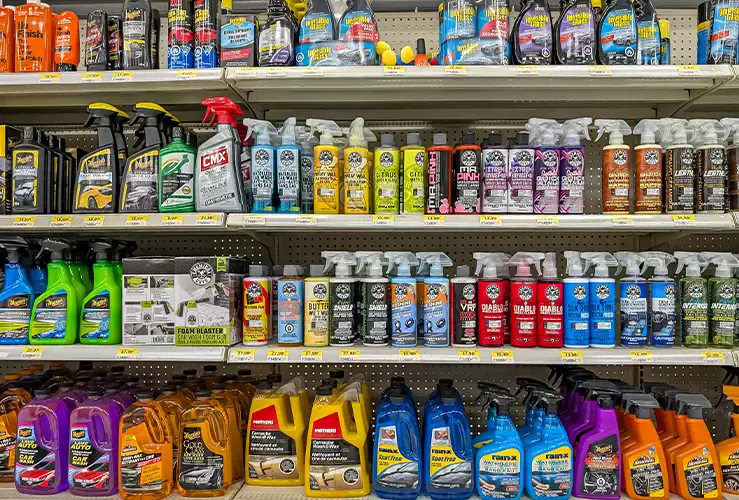
- Dashboard and Plastic/Vinyl Trim: Rather than resorting to washing up liquid and an old dishcloth, use a dedicated interior cleaner, or a mild, pH-neutral all-purpose cleaner together with a damp microfiber cloth. Avoid harsh cleaners which can damage the surfaces.
- Seats:
Leather: Vacuum first to remove loose debris. Choose a mild, pH-neutral leather cleaner applied to a microfiber cloth or brush. Clean in a circular motion, then wipe dry with a clean cloth. Avoid general household cleaners, vinegar or anything with alcohol in it - since these can remove the leather’s protective oils. Avoid abrasive pads and sponges.
Cloth interior elements: If you have a mainly cloth interior, it's important to avoid getting the fabric too wet when cleaning. Lightly spray with an upholstery cleaner, gently clean with a stiff interior brush, and wipe off the resultant dirt with a microfibre cloth.
Alcantara: This suede-like material demands ongoing care to preserve its luxurious aesthetic. Use a soft brush for regular maintenance, and an Alcantara-specific cleaner for deep cleaning, applying with a sponge and wiping off with a damp cloth. - Glass: Use a dedicated, specialist automotive glass cleaner together with a clean, lint-free microfiber cloth for a delightful streak-free finish. Avoid ammonia-based household cleaners, especially if you have window tint.
Protection and maintenance
- Apply protectant:
- Once all your surfaces are clean and dry, it’s time to apply a protective coating. For plastics, vinyl, and leather, a protectant (like a water-based protectant or a ceramic interior coating) will help keep dust away, as well as protect against UV rays and give you a natural sheen. Put it on an applicator pad, then wipe onto the surface - this prevents overspray.
- For the exterior paintwork, consider applying a coat of wax or a ceramic coating. This should protect the finish and help prevent dirt from sticking and should ultimately mean you have a longer period before it's time to clean again.
- Regular maintenance:
- Regularly wipe down surfaces with a microfiber cloth to manage the inevitable build-up of daily dust.
- If there are any spills of messes, get them sorted straight away to prevent staining.
- Consider using a sunshade when parked to protect the dashboard from sun damage, particularly if summer is round the corner.
- Swap out your cabin’s air filter every 15,000–30,000 miles to help keep dust at bay (especially important if you smoke in your vehicle).
- Think about instituting a ‘no-snacking-or-drinking’ policy - your seat coverings will thank you for it, and you’ll minimise time spent cleaning up over time.
Customising interior of cars to support maintenance
If you’re thinking about souping up your car’s interior, there are various customisation options that help you protect and maintain your cabin, while ensuring in-laws and car-poolers are quietly impressed. Carefully selected seat covers, steering wheel wraps, and dashboard mats can all help protect the original interior from wear and tear, preserving the car's condition and even potentially boosting its resale value.
Scratch repair for car interiors
Interior scratches are part and parcel of owning a car, but there are steps you can take to fix them as and when they appear. Here are some useful tips for undertaking scratch repairs for your car interior.
- Plastic/Vinyl: Scratches on dashboards, door panels, centre consoles, and trim pieces.
Minor scratches can often be polished out with plastic polish or even a mild abrasive like non-gel toothpaste or baking soda. Fixing deeper scratches will require more work. You’ll likely need to do some fine sanding, then apply putty to even out the surface. After this, you may need to do some colour correction with dye.
- Leather/Faux Leather: Scuffs, tears, or scratches on seats and steering wheels.
To fix these kinds of abrasions, clean the area and trim any loose fibres. For minor scratches, apply a specialist leather conditioner or oil in order to condition the affected area; for deeper scratches and tears, you’ll need to invest in a leather repair kit, which in most cases involves applying some kind of binder or filler, sanding it smooth, then applying matching leather paint, followed by a protective coat. This is not exactly an easy job so you may decide to enlist a professional (pricey, but you may get a better result).
- Wood/Metal Trim: Scratches or scuffs on decorative interior accents
For minor scratches in wood elements of your interior, a little polish and some elbow grease should eliminate them. To sort out scratches on metal parts in your car's interior, you should first clean the area, then use a fine-grit sandpaper followed by a metal polishing compound and finish up with a protective coating. For deeper scratches, you may need a little touch-up paint. Alternatively, you may get a more satisfactory result if you hire a specialist to fix the damage.

Car interior cleaning: Smoke smell
When it comes to car interior cleaning, smoke-smell elimination isn’t always easy - especially if people have been smoking in said vehicle over a number of years. It is a common problem faced by buyers of used cars. Thankfully, there are steps you can take to eliminate, or at least reduce, that unpleasant smoky smell.
First up, you’ll need to remove any debris, then vacuum all the soft furnishing surfaces you can reach and wipe down all the hard surfaces.
You should then invest in some odour-absorbing cleaning products like baking soda, activated charcoal, or coffee grounds. It's also a good idea to clean the air vents with a specialist spray, since a lot of the smoke smell might be lingering there.
Swapping out your air filter with a fresh one should also help reduce those smoky whiffs.
If the odour is still present after taking the above steps, consider deep cleaning the soft furnishings/carpets with a car-specific cleaning product. An odour-neutralising fogger can also be effective: these target the source of the bad smells (rather than just masking them, they break them down by way of a chemical reaction).
Ensure you read the label of any products you use, since some, like foggers, can be harmful if not used correctly.