

Thinking about buying a damaged car? Whether you're browsing salvage cars, damaged car auctions or auction cars, understanding the risks and rewards is essential. From a lightly damaged car to a crashed car ready for repair, this guide explains when salvage vehicles can represent good value, what to check before you buy - and how to avoid costly mistakes.
You may have seen videos online about people who buy damaged cars for a low price and then repair them - either to drive themselves or to sell on for a profit.
Such videos present an enticing prospect: getting hold of a particular model for considerably less than its market value, then spending a little on getting it into a roadworthy condition.
You get a car you want for a great price, and the money you save can be used for fuel or insurance - or simply kept in your pocket.
Aside from online portals like Facebook Marketplace, you can find repossessed cars for sale at damaged car auctions - or general car auctions. Sometimes accident-damaged/crashed cars are referred to as ‘salvage cars’ - due to having been written off by the associated insurer. But there are also dealers that specialise in salvage cars.
Some crashed or otherwise broken cars are indeed bargains. However, if you don’t have a lot of experience in the area, you might wind up with a vehicle that gives you a lot of problems down the line.
In this article we’ll ask: When does a discount outweigh the risk?
What is an accident-damaged or salvage car?
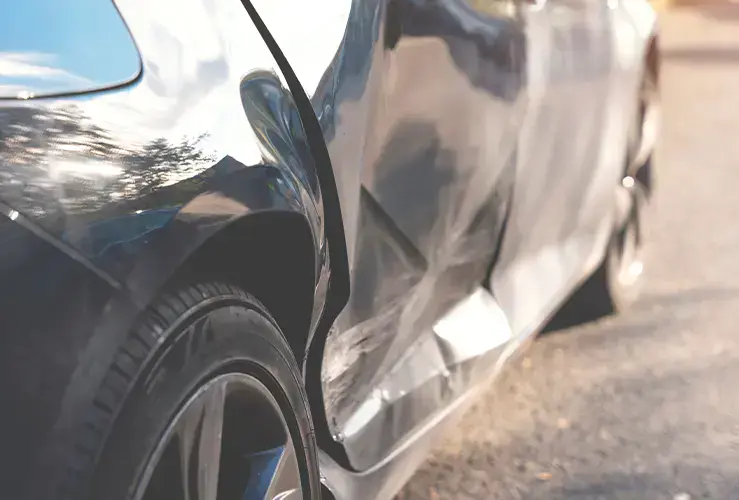
An accident-damaged car (or salvage car) is one that has been in an accident.
But accidents can take many forms - from light prangs where little damage is done, to being classed as an ‘A’ or ‘B’ write-off by the associated insurer.
Insurance write-off categories
If an accident resulted in the car being written off, it will fall into one of four categories:
A - a vehicle that has been completely destroyed in an accident - such as by fire or heavy collision. An ‘A’ classed car can never be legally driven again.
B - severe structural damage. A ‘B’ grade vehicle can also never be driven again. However, some undamaged parts may be salvageable.
S - Structural damage (to chassis, crumple zones, structural pillars etc.). An ‘S’ graded car can be legally repaired and driven again.
N - Non-structural damage (paintwork, bumpers, doors, headlights etc.). ‘N’ graded cars can also be repaired and driven again.
Not all accident-damaged cars are insurance write-offs
It's important to note that not all accident-damaged vehicles have been classed as ‘write-offs’ by insurers. Some people decide to repair a damaged car themselves - which means there is no write-off record.
Types of accident damage
If you’re thinking about buying a car that has been in an accident - perhaps at a damaged car auction, at a specialist dealership, or on Facebook Marketplace - it obviously makes sense to choose one that has minimal damage. With this in mind, a cosmetically-damaged crashed car is generally much cheaper and easier to fix than one that has mechanical or structural damage.
Any mechanical or structural damage must be repaired to a very high standard - otherwise future occupants (and other road users) could be put at risk. For example, a poorly repaired chassis could have serious consequences - altering how the crumple zones function, or impacting suspension alignment (among other issues).
Here’s a quick run-down of the different types of damage commonly sustained in accidents.
Cosmetic damage
- Scratches
- Dents
- Bumper damage
- Minor panel replacement
Mechanical damage
- Suspension
- Steering
- Cooling system
- Engine components
Structural damage
- Chassis
- Crumple zones
- Pillars
- Subframe
Image credit: art_zzz - stock.adobe.com
Potential benefits of buying a salvage car
Aside from the general benefit of being able to buy a car for less, there are other advantages to buying an ancient-damaged or salvage car. A big one is being able to get hold of a new or higher-spec car that you would otherwise not be able to afford.
For example, getting hold of a structurally-damaged but high-spec Porsche, BMW or Jaguar might be 20 to 40% cheaper than buying a comparable example in undamaged condition.
The exact discount you get would depend on things like:
- the severity of the original damage
- the quality of the repairs
- the age and specification of the vehicle
- mileage
- buyer demand
Most S and N cars are repaired before they are put up for sale. Many professionally repaired vehicles can offer great value.
However, not all S and N vehicles are repaired before being put on the market. Cars sold at damaged car auctions, or where there are repossessed cars for sale, are less likely to have been repaired before being put up for sale.
In these cases, you would need to find a reputable repair garage, or do the work yourself (potentially saving a significant amount).
Some of the most attractive accident-damaged cars are ones that have light cosmetic damage.
The risks
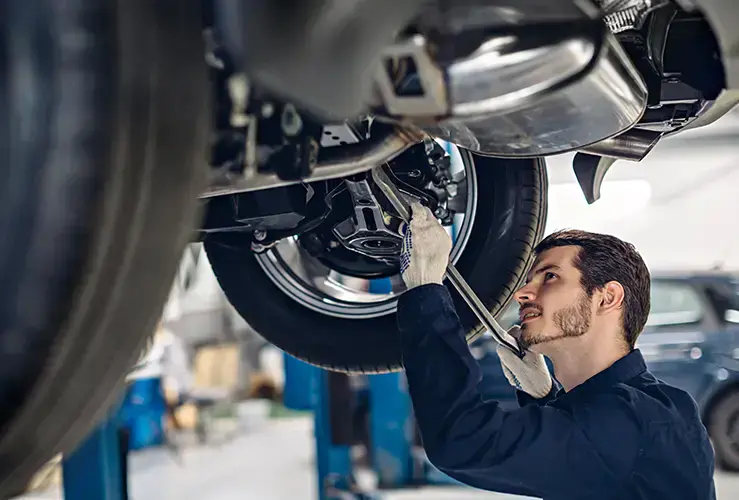
However, there are some notable risks to consider before you buy a damaged car, whether at a damaged car auction, Facebook Marketplace, or other places where you can buy crashed or otherwise broken cars.
One of the biggest pitfalls is hidden structural damage. As mentioned before, this can cause other components to fail or develop issues. This kind of damage can also make a vehicle less safe - particularly in a collision.
You also have to be aware of poor quality repairs; airbags that have not been replaced; alignment and electrical issues; corrosion zones that develop after repairs; and a lower resale value.
Some problems can develop weeks or months after purchase, and might have been difficult to predict. For example, wiring may have become loose in an accident, getting worse over time.
What to check before buying
Vehicle history
Getting a vehicle history check is really non-negotiable if you want to mitigate some of the risks of buying a used car. You’ll be able to double check the write off status (it might turn out to be an ‘S’ Cat rather than an ‘N’, for example).
You’ll also find out about any outstanding finance. This is critical because a lender might seize the vehicle later on (and may legally be able to do so).
You’ll also find out about any theft records and about previous keepers.
Repair documentation
You should also ask for repair invoices, and photographs of damage before repairs took place.
You would also be looking to find out which parts were used, and have access to professional repair records.
Physical inspection
It’s also important that you spend some time doing a physical inspection. Any hint that the seller wants to rush you, or take your attention away from a particular area of the car could be cause for concern. Look out for:
- Uneven panel gaps
- Paint colour mismatch
- Overspray
- Warning lights
- Tyre wear
- Suspension alignment
- Signs of water ingress
If the damage has been significant, it’s a good idea to get an independent inspection done.
Test drive it
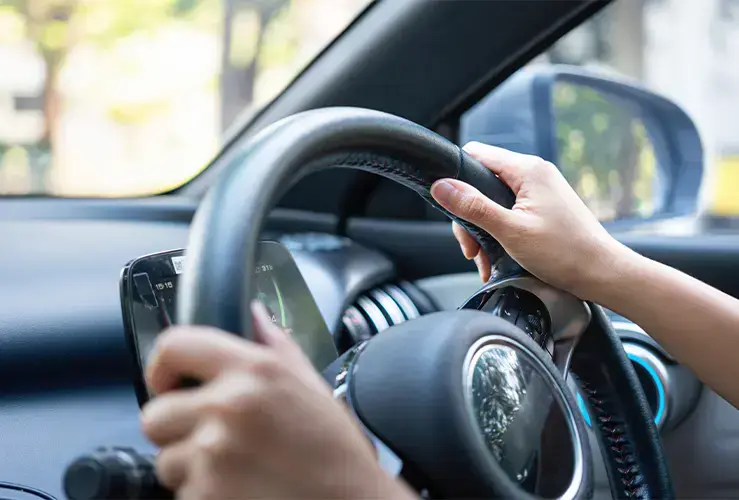
A test drive is another ‘must-do’.
Drive it for at least 20 minutes - some issues won’t appear until the car has been running for a while.
- Determine if the car drives in a straight line without pulling to one side.
- Ensure the steering wheel is centred, and keep an ear out for unusual noises from the suspension or drivetrain.
- Be alert to any vibrations through the steering wheel or body.
- Check the braking performance - and whether the car remains stable under braking.
- Look out for any warning lights that come on during the drive.
- Ensure gear changes are smooth (manual or automatic).
- And note any wind noise - this could indicate poor panel or door alignment.
Some seasoned online buyers also suggest that if a seller is reluctant to accompany you on the test drive (in the case of a private sale), they could wish to avoid any embarrassment over any issues that become apparent - and which they haven’t previously mentioned.
Is it worth buying a category S or category N car?
Buying a category ‘N’ car is usually lower risk than buying an ‘S’. Damage to these cars is nearly always non-structural (i.e. cosmetic). However, you should still inspect them and do a vehicle history check.
A category ‘S’ car, meanwhile, can still represent good value - but any repairs must have been done to a high standard. It’s highly recommended you get a professional inspection done before you part with your money.
How much cheaper should it be?
With a Category N car, you can expect around 10–25% discount on an equivalent undamaged car.
A Category S vehicle gets you an even bigger discount - at around 20–40% below the value of an equivalent undamaged car.
However, the exact discount will depend on the vehicle’s age, the brand, the extent of the damage, the quality of the repairs - and last but not least, current market demand for that particular model.
What questions should I ask the seller?
Here are some useful questions to ask the seller. It’s probably wise to ask these over the phone - then you can determine if it’s worth viewing the vehicle.
- What caused the damage?
- Was it an insurance write-off?
- What repairs were carried out?
- Who completed the repairs?
- Are there photos of the damage?
- Are repair invoices available?
- Has the car been inspected since repair?
By asking these questions you’ll get a sense of the person on the other end of the line, and whether everything ‘adds up’ (it doesn’t always!).
When is buying a damaged car a good idea?
Generally, if a car only has cosmetic damage (N category), it could be worth your attention.
Such a vehicle should also have had high quality repairs that are well documented, and a full service history.
Having an independent inspection would confirm the vehicle’s roadworthiness.
And lastly, the price should reflect the car’s history.
When should you walk away from a purchase?
Consider avoiding a car if the seller cannot explain the damage, or if there is no evidence for repairs.
Also look out for signs of poor workmanship, or any structural repairs that haven’t been properly documented.
And if the vehicle history doesn't match the seller's description, or if the price is similar to undamaged examples - think about walking away.
Conclusion
Ultimately, buying a damaged car or a salvage car isn’t automatically a bad idea - quite the opposite in some circumstances.
The key is to fully understand the extent of the damage and the quality of the repairs.
Before parting with your money, do a vehicle history check, ask for documentation, and have an independent inspection done - all of which can significantly reduce the risk.
If the discount is right, and the repairs are well documented, an accident-damaged car can offer excellent value for money.