



Planning to leave your car standing for a long period? Learn how best to prepare it, and minimise the risk from things like a drained battery, rust, tyre flat spots, pest infestations and vandalism.
Leaving a car stationary and not driving it for long periods will almost certainly cause issues. Some of these will be fairly inexpensive to fix, while others could be much more costly. As a general rule, the longer you leave a vehicle parked up, the more it is likely to cost you to get it up and running again.
However, there may be situations where you may need to leave your car standing for long periods. For example, if you’re planning a long trip away from home, or illness or injury has affected your mobility.
In this article we’ll explain how best to prepare for leaving a car unused for a long time, minimising the issues you’ll face when you eventually drive it again.
Common issues related to leaving a car stationary
Flat battery
This is the most common problem associated with leaving a car unused for long periods. Over time the battery will drain and go flat - particularly in low temperatures.
Flat/damaged tyres
Leaving your car stationary for long enough will lead to flat spots on its tyres due to a loss of pressure. The tyres will then need to be replaced.
Tyres can also develop dry rot and cracks when left in one position for a long time, especially when exposed to sunlight for long periods.
Corrosion of electrical connections
If your car’s engine is left off for a long time, various electrical connections can begin to corrode.
Rust and corrosion
Left exposed to the elements, a car will eventually suffer from rust and corrosion.
Other issues include the breakdown of various seals, and brake seizure - both of which are complex and costly to fix.
Additionally, rodents may move into the vehicle, leaving you with a tricky and expensive issue to address.
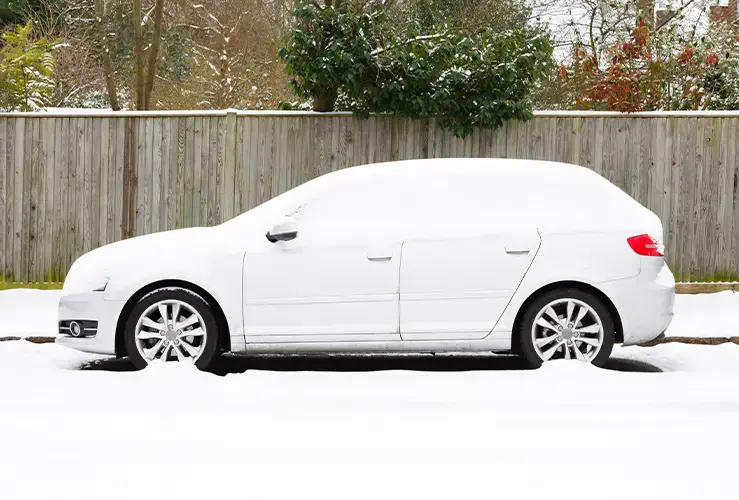
Car stationary? How to prepare for a long period of being parked
Leaving a car unused for a long time is not advisable, but if you must leave your car standing for weeks - or months - then this checklist should help minimise damage and maintenance issues.
Decide where to park and use a breathable cover
Ideally, park in a garage or covered area (at least somewhere dry and shaded). Use a breathable cover (avoid plastic tarps as they trap moisture).
Prepare the battery
Aim to fully charge your battery before you leave the car alone. If possible, use a trickle charger/battery maintainer to keep it topped up. If you can’t use a trickle charger, you might consider disconnecting the negative terminal to slow discharge (but only if you’re comfortable doing so and it doesn’t impact the car’s alarm or locks etc).
Tyres
Inflate the tyres to the pressure recommended by the manufacturer, or slightly higher. If possible, get someone you trust to move the car forward/backward slightly (to prevent pressure spots).
Fuel
Fill up the tank in order to minimise condensation in the fuel tank. If the car is being left for 3 months or more, think about adding a fuel stabiliser.
Engine and fluids
Check the levels of engine oil, brake fluid and coolants, and top them up as required. Check for any leaks prior to storage.
Clean the car inside and out (rust and pest prevention)
Remove droppings and other dirt, since these deposits can trigger corrosion. Clean the interior and get rid of any food remnants, since these can attract rodents.
Brakes and handbrakes
If possible, avoid leaving the handbrake engaged for long periods, since it can seize. One option is to use wheel chocks, but these must be rubber or plastic (not wood) very secure and completely unmoveable, and used on a level surface. Leave the car in gear (manual) or Park mode (automatic) if you do this.
Insurance
Ensure your insurance covers long-term storage. Think about using a wheel lock, or other device that can be seen easily (as a deterrent).
Before you start driving your car again…
Check battery health, brakes, engine oil, fluid and coolant levels before you get back on the road.
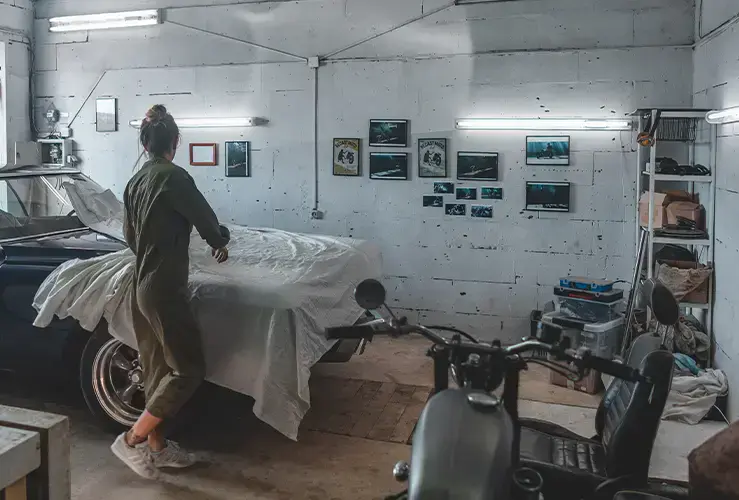
What to do depending on how long you’re leaving your car
How long to keep a car parked up and stationary (safely) depends on your specific obligations/needs, but the shorter the time, the better. Here’s a quick guide to what you should do to keep your car safe based on how long it is being left.
Situation | Advisable? | Tips for storage |
Car sitting for 1 month | ✔️ Generally fine | If your car is not used for a month, be sure to inflate tyres properly, avoid using handbrake if possible (or use lightly), fill fuel tank, consider a battery maintainer if modern car with electronics |
Car sitting for 3 months | ✔️ Usually fine with light prep | Car not used for 3 months? Make sure you fill fuel tank, check tyre pressures before and after storage, consider trickle charger or disconnect battery, avoid prolonged handbrake use, and finally, have it checked for damp/mould (if stored outside) |
Car sitting for 6 months | ⚠️ Okay with preparation | Use a trickle charger or disconnect battery, inflate tyres higher to prevent flat spots, consider fuel stabiliser, wash car thoroughly, use breathable cover (not plastic tarp), and check for any rodents |
Car sitting for 1 year | ⚠️ Needs proper prep | Use fuel stabiliser, fully charge or maintain battery, consider removing battery, avoid handbrake (use chocks), change oil before or after storage, protect interior from damp, inspect brakes before driving again |
Car sitting for 3 years | ❌ Not ideal without storage setup | Drain or stabilise fuel system, remove or fully maintain battery system, expect to replace tyres, brake corrosion likely, seal exhaust/intakes against pests, consider professional storage if possible |
Car sitting for 10 years | ❌ Essentially long-term storage/“barn find” condition | Full recommission will be required: tyres, brakes, fluids, battery, rubber seals, possibly fuel system rebuild, check for corrosion, likely needs full inspection before road use |

Car parked for a long time on street?
A car parked for a long time on the street is exposed to more perils than one kept in a garage or on a driveway. Exposure to weather and bird droppings can cause rust, paint damage, while seals can deteriorate.
Temperature changes and dampness can affect the brakes, tyres and battery.
Vandalism, theft and pest infestation are also more of a risk when you park on the street for a long time (especially if the car is not moved periodically).
Tyre flat spots and brake seizure are also a risk.
If you need to leave your car parked for a long time on the street, ensure it is taxed, insured MOT’d and generally roadworthy. If possible, get someone trusted to move the vehicle periodically; if your car sits for months without being moved it will be at higher risk from the above-mentioned threats.
I don't drive my car often: How to take care of it?
If you don’t drive your car very frequently, there are some ways you can help keep it in good condition:
- Firstly, aim to drive it every week or two. Even a short 15 minute trip can help keep the battery charred and the fluids circulating.
- Check the tyre pressure regularly, since pressure can be lost when a car is sitting stationary for long periods.
- Keep the tank more than half full to minimise condensation in the tank.
- Think about using a battery maintainer to keep the battery topped up.
- Keep it clean and free of food remnants, to prevent mould and pests. Check under the bonnet and by doors for pest infestations.
- Keep insurance, tax and MOT up to date as required.
- Check oil, coolant, brake fluid, and look out for any leaks.