


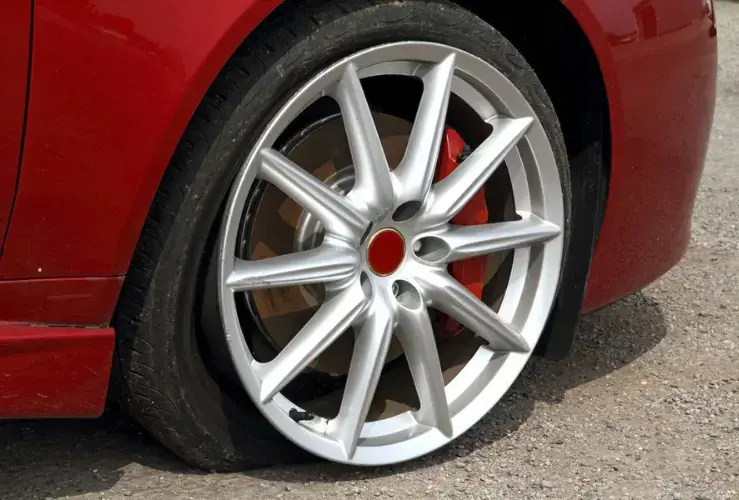
A flat tyre can happen to any driver, whether you’re on a short school run or a long motorway journey. Even the most careful motorists can end up with a punctured tyre, and it often happens at the worst possible time.
Because the UK driving test doesn’t cover how to change a tyre, many drivers feel unprepared when it happens. Staying calm and knowing the correct steps can make the situation far less stressful and much safer.
Here we offer a practical guide on how to change a flat tyre. If you have the time and inclination, it's a good idea to do a practice tyre change, so you're even better prepared for when you face the dreaded 'flat'.
Common Signs of a Flat Tyre
Not all punctures are immediately obvious. Watch out for:
- The vehicle pulling to one side
- A thumping or flapping sound
- Rattling or vibration through the steering wheel
- Sudden loss of handling stability
- A tyre pressure warning light
Some punctures develop slowly. Avoid driving on a flat, as this can damage the wheel, increase repair costs and compromise vehicle control.
1. Know what you're working with
The first thing you need to do is see if you have a spare tyre and if it's in full working order. Many people forget to check the condition of their spare tyre or replace it, which means you could be in trouble the next time you have a puncture.
Many modern cars don't have spare tyres to save space but instead include a puncture repair kit, so if you can't find your tyre don't panic.
2. Make sure you have everything you need
You’ll need:
- Vehicle handbook (for jack positioning guidance)
- Spare wheel or repair kit
- Jack
- Wheel brace
- Locking wheel nut adapter (if fitted)
- Wheel chock
- Gloves
- Torch
- Reflective jacket
- Solid footwear
- Something to kneel on
Preparation prevents unnecessary delays during a car tyre replacement.
3. Move to an appropriate area
You should never change a wheel on the hard shoulder of a motorway or on soft, loose or uneven ground. If you get a flat tyre on the motorway call for recovery assistance.
4. Get all passengers out of the car
Passengers need to be out of the car and in a safe area before you attempt to change a tyre. It's unsafe to jack a vehicle with people still in it and even if the weather is bad, passengers have to be out.
5. Prepare the car
Before you start to change the tyre you need to switch off the car, apply the handbrake, engage first gear or 'P' if it's an automatic, chock the wheel diagonally opposite the one to be replaced, and switch the hazard lights on. Once this is done you need to remove the wheel trim and place the jack in the recommended lifting position. Your vehicle handbook will tell you how to do this correctly.
6. Start lifting
Once all the above steps have been completed, it's time to start lifting the car. The jack needs to be raised so the wheel is just clear of the ground.
7. Loosen the nuts and bolts
Using the wheel brace and locking wheel-nut adapter, turn the wheel nuts/bolt anti-clockwise to undo. The top nut/bolt should be left until last so it's easier to lift the wheel off.
8. Attach the new wheel
Attaching the new wheel is reasonably simple. Place it in the required place and then tighten the top nut/bolt and work your way around the tyre diagonally.
9. Get ready to go
Lower the car carefully back to the ground and remove the jack. Tighten the bolts no more than ½ a turn past tight or tighten to manufacturer recommendations. Store the damaged wheel safely in the boot, along with your tools. After a short journey, re check the bolt tightness and when you are having your flat tyre replaced, ask the mechanic to also check the wheel and tyre you fitted.
Final Checks Before Driving
Before setting off:
- Double-check all wheel nuts are tight
- Ensure the spare tyre is properly seated
- Confirm tools are securely stored
- Drive cautiously for the first few miles
- Re-check nut tightness after a short journey
When arranging your car tyre replacement, ask the mechanic to inspect the spare wheel you fitted.
Important Safety Tips After Fitting a Spare Tyre
Spare wheels often have limitations:
- Most space-saver spares should not exceed 50mph
- They are temporary solutions only
- Replace or repair the punctured tyre as soon as possible
- Avoid long journeys
- Drive smoothly and avoid harsh braking
Ignoring these precautions can affect braking distance and handling.
When to Call for Help
Seek professional assistance if:
- You’re on a motorway
- The wheel nuts are seized
- You don’t feel confident
- The vehicle is unstable
- You do not have suitable equipment
Your safety is always more important than speed.
Need peace of mind on the road?
Breakdowns and punctures can happen to anyone. Make sure you’re covered for roadside assistance and emergency support before your next journey.
Explore your cover options today and drive with confidence.