



AI-enhanced cars rarely go into ‘panic mode’ - but if yours does, there’s no need to follow suit. Read our guide on what to do if your AI/smart car decides it doesn’t want to move, and what kind of smart car services can get your vehicle running again.
Being behind the wheel of a car that refuses to move is not pleasant, especially if you have no idea why.
With modern cars getting ever more complex, determining why a vehicle won't proceed can be increasingly difficult to work out.
New cars are essentially ‘computers on wheels’ and the advent of artificial intelligence (AI) systems has meant that a vehicle’s inner workings are more opaque than ever.
A case in point is the so-called “panic mode” featured in AI-assisted or ‘smart’ cars.
What is ‘panic mode’?
‘Panic mode’ is not a term often employed by carmaker’s marketing departments (not least because it sounds a bit dramatic), but it is a term that gets used by motoring journalists and the general public.
Panic mode is essentially when a vehicle’s computer/software/AI decides it’s not going to move - either because it’s dangerous to do so, or there's a problem with the car (which might also spell danger).
This solution to this very modern kind of vehicle breakdown may not be immediately apparent.
Panic mode might look like:
Automatic safety lockout
Your car won’t start or move if sensors detect a critical issue such as:
- Brake system failure
- Steering system problem
- Collision risk detected while stationary
Emergency braking / stop
- If the car detects an imminent collision while moving, the AI can stop the car.
System errors / software glitches
- Sometimes the AI refuses commands due to sensor faults or firmware errors.
- There could be errors with over-the-air updates
- Could require a reset or ‘smart car’ service.
Battery or electrical protections (common in EVs)
- Electric vehicles can disable driving if the battery is too low or overheated or is having some other issue.
The above issues may resolve themselves, for example by charging the battery, or the required over-the-air update being received and installed. Other problems may require the services of smart car specialists.
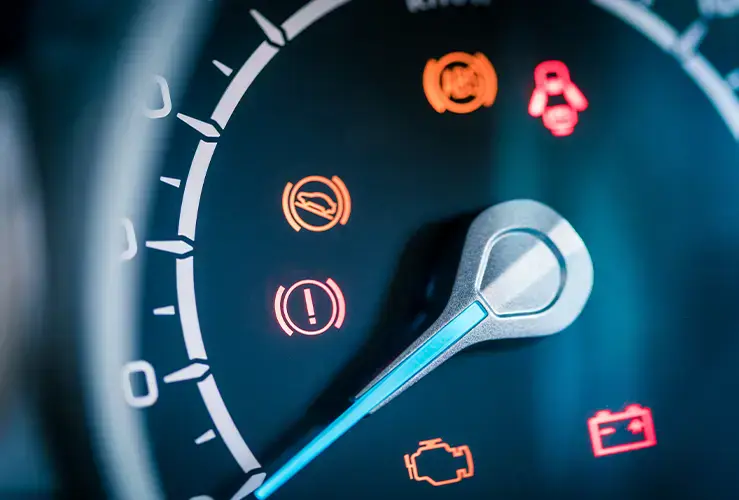
Why might my smart car enter ‘panic mode’?
From software glitches to sensor misreads, or the activation of safety protocols, your smart car’s AI system can enter ‘panic mode’ for various reasons.
It’s important to remember, however, that your vehicle’s AI systems have been designed to keep you and your passengers safe - not to frustrate anyone.
Indeed, one of the chief benefits of AI is that it can keep us safer on the road compared to if we humans were managing every facet of driving.
A good example of AI’s safety credentials is Volkswagen’s Emergency Assist system, which can detect driver inactivity as might be caused by falling asleep, passing out, or otherwise suffering a medical issue. This system can then give warning alerts, use braking actions to wake the driver up and then, if required, move the car into the emergency lane and come to a stop.
But of course, when AI systems don’t work as expected, perhaps leaving us by the roadside or unable to start our journey, it can be frustrating. Luckily, repairing a smart car is getting easier by the day, with smart automotive services becoming more common across the UK.
This kind of ‘smart’ auto repair is certain to become the norm for most of us, rather than something needed only by early adopters of high-tech vehicles.
My car is in panic mode: What should I do?
As with all breakdown or emergency situations, it's important to stay calm if your car refuses to move.
If your car stops moving on a busy road, apply your brakes so other road users know you have stopped. If you’re unable to safely move or push the vehicle to a safe location, then turn on your hazard lights immediately.
You and your passengers should only exit the vehicle if it is safe to do so. If you do exit, move away from the traffic, to a safe location. Exit via the kerbside doors.
Now check any alerts and consult your vehicle's manual. Use the online digital version of the manual if the printed copy is not to hand as almost all manufacturers provide these.
Next, you might attempt a soft reset if it’s safe to do so.
What is a ‘soft reset’?
In simple terms, a soft reset in a smart or AI-assisted car is a non-invasive reboot of the vehicle’s electronic systems. This is comparable to restarting your smartphone or computer. While it doesn’t fix hardware problems, the process might clear temporary software glitches that could be causing your car to refuse to drive.
A soft reset would target and potentially remedy infotainment system errors and sensor communication glitches. It might also sort out malfunctioning driver-assist features like autopilot, lane keeping assist, or emergency braking logic.
It might also fix faulty dashboard warnings caused by software (as opposed to hardware).
If a soft reset doesn’t fix the issue, then you should contact your roadside recovery provider.
If you’re not a member of a vehicle breakdown/roadside recovery service, then you’ll have to arrange recovery with a private recovery firm, a motoring organisation, or a local towing/recovery service (at full cost).
The bottom line is there’s no need to panic, there are many breakdown services for cars in the UK.

Servicing your smart car
The most reliable way to prevent, or minimise the chances of, an AI lockout/panic mode is through regular smart car servicing.
It’s important to use certified services (search ‘smart car specialists near me’ or ‘smart auto service providers’ online).
The process of servicing a smart car is not necessarily more complicated than servicing a regular/non-AI car, it’s just different. Specialist diagnostic software/tools are required to carry out resets or recalibrations to things like the auto pilot and radar/lidar - resources that are the bread and butter of garages that specialise in smart car services.
Preventing ‘panic mode’ in the long term
In order to reduce the chances of an AI lockout or entering any sort of ‘panic mode’, it's important to keep your car’s software up to date.
You should schedule regular smart car service appointments and familiarise yourself with your car’s various warning indicators.
Conclusion
Panic mode is nothing to panic about because it’s rare and if it does happen, it’s usually to keep you and your passengers safe.
As with all vehicles, it’s important to use professional, reliable services and undertake regular maintenance.
While AI-powered vehicles can seem mysterious and complex, the UK has ample breakdown services for cars, including smart auto repair options, so if you do suffer a problem, it should be easily resolved.