



Thousands of Britons work tirelessly to keep UK classic cars roadworthy and looking great. But in truth, everything from maintenance to visibility are more challenging in a classic car. Here we explore how retro car lovers ensure their classics can handle the rigours of modern driving.
According to the Federation of British Historic Vehicle Clubs, there are almost 700,000 historic vehicle owners in the UK.
On a per capita basis, that makes the UK something of a classic car superpower.
But what’s the appeal? What is it about classic cars that quickens the pulse for so many Britons?
It might be admiring the elegant lines of a Jaguar E-type, or cramming oneself into an original Mini Cooper for a non-steering-assisted pelt around town.
It could be enjoying the sonorous notes of the Austin-Healey 3000 Inline-6 engine, or being propelled down a country road in an Aston Martin DB4 GT Zagato.
The styling, the purring engines, the smell of grease and oil, the feeling of being truly connected to the road, these sense pleasures are all part of owning, maintaining, and driving a classic motor car.
This passion for heritage vehicles, together with a host of government incentives, has made the UK a global leader in retro car preservation.
But running an older car on modern roads is not without its challenges…
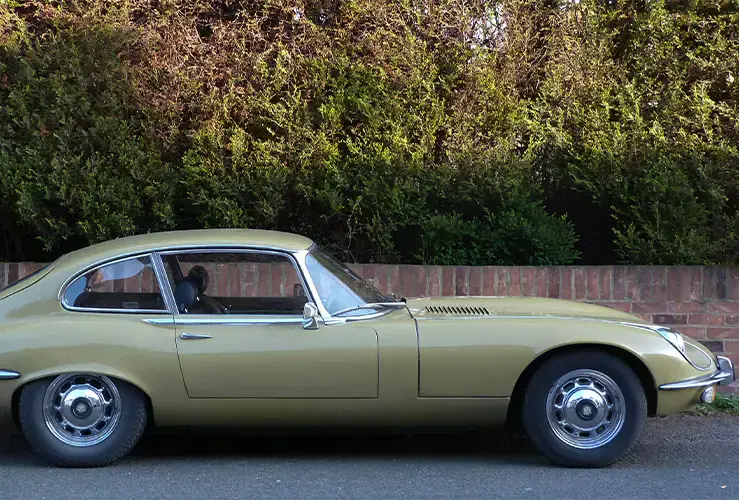
Image credit: Susan Halewood - stock.adobe.com
Classic motor cars and modern roads: Do they mix well?
In truth, older cars were never designed for modern traffic conditions. When many classic automobile models were first built, our roads were quieter, speeds were lower, and safety regulations were far less strict.
Today’s roads are populated with quicker, much heavier modern cars equipped with advanced braking systems, lane assist, and collision detection alongside many other safety features.
Conversely, most retro cars lack these features entirely, which can make driving them in busy urban environments feel daunting. With less power under the bonnet, many classic cars can struggle to get out of tricky situations.
For these reasons, classic car owners often prefer keeping to quieter, country roads, and avoid the start-stop city traffic, or bone-rattling journeys on the motorway.
Driving challenges: Classic vs modern cars
This table shows some of the main challenges of day-to-day driving, and how the majority of classic vehicles in their original manufactured state, compare to more modern vehicles and the features they have as standard, or can be added.
Driving Challenge | Classic Cars | Modern Cars |
Parking | Manual parking, no sensors or cameras - relies on judgement | Parking sensors, rear-view cameras, even self-parking systems |
Steering | Heavy, especially at low speeds (no power steering in many models) | Light, responsive power steering or fully electric steering |
Braking | Longer stopping distances, no ABS | Advanced braking systems with ABS and emergency assist |
Visibility | Smaller mirrors, no blind-spot monitoring | Large mirrors, blind-spot alerts, 360° cameras |
Gear Shifting | Manual gearboxes, often less smooth | Automatic or seamless manual transmissions |
Traffic Driving | Can overheat, clutch-heavy in stop-start traffic | Designed for efficiency and comfort in heavy traffic |
Night Driving | Weaker headlights, limited illumination | LED/laser lights, adaptive headlights |
Safety Features | Minimal - basic seatbelts or none | Airbags, lane assist, collision detection systems |
Navigation | Paper maps, local knowledge, or a car phone holder for use of GPS apps such as Google maps and Apple maps. | GPS, real-time traffic updates |
Comfort | Basic interiors, no climate control in many models | Air conditioning, heated seats, driver assist tech |
Reliability | Requires regular maintenance and attention | Built for long service intervals and dependability |
Fuel Efficiency | Generally lower, especially in older engines | Highly optimised engines, hybrid/electric options |
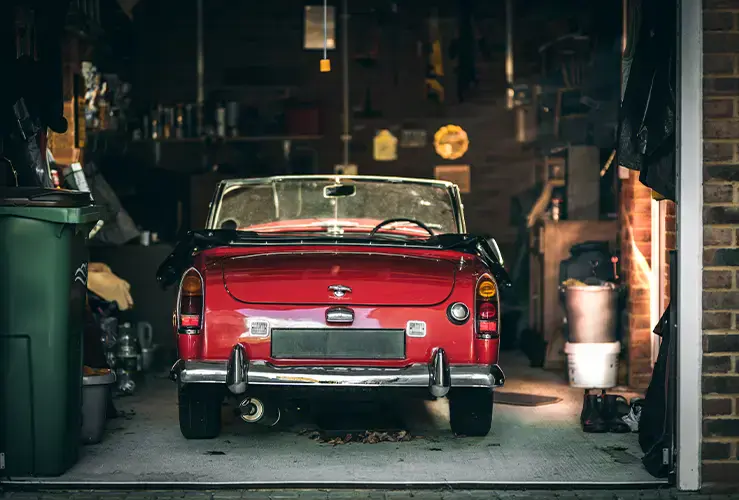
Safety vs character
One of the biggest differences between classic motor cars and modern cars is safety.
Modern vehicles are engineered with things like crumple zones, airbags, and stability control systems - all of which have helped to dramatically reduce road injuries and deaths.
Meanwhile, classic automotives often rely on basic seatbelts - or sometimes don’t have any at all. While this doesn’t stop enthusiasts from enjoying their vehicles, it does mean that drivers of older cars need to be more cautious, especially on high-speed motorways.
1966 to 2024: Vehicles up 250%, casualties down 75%
The difference in safety equipment between older and modern cars is seen most starkly in the road casualty figures: In 1966, road deaths peaked at nearly 8,000. In 2024, fatalities were under 1,700 - despite the number of vehicles on our roads soaring from 12 million to 42 million in the same period.
However, the improvement in road casualty figures is not all about vehicle safety features - it’s also about government-led safety regulations, law enforcement, and infrastructure improvements.
But vehicle engineering plays a huge role in safer roads.
Maintenance and reliability
Owning classic cars can be incredibly rewarding, but it’s hardly a straightforward pastime. Parts for retro cars - particularly non-British models - can sometimes be difficult to source, and regular maintenance is essential to keep them roadworthy.
In contrast, modern cars are built for convenience. With longer service intervals and widely available parts, they’re designed to fit seamlessly into our busy lives. However, some (particularly classic car owners) would argue that this convenience comes at the cost of personality - something that classic motor cars, arguably, have in abundance.
Modern motoring: Can classics keep up?
Despite their limitations, many classic automobile models still perform surprisingly well on today’s roads - especially when properly and safely restored or upgraded. Enthusiasts often modify braking systems, suspension, and even engines to help older cars cope with demands of modern motoring.
Still, driving a retro car isn’t about speed or efficiency - it’s about experience - the feel of the road, the sound of the engine, and the connection between driver and machine.
Keeping classic running: British Motor Heritage and others
British Motor Heritage (BMH) is the leading manufacturer of components for UK classic cars and is a key reason why so many older UK vehicles remain roadworthy. BMH makes complete bodyshells for the MGB, MGR V8, MG Midget, Austin-Healey Sprite, Triumph TR6, and various classic Minis.
The firm rescued around 100,000 drawings from Rover Group, the entity that once owned dozens of British car marques. It also rescued original jigs and tooling, which it uses to make new panels and other components.
Other key suppliers of parts for classic cars include Rimmer Bros, Moss Europe and SNG Barrat, who help meet demand for both UK and non-UK marques.
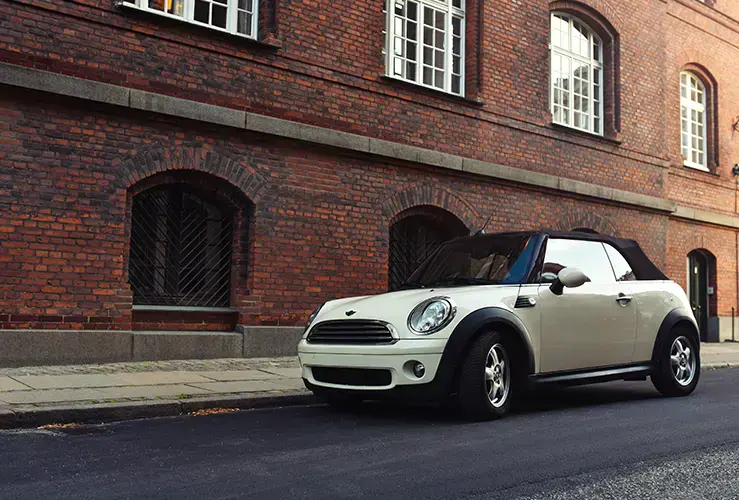
Image credit: Oleksandr - stock.adobe.com
Retro-inspired cars: The best of both worlds?
Some drivers want the look and feel of a retro car, but without the ongoing maintenance required to keep one on the road. One solution that has seen remarkable success in the last 25 years is the ‘retro-inspired car’.
Popular vehicles like the Mini Cooper, the Fiat 500 and the E-Type, have been revamped for the modern era, often keeping the old name, or evolving it (e.g. F-Type).
These modern incarnations embody the styling and character of their older namesakes, but with all the speed, safety tech, infotainment, and efficiency of a modern vehicle.
Here are some of the most successful “back-from-the-dead” models, with sales figures for both old and new versions.
Classic Car | Modern Equivalent | Classic Production Numbers | Modern Production Numbers |
Mini (1959–2000) | MINI Cooper (BMW era) | ~5.3 million units (Wikipedia) | 5+ million since 2001 (approx) |
Fiat 500 (1957–1975) | Fiat 500 (2007– ) | ~3.8 million units (commonly cited) | 2.5+ million by 2021 (Wikipedia) |
Volkswagen Beetle (1938–2003) | VW Beetle (modern) | 21+ million units (autocar.co.uk) | ~1.7 million (1998–2019, approx) |
Porsche 911 (1964–1989 air-cooled era) | Porsche 911 (992) | ~200,000+ (early air-cooled approx) | 1+ million total 911s (all gens) |
Land Rover Series I/II | Land Rover Defender (2020– ) | ~2 million Series/Defender combined (historic) | 100,000+ per year (modern approx) |
Jaguar E-Type (1961–1975) | Jaguar F-Type | ~72,000 units | ~100,000+ (lifetime approx) |
Conclusion
Keeping a classic automobile on the road comes with a host of challenges, from sourcing spare parts to an absence of technology to help with safe, easy, efficient motoring.
Yet despite these hurdles, the UK’s classic car scene is as buoyant as ever, with many specialist companies working hard to ensure enthusiasts can keep their pride and joy on the road. And for those who want the thrill of a classic car without the associated impracticalities, there are plenty of modern incarnations of much-loved retro vehicles to consider.