



From the much-anticipated all-electric Range Rover, to Kia’s new supermini crossover, there’s a lot to get excited about if you’re in the market for a new electric vehicle in 2026. Here are some of the best electric cars you can buy now, or very soon.
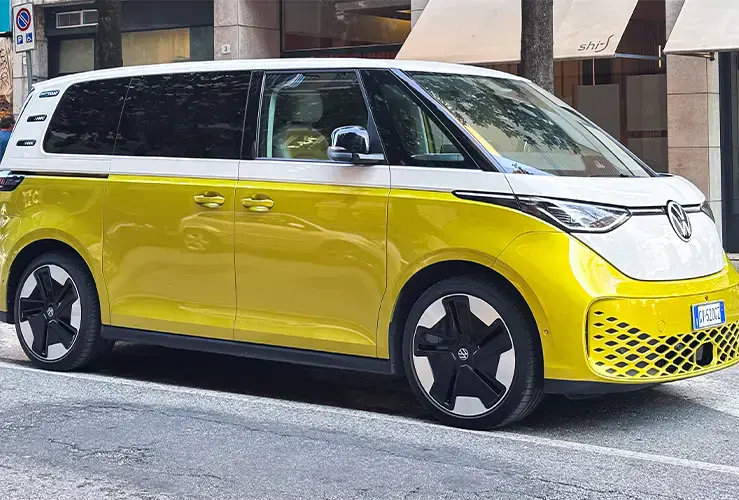
Image credit: Luca - stock.adobe.com
Europe has arguably embraced the electric vehicle more than any other region of the world.
In Norway, for example, EVs now account for 90% of vehicles sold new. Germany, France, the Netherlands and the UK are also adopting electric vehicles at an increasingly fast rate.
Looking at the UK specifically, data suggests that in the first half of 2025 the UK was the second biggest European market for EVs, with more than 224,000 units sold.
Tax breaks, grants, low emissions zones, and heavy investment in EV infrastructure (notably charging systems) have been adopted by many European nations, with a view to meeting ambitious greenhouse emission reduction targets, while cutting the air pollution associated with petrol and diesel cars.
In order to meet the increasing demand for EVs, manufacturers have brought, or will be bringing, a variety of tech-laden electric vehicles to market in 2026 and beyond.
Indeed, given the forthcoming bans on the sale of new petrol and diesel units (see table below), what might be regarded as ‘regular’ car brands will soon become electric car brands within a few years.
Here are some of the best electric cars you can buy in 2026.
Overview of the European EV market in 2026
Many European countries will be banning the sale of new petrol and diesel cars in the coming years (in the case of Norway, a ban has already come into effect).
In some cases, such bans are just a few years away, which is why there has been increasing investment in charging infrastructure and the development of low emission zones. As mentioned, tax breaks and subsidies continue to be made available, easing the financial pressure on motorists who wish to ditch their combustion engine vehicle for an electric vehicle.
Here’s when bans on the sale of petrol and diesel cars will be taking place across Europe:
Country | Ban Year | Details |
Norway | 2025 | 100% of new car sales must have been electric by 2025. |
United Kingdom | 2030 | Ban on new petrol and diesel cars by 2030, full zero-emission sales by 2035. |
The Netherlands | 2030 | Target to have all new cars sold be zero-emission by 2030. |
Sweden | 2030 | New car sales must be zero-emission vehicles by 2030. |
Ireland | 2030 | Ban on the sale of new petrol and diesel cars by 2030. |
Denmark | 2035 | Ban on the sale of new petrol and diesel cars by 2035. |
Germany | 2035 | EU-wide ban, all new cars must be zero-emission by 2035. |
Belgium | 2035 | EU-wide ban, new petrol and diesel car sales must be zero-emission by 2035. |
Austria | 2035 | Target for zero-emission car sales by 2035. |
Luxembourg | 2035 | Follow EU-wide goal for zero-emission car sales by 2035. |
Finland | 2035 | Target for zero-emission vehicles by 2035. |
Poland | 2035 | New car sales to be zero-emission by 2035 (expected). |
Czech Republic | 2035 | EU-wide ban, zero-emission car sales by 2035. |
Slovenia | 2035 | New car sales to be zero-emission by 2035. |
Estonia | 2035 | New car sales to be zero-emission by 2035. |
Latvia | 2035 | Target to be zero-emission by 2035, in line with EU policy. |
Lithuania | 2035 | EU-wide ban, zero-emission cars to be the norm by 2035. |
France | 2040 | Ban on new petrol and diesel cars by 2040. |
Spain | 2040 | Ban on new petrol and diesel cars by 2040. |
Top EVs expected in 2026
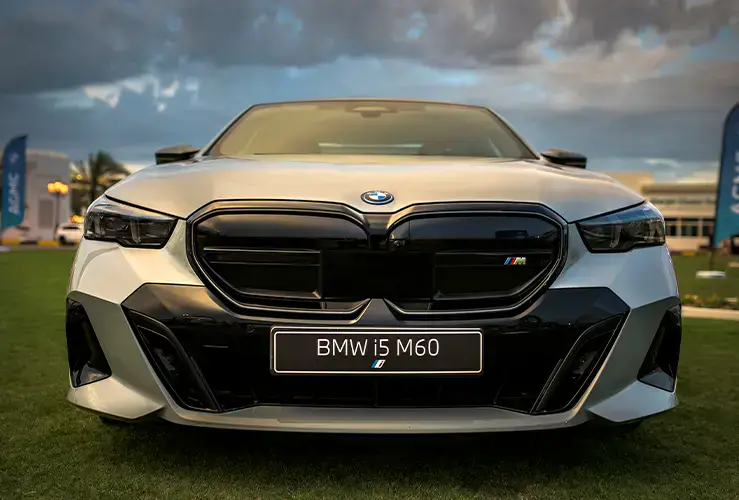
Image credit: Shukhrat Umarov - stock.adobe.com
BMW i5
This all-electric 8th generation of the BMW 5 Series is much anticipated, and its makers hope it will become the leading business saloon for planet Earth. Despite the stiff competition from the Model S, the Mercedes EQE, and the Porsche Taycan, it could well be.
There’ll be two types: the rear-drive eDrive40 (335bhp, claimed 362 mile range and limited top speed of 120mph) and the all-wheel drive M60 xDrive (593bhp, claimed 321 mile range, 143mph top speed).
Neither of these models have top rated electric ranges, but they’re decent enough. If you’re looking for extended range, you might wait for the BMW iX3 (which has a range of 500 miles, reportedly).
Back to the BMW i5: Top Gear magazine described it thusly: “This is the best-handling car in its class and makes a Model S feel like a shopping trolley”.
However, you could buy a small house in some parts of the UK for the cost of an eDrive40, which starts at £74,105 or you could buy a slightly bigger house for the starting price of an M60 xDrive - £97,745 without optional extras!
Despite the costs, however, the i5 could wind up being considered one of the best electric cars for business folks in 2026.
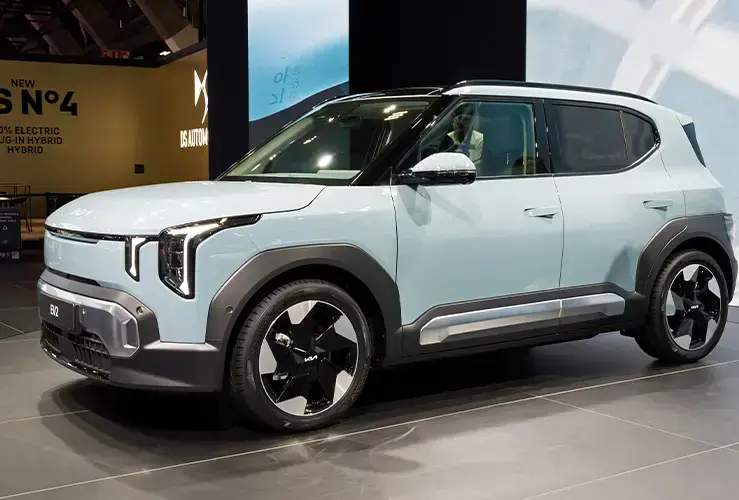
Image credit: VanderWolf Images - stock.adobe.com
Kia EV2
Looking for cheap electric cars rather than an all-mod-cons Beamer?
How about the highly anticipated Kia EV2, which boasts the characteristics of both a supermini and a crossover.
While on the small-ish side, Kia hopes people will pick the EV2 as a main family car, not just a city runabout.
You can choose from two battery setups: a 42.2kWh unit (197 miles of range), and a 61kWh option (278 miles). However, when it comes to the top rated electric ranges, you might be better off with the EV3, which boasts a 375-mile range.
With 400V architecture you’ll be able to recharge the EV2 up to 80 percent in half an hour, assuming the charger can handle it.
It also has plenty of tech to make driving more safe and pleasant: surround view, blind spot monitoring, highway assist, cruise control, collision avoidance tech, park assist, and more.
The entry-level Air trim version will start at about £25,000 and could be one of the best electric cars for those on a budget.
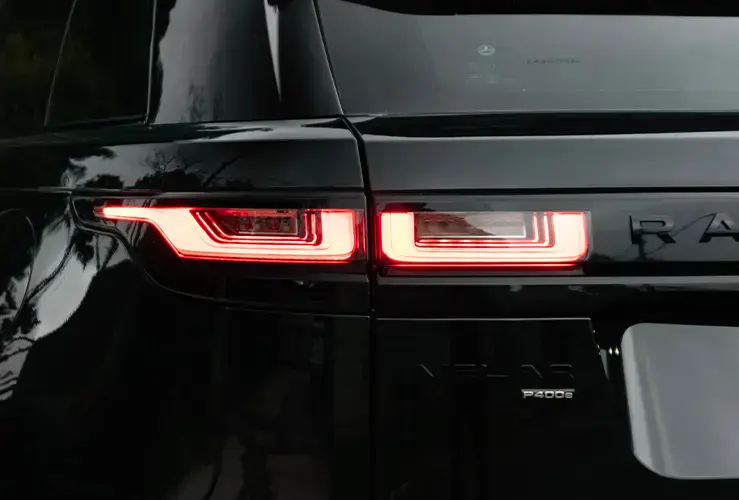
Image credit: PedroHenrique - stock.adobe.com
Range Rover Electric
The boffins at JLR have finally produced an all-electric version of what is probably the world’s premier luxury vehicle. It’s taken them a while, though.
The BEV RR has two synchronous motors, one on each axle. These are fed by a double-stack 117kWh battery pack, which supports charging up to 350kW.
Interestingly, the very specific requirements for this vehicle’s battery pack (it must be able to handle temps of -40 to +50°C) has meant JLR had to make it in-house. The first tranche will be built in Wolverhampton, before a new Somerset gigafactory takes over production later.
It’ll deliver a very punchy 542bhp and have a range of about 330 miles WLTP.
Automotive journalists lucky enough to get behind the wheel of the all-electric Range Rover say it’s quieter and smoother than the fuel version, while being more efficient, and crucially, even better off road (an attribute that the target demographic will appreciate, if not always use!).
While Range Rover is not known as one of the top electric car brands, that could be about to change (not least because all carmakers will become electric car brands within a few years!).
Prices are expected to start between £130,000 to £150,000.
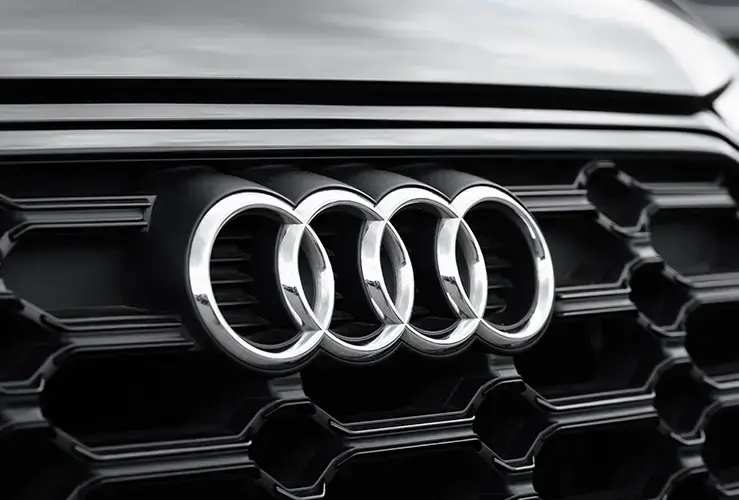
Image credit: Anton Pentegov - stock.adobe.com
Audi Q6 e-tron
The Q6 is a luxury, mid-sized EV from Audi, and is already available to buy across Europe, including the UK.
The vehicle offers the kind of premium interior Audi fans have come to expect, and a range of advanced driver assistance systems. It’s also small enough to park in urban environments yet offers plenty of space for people and things.
As always, range is a critical factor when choosing any EV, and the Q6 is no slouch. You can choose between either a 322 hp single-motor rear-drive unit, or a 456 hp dual-motor quattro variant (with launch control). Range is about 321 miles for the RWD version (with the Ultra package) and approximately 307 miles in quattro setup.
While this range is impressive, this automatic electric is still a way off comparable diesel models. For example, the Q5 TDI diesel model boasts a range of up to 650 miles.
Nevertheless, the Q6 e-tron is sure to delight Audi enthusiasts looking to embrace the coming EV revolution in style.
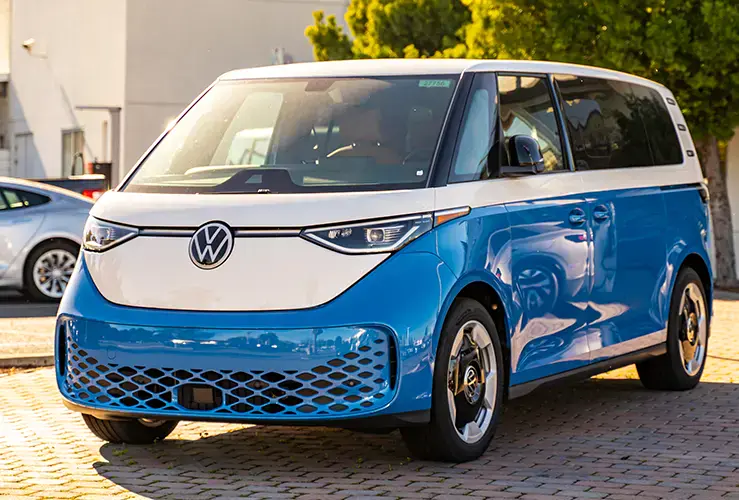
Image credit: Olga - stock.adobe.com
Volkswagen ID. Buzz (expanded range)
2026 will see no fewer than five different ID. Buzz models become available to European buyers, namely five, six, and seven-seater variants, plus the dual motor GTX and the ID. Buzz Cargo commercial van.
The Buzz is basically a retro-inspired MPV, and a sort of electric version of the Caravelle.
While extremely spacious compared to most SUVs (the 5-seater features 1,121 litres of capacity), and while delivering exceptional power (the RWD five-seat version features 282bhp and can reach 62mph in 7.6 seconds), the ID. Buzz is a pricey proposition.
Prices start at £59,940 (5-seater) and rise to £69,912 (7-seater GTX).
This seems expensive enough, until you discover that the Kia PV5 is available for nearly £30,000 less (among the best cheap electric cars with serious people carrying capability).
Nevertheless, this spacious, tech-laden and above all retro-inspired people carrier will be worth every penny to a certain demographic.
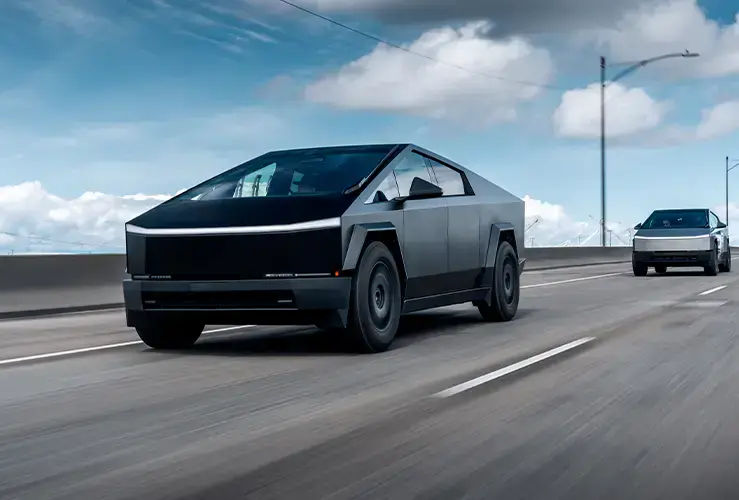
Image credit: Brandon Woyshnis - stock.adobe.com
What about the Tesla Cybertruck?
Bold, angular, shiny - so far the Tesla Cybertruck has only been available for pre-order in the US, Canada and Mexico. For Europeans who’d like to get behind the wheel of this unique off-roader, sadly that situation is likely to remain the same: no European release is expected anytime soon.
This is because the Cybertruck fails European (and UK) safety regulations, largely due to its rigid stainless-steel body, sharp edges, and weight.