



Learn about the 2030 UK-wide ban on sales of new petrol and diesel cars, the later 2035 zero-emissions rule and what it all means for the second-hand car market.
In just a few years, in 2030, you won’t be able to buy a brand-new pure petrol or diesel car and just 5 years after that, in 2035, you won’t be able to buy new hybrids either.
Instead, in around nine years, you’ll only be able to buy new cars and vans that emit zero emissions.
The zero-emissions shift is coming and no one gets to sit it out.
UK ban on petrol/diesel cars is coming
The 2030 UK-wide ban on the sale of new petrol and diesel cars and vans sounds like a hard cut-off line for the combustion engine; a sudden, teary goodbye to the petrol and diesel motors that have played such a key role in our lives for decades.
But in truth, petrol/diesel fuel stations won’t simply disappear overnight. You'll still be able to drive pure petrol and diesel cars for as long as they remain roadworthy.
You just won’t be able to buy any new petrol or diesel vehicles.
But you will be able to buy second-hand petrol and diesels.
But what does the diesel/petrol car ban mean for the used car market?
Firstly, it’s important to note that the 2030 ban won’t spell the end of the ICE (internal combustion engine) used car market. Given that UK cars last between 16 and 20 years after they roll off production lines, that means there might still be a fairly healthy second-hand market for years after 2030.
In this article we’ll explore how the 2030 ban will impact used car buyers across the UK.
What the 2030/35 bans really are
When will petrol and diesel cars be banned in the UK?
The UK had initially planned to ban the sale of new petrol and diesel cars in 2030 (under Boris Johnson), but this was changed to 2035 by then-PM Rishi Sunak. However, when Labour got into power, they went back to the original 2030 ban date, with all new vehicles to be 100% zero-emissions by 2035.
The Paris Agreement, signed at COP21 in 2015, has been a major catalyst in promoting many nations to cut greenhouse gases and work towards climate targets. The decision to ban new sales of petrol and diesel cars was heavily influenced by COP21.
Diesel/petrol car ban: Timeline of changes
1. New petrol and diesel-only cars (pure internal combustion/ICE)
Effective date: 1 January 2030
From this date, new cars powered solely by petrol or diesel engines will no longer be sold in the UK (under current government policy which could, in theory, change).
2. Hybrid and plug-in hybrid models
Allowed until 2035 (under current rules)
Full hybrids (HEVs) and plug-in hybrids (PHEVs) will still be allowed to be sold new between 2030 and 2035, as long as they meet specific emissions/zero-emission criteria (e.g. a minimum electric-only range).
3. All new cars must be zero-emission (100%)
Effective date: 1 January 2035
By this date, every new car and van sold must be fully zero-emission at the tailpipe - essentially battery-electric, hydrogen FCEV, or similarly defined ZEVs.
Any exemptions or extensions?
Micro-volume carmakers (i.e. those with very low sales volumes) will be exempt from the 2030 ban, due to the cost and difficulty of switching to electric powertrains. Small volume carmakers are also exempt from the 2030 ban, but only if their models emit very low CO2.
For example, a low volume, luxury carmaker like Rolls Royce is likely to be exempt from the 2030 diesel/petrol car ban.
It will also still be possible to buy new ICE vans (petrol, diesel, hybrid, and plug-in hybrid) after the 2030 date up until 2035.
Are we ready for the 2030 ban?
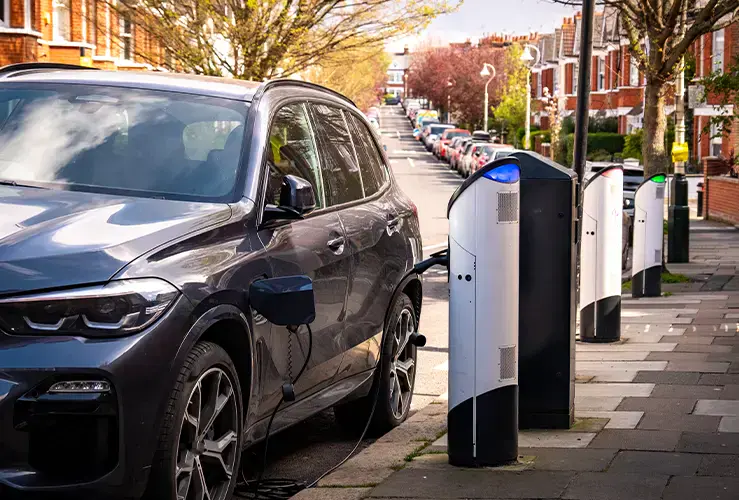
By 2030, the UK will (or at least, should) have a much stronger foundation to absorb the transition from petrol and diesel to zero-emission vehicles. Electric vehicle adoption is accelerating rapidly, with more affordable models hitting the market, longer-range batteries, and vastly expanded charging infrastructure across the nation’s cities and motorways.
Consumer awareness is higher than ever, with many buyers already considering EVs as practical alternatives rather than simply being niche options. Meanwhile, manufacturers are preparing fleets that meet the Zero Emission Vehicle Mandate, ensuring a steady supply of compliant cars.
Taken together, these developments mean that when the 2030 ban arrives, both the motoring public and the industry are far better equipped to make the switch smoothly than they were just a few years ago.
The hope is that growing EV adoption and shifting consumer habits will mean the 2030 ban on new petrol and diesel cars feels evolutionary, not disruptive.
Immediate impacts on used car market
Changes in demand
Will petrol and diesel cars remain desirable?
In the short to medium term, petrol and diesel cars are likely to retain some appeal. Many drivers still appreciate ICE vehicles because they are familiar, offer high performance, and boast solid range (important if travelling in areas where there’s limited charging infrastructure). Those based in the countryside may feel ICE vehicles are better suited to their needs.
Collectors and enthusiasts are also likely to keep ICE vehicles on the road and continue buying and selling them. The sound of the engines, the engineering, and the cultural value of these machines mean that they will continue to be popular.
However, the popularity of electric vehicles is sure to increase due to improved charging infrastructure, lower running costs, and expansion of low emissions zones. At the same time, existing petrol and diesel cars will become more difficult and expensive to keep on the road, and thus resale values are likely to decline generally.
Goodbye to the cheap petrol runabout?
The long-standing idea of the “cheap petrol runabout” or first-time car is likely to fade out over the next decade. As new petrol and diesel cars disappear from dealerships after 2030, and EV options become increasingly affordable and practical, entry-level buyers will shift toward electric alternatives.
Resale value risks
Perceptions of petrol and diesel cars are shifting rapidly. This is already affecting pricing. As buyers increasingly favour electric vehicles, older petrol and diesel models ,especially higher-emission vehicles, face a growing risk of depreciation, meaning their resale values could drop faster than they have in the past.
How will diesel cars hold their value?
In recent years, attention grabbing stories on this topic have appeared in the news. Diesel cars have been much maligned - largely due to the ‘Dieselgate’ scandal which revealed diesel cars were producing far higher levels of nitrogen oxides (NOx) and particulates than previously thought.
Looking in more detail at diesels, the current market picture is mixed. Generally, used diesel prices remain stable. This is because buying a diesel now could deliver cost savings thanks to the powertrain's good fuel economy, lower running costs, and proven reliability. A diesel bought today could still be running well in 5 or more years.
However, buying a new diesel auto or van could make less economic sense if it is likely to be driven in ULEZ, the London Congestion Charge zone, or in one of the UK's other Clean Air Zones (where extra fees would be levied).
Looking to the future, keeping a diesel in good working order will become much more difficult as spares dry up, and the economic argument to go electric gets stronger.
Dealer inventory trends
By 2030, diesel and petrol cars will be banned, and as a result dealers are likely to stock fewer new and used high-emission petrol and diesel cars, focusing instead on models that will remain in demand.
At the same time, the used EV and hybrid market is expected to grow, with more pre-owned electric and plug-in hybrid vehicles becoming available as early adopters trade them in, giving buyers a wider range of zero-emission options.
What about affordability?
Used petrol & diesel cars being potentially cheaper in the short-to-medium term
Used petrol and diesel cars may remain more affordable than new EVs in the short-to-medium term, offering buyers a lower entry point while still providing several years of reliable use.
Used EV pricing trends and affordability gaps
While the stock of used EVs is growing, prices remain relatively high, reflecting strong demand and limited availability, which can make them less accessible for first-time buyers or those on a tight budget.
Total cost of ownership comparisons (fuel vs electricity, maintenance, incentives)
Even if purchase prices are higher, EVs can offer lower running costs thanks to cheaper “fuel” (electricity vs petrol/diesel), reduced maintenance, and government incentives, meaning the total cost of ownership may be competitive or even lower over time.
What should you think about as a used car buyer?
For petrol & diesel buyers
Pros and cons of buying pre‐2035 internal combustion engine (ICE) cars
Buying a pre‑2035 petrol or diesel car can offer immediate affordability, familiarity, and established service networks, but owners may face faster depreciation, higher fuel costs, and potential restrictions as zero-emission vehicles become the norm.
Considerations for future resale value
Resale value for ICE cars is likely to decline over time, particularly for older or higher-emission models, so buyers should weigh short-term savings against the potential for lower returns when selling.
Emissions zones and city access restrictions
Increasingly strict emissions regulations and low‑emission zones in urban areas may limit where ICE cars can be driven. This is likely to impact convenience and potentially increase costs through congestion charges or fines.
For EV buyers
Benefits of going electric early
Electric cars, by 2030, will be commonplace. But switching to an electric vehicle now (or soon) may lock in lower running costs and tax incentives, whilst future-proofing your driving ahead of stricter ICE regulations.
Charging infrastructure considerations
Access to reliable home or public charging is key to making an EV practical and stress-free.
Battery health and warranty
A strong battery warranty and good maintenance can protect against degradation and help preserve resale value over the life of the vehicle.
For hybrid buyers
Hybrid as a compromise?
Not sure which vehicle type to choose? Hybrid vehicles can offer a middle ground, providing lower emissions and some electric driving range while retaining the familiarity of a petrol or diesel engine.
Future relevance post-2035
After 2035, hybrids are likely to become less relevant, as fully zero-emission vehicles dominate new car sales and policy incentives shift away from any exhaust emissions.
The dealership perspective
How UK dealerships are preparing
UK dealerships are adapting to the 2030 transition by expanding EV offerings, adjusting stock levels, and educating customers about the various zero-emission options on the market.
The role of certified pre-owned EV programs
Certified pre-owned EV programs should help build buyer confidence in the used EVs by offering inspected vehicles, warranties, and ongoing support for first-time electric car owners.
Training and inventory shifts
Dealerships are investing in staff training and reshaping inventory to focus on EVs and hybrids, ensuring they can meet growing demand and regulatory expectations.
Key takeaways
From 2035 diesel and petrol cars will be banned, marking a clear shift toward zero-emission vehicles, but used car buyers still have opportunities today. Petrol and diesel cars will remain available and practical for several years, particularly hybrids, low-emission diesels, and models outside major urban zones.
To make the most of the transition, as a buyer you should consider total cost of ownership, future resale value, and any local emissions restrictions, while also exploring electric and hybrid options to stay ahead of the curve.
Planning carefully now by choosing well-maintained, popular models and keeping an eye on emerging EV inventory, will ensure a smoother more cost-effective journey toward the UK’s electric future, and your place in it.