


‘Ghost number plates’ are being used by criminals to help them commit a range of illegal activities - from flouting speed limits to much more serious crimes. But what exactly are ghost plates, how do they work, and how might AI help detect them?
What are ghost number plates?
Ghost number plates are vehicle registration plates that have been modified to make them difficult for cameras to read. Sometimes referred to as stealth plates, they are designed to interfere with Automatic Number Plate Recognition (ANPR) technology.
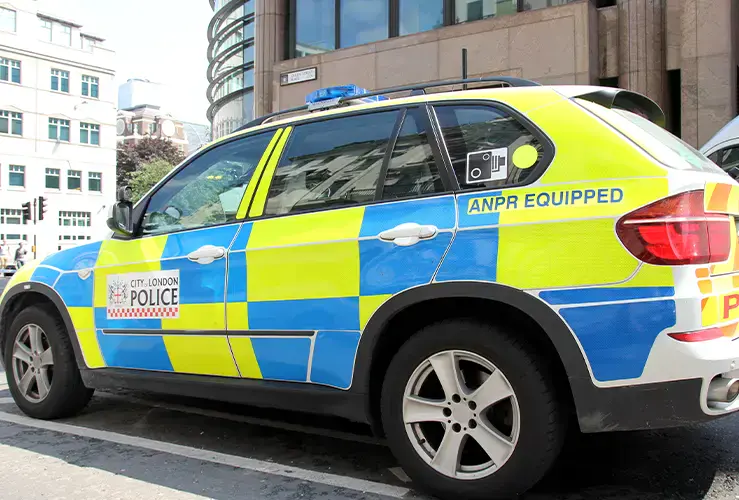
ANPR cameras are widely used by police, local authorities and other organisations to identify vehicles by reading their registration marks.
ANPR cameras can:
- help detect speeding motorists
- identify untaxed or uninsured vehicles
- enforce clean air zone charges
- help with police investigations
- assist with parking charge enforcement
Ghost plates are designed to get around this long-established technology. They may look like ordinary registration plates to the naked or untrained eye, but actually incorporate materials or modifications that make their characters difficult for cameras to recognise. Some such plates have raised or 3D lettering, along with reflective properties, that can confuse ANPR systems.
Ghost plates can enable drivers to avoid detection, whether that's to escape a speeding fine - or to conceal a vehicle's movements from the police.
It's worth distinguishing ghost plates from cloned number plates. Cloning involves copying the registration number of another legitimate vehicle and displaying it on a different vehicle. Ghost plates, meanwhile, are designed to make the registration itself difficult for cameras to read.
Both pose big challenges for police, but in different ways.
Unwitting ghost plate buyers
While some drivers actively seek out non-compliant ‘ghost plates’ - others may have bought them without knowing they contain materials or features that make it difficult for ANPR cameras to read them.
What do ghost number plates look like?
One of the difficulties with ghost plates is that they don't always look unusual.
Some incorporate transparent films or other modifications - such as raised 3D digits - that affect how the plate appears to camera systems, despite looking relatively normal when viewed by a person.
This is particularly problematic because conventional ANPR technology relies on being able to capture and interpret the characters on a passing vehicle's registration plate.
If a camera cannot read those characters properly, the vehicle may not be identified or matched against the relevant databases.
It's not just a problem for traffic police looking to enforce speed limits. A vehicle using a set of ghost plates might avoid being recognised by police ANPR systems when travelling through areas where, under normal circumstances, its presence might otherwise raise an alert.

Ghost number plate sprays: Do they actually work?
A quick search online reveals various products marketed as ‘ghost number plate sprays’ or anti-ANPR sprays. These are generally promoted as a way of making registration plates harder for cameras to photograph or read.
The claims surrounding these products can be rather bold, with suggestions that they can make a vehicle effectively invisible to speed cameras - as well as other number plate recognition systems.
And even if a product is able to affect one type of camera, it doesn’t mean it will work with every ANPR system.
Are ghost number plate sprays illegal?
Ghost sprays are not illegal to buy, but under Regulation 11(2) of the Road Vehicles (Display of Registration Marks) Regulations 2001, it is illegal to do anything to a numberplate that makes it difficult to be read by a human or an ANPR camera.
Offenders can face fines of up to £1,000.
But the authorities are taking note. Modern number plate recognition technology is evolving, and police are increasingly using specialist equipment to identify vehicles with altered or non-compliant registration plates.
Can new AI cameras detect ghost number plates?
As in so many areas of modern life, AI could be about to change things.
Traditional ANPR cameras use optical character recognition (OCR) technology to capture registration marks and convert them into readable text. The registration can then be checked against relevant vehicle and police databases.
But what happens when a plate has been deliberately altered to prevent this process from working?
Police forces are now exploring additional technology to help identify vehicles that conventional ANPR cameras might miss.
In September 2026, the Government announced a nationwide crackdown on illegal number plates, supported by a new National Roads Policing Coordination Centre (NRPCC).
The initiative includes trials of specialist technology, including goggles designed to help officers identify number plates that have been modified to make them unreadable to cameras.
And in September 2026, technology company MAV Systems began testing cameras that combine infrared and colour images with AI algorithms. A camera near the Dartford Crossing reportedly identified more than 1,000 suspected ghost plates in a single day. Other locations recorded hundreds or even thousands over 24 hours.
AI-assisted ANPR: What are the limitations?
Despite these advances, AI is not yet a guaranteed solution.
- Different materials: Ghost plates use different coatings, films and character constructions, meaning one detection method may not identify every type.
- Environmental conditions: Lighting, weather, viewing angles and vehicle speed can affect image quality.
- False positives: AI may flag legitimate plates as suspicious, requiring further checks.
- Incomplete coverage: Not every UK ANPR camera has the latest detection capabilities.
Nightfox Whisker
Authorities are also developing their infra-red detection systems. One example comes from Greater Manchester Police.
The force has been using specialist infrared detection equipment, known as Nightfox Whisker devices, to help officers identify ghost plates.
The equipment enables officers to examine registration plates that may otherwise evade infrared ANPR cameras. Once a potentially altered plate has been identified, officers can use the visible characters to help establish the vehicle's registration.
What does the DVLA say about ghost number plates?
The Driver and Vehicle Licensing Agency (DVLA) has clear requirements governing how vehicle registration plates must be displayed.
In the UK, number plates must meet specific standards relating to their construction, appearance and visibility. Among other requirements, they must:
- Be made from reflective material.
- Display black characters on a white background at the front and a yellow background at the rear.
- Use the prescribed ‘Charles Wright’ character font - and spacing.
- Display characters that are not removable or reflective.
- Meet the relevant British Standard, BS AU 145e, for new or replacement plates fitted since September 2021.
The intention is straightforward enough: registration plates must be clearly visible and readable by both people and camera systems.
Aside from attracting a fine of up to £1,000, drivers displaying incorrectly formatted or non-compliant number plates are likely to fail their MOT.
The Government has also been considering tougher measures to tackle illegal number plates, including stronger penalties and improved checks on number plate suppliers.
The DVLA works alongside the police and other agencies to identify non-compliant plates - and to investigate businesses involved in their supply.
You can find the full requirements in the official GOV.UK guidance on number plate rules.
The future of number plate recognition
Ghost number plates highlight an ongoing challenge for road policing - namely, criminals seeking innovative ways to get around established high-tech systems like ANPR.
But the increasing use of specialist infrared equipment and improvements in ANPR systems are giving police additional ways to tackle the problem. And while research into AI-powered solutions is still in its infancy, it could also present ways to prevent ghost-plate crime in the future.
For motorists, the message is fairly simple. Number plates must remain clearly visible and compliant with UK regulations. Trying to make a vehicle invisible to cameras could result in hefty fines, but it could also have much more serious ramifications if the vehicle is connected to criminal activity.
Frequently Asked Questions
A ghost number plate is a vehicle registration plate that has been modified to make it difficult for cameras - particularly ANPR systems - to read. It may look relatively normal to the human eye but incorporate materials or alterations intended to interfere with automated recognition.
Yes. Deliberately altering a registration plate to make it difficult to read or to evade enforcement can breach UK number plate regulations. Drivers must display plates that comply with the relevant legal standards. But as mentioned above, some motorists do buy non-compliant plates unwittingly.
Some ghost plates are designed to evade conventional ANPR cameras. However, police are increasingly using specialist detection equipment, including infrared technology, to identify altered plates. New approaches involving AI are also being explored.
Products marketed as ghost plate sprays claim to interfere with camera recognition, but their effectiveness should not be taken at face value. Different camera systems use different technologies, and there’s no guarantee that such products will prevent a vehicle from being identified.
Drivers displaying illegal or non-compliant registration plates can face fines of up to £1,000. Depending on the circumstances, further legal action may follow.