


For all its detractors, the SUV still holds huge appeal for UK motorists, offering practicality, comfort and a higher driving position. We look at why the shift to electric vehicles has reinforced its popularity - rather than pushed drivers towards smaller cars.
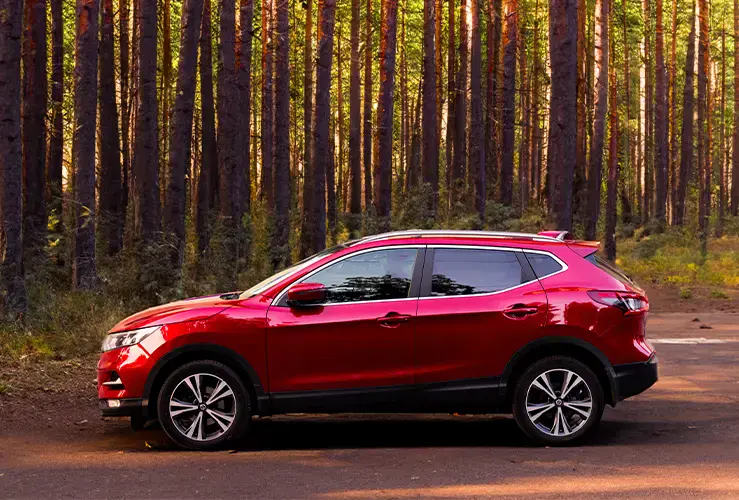
Image credit: Ruslan - stock.adobe.com
The UK’s love affair with the SUV - or sports utility vehicle - goes way back to the 1970s, when the Range Rover became the ultimate symbol of the well-heeled who needed to get from A to B in style, occasionally by way of streams, fields or muddy tracks.
Today, the SUV is no longer the preserve of successful farmers and financiers. You’re as likely to see an SUV parked outside a semi in Sunderland as a farmhouse in Frome or a residence in Richmond.
Of course, a big reason for this is that buying an SUV today is within the financial reach of many more than in the 1970s (both in terms of lower prices and higher wages).
In the 1990s, the Toyota RAV4 and Honda CR-V hit the roads of the UK. They were popular, but couldn’t hold a candle to the Nissan Qashqai, which arrived in 2007 and essentially created a brand-new segment - the “crossover SUV”.
The Qashqai boasted a high riding position and rugged SUV styling, but with the running costs and manoeuvrability of a hatchback.
Nearly 20 years later, the Qashqai remains a UK best seller but is joined by other popular models like the Ford Puma and the Kia Sportage. The best SUVs for UK roads offer a modest footprint (for the narrow roads and limited parking) with rugged suspension (to deal with potholes) - and models like these fit the bill.
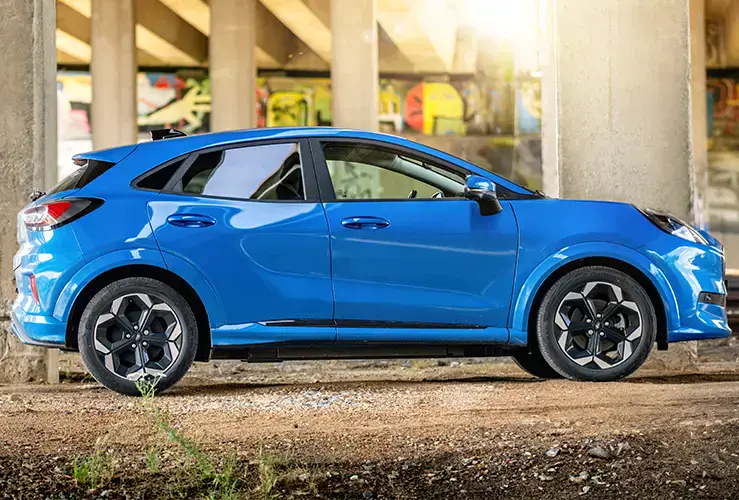
Image credit: Jan - stock.adobe.com
The EV revolution
A few years after the Qashqai was released, Nissan brought out the electric Leaf - marking another huge shift in motoring.
Many believed the introduction of the electric vehicle would lead to smaller, lighter cars.
However, many of today’s most popular cars are still SUVs or crossovers.
So why do motorists in the UK and around the world, still favour SUVs even when switching to electric power?
SUVs suit modern family life
In short, the SUV is an extremely versatile vehicle type. You can use it to handle the school run, shopping trips, holidays and hobbies.
Higher rooflines also mean you can fit in more passengers, and more cargo.
Additionally, for growing families, flexible seating and big boots hold a lot of appeal.
Indeed, tasks that were formerly the preserve of estate cars and MPVs can be managed with ease by an SUV.
The EV revolution, for all its merits, has not changed these very practical needs.
Whether you need to transport a pram, the week’s shopping, your kids or an elderly relative it’s all so much easier with an SUV.
The high driving position remains popular
Another big plus-point for the SUV is its high riding position. Many of us prefer to sit higher above the road, since it offers better visibility and gives us a feeling of confidence.
It’s also much easier to get in and out compared to a hatchback or saloon. For older drivers or people with families, these advantages are especially attractive.
This preference is independent of whether the vehicle in question uses petrol, diesel, or electricity.
EV technology works well in SUVs
The layout of the modern SUV is well suited to EV tech, mainly because electric batteries can be located beneath the body. What’s more, floor-mounted batteries create a lower centre of gravity, enhancing stability and handling.
These kinds of large vehicle footprints make it easier to accommodate bigger battery packs and that extra battery capacity helps deliver the range that today’s consumers expect.
At their best, SUVs with electric drivetrains show that it's possible to meet the practical needs of motorists while offering a long range.
Additionally, the manufacturers are happy too, because they can market these vehicles as premium products and charge a higher price as a result.
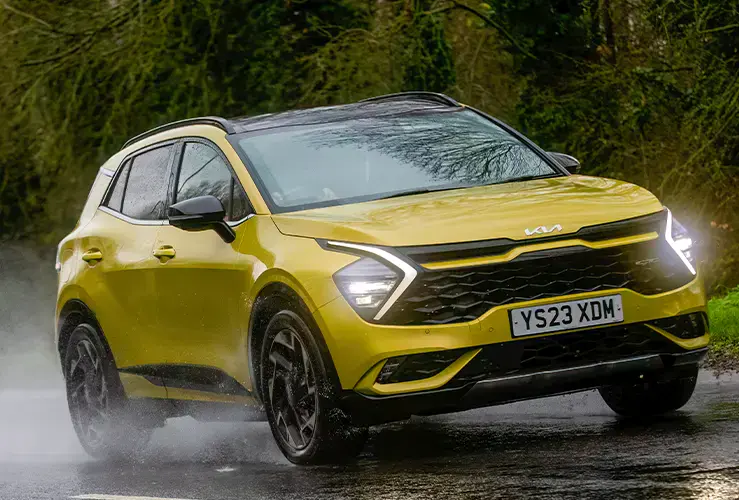
Image credit: sue - stock.adobe.com
Some of the best SUV EVs for UK roads
Here’s a rundown of which SUVs are best suited to UK roads. In terms of the ‘best family SUV’, all of these might be suitable, depending on your exact needs.
Model | Key benefits for UK roads |
Nissan Qashqai | Easy to drive in towns, good fuel efficiency (and hybrid options), comfortable ride, very popular, cheap to run and repair (among the best small SUV cars) |
Kia Sportage | Strong warranty, roomy interior for families, good tech, smooth on motorways and decent on rougher UK B-roads (one of the best family SUVs) |
Ford Kuga | Great handling for UK country roads, plug-in hybrid option, practical boot space, widely available parts/service network |
Toyota RAV4 | Very reliable, excellent hybrid fuel economy, comfortable long-distance cruiser, strong resale value |
Volvo XC40 | High safety reputation, refined interior, comfortable ride quality, good electric (Recharge) versions available (another smaller SUV car) |
NB: SUVs with automatic gearboxes have become the default option, rather than an optional extra.
Why some are worried about the popularity of SUVs
But SUVs, even in their EV form, do have some downsides.
For a start, they require more resources to build which has an upfront cost to the environment (bigger batteries need more rare earth minerals like lithium). They also consume more energy than smaller EVs.
Additionally, due to their weight, they result in more tyre and road damage, while their height and mass pose a much greater risk to pedestrians and cyclists.
SUVs also simply take up more space, making parking more difficult.
Consumer demand shapes the market
However, despite their downsides, SUVs remain very popular. And manufacturers are quite happy to meet that demand - especially when they can command higher profit margins (compared to smaller cars).
The popularity of SUVs has meant carmakers have generally released electric SUVs before other vehicle types. As a result of this, consumers have more SUV options than ever and this increased choice simply reinforces the trend.
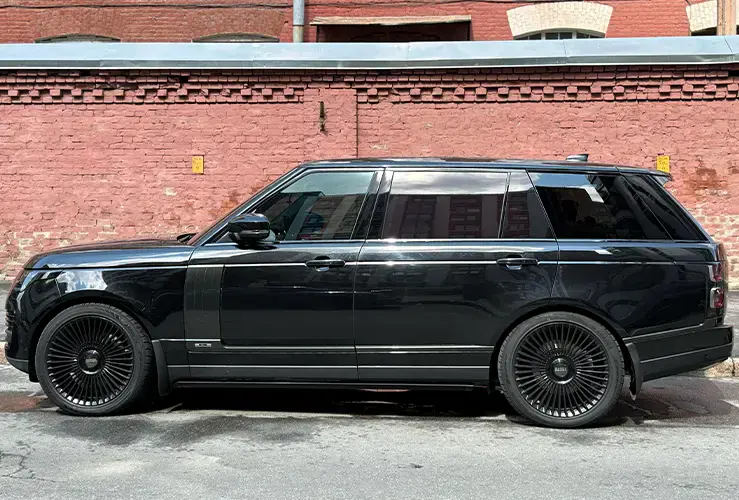
Image credit: Dmitry Presnyakov - stock.adobe.com
Are SUVs here to stay?
The UK’s love affair with the SUV is likely to continue for some time. However, smaller EVs are becoming more common and may be increasingly favoured by those who live in cities, where running a larger vehicle is simply not practical.
SUVs continue to offer an attractive balance of practicality, comfort and versatility. Concerns over size may, in time, be diminished by improvements in battery efficiency, where smaller batteries will offer the range of today’s larger batteries.
So while more and more consumers are being won over by electric vehicle technology, they still value the advantages of the SUV.
Conclusion
The rise of the EV has dramatically changed how vehicles are powered, but it hasn’t changed what car owners want from their vehicles.
Consumers still want practical vehicles that offer space, comfort, and sense of comfort on the road.
With this in mind, it's not surprising that many motorists gravitate towards electric SUVs, rather than switching to something smaller.
The future may well be electric, but it’s probably still going to look like an SUV.