



Public policy around electric vehicle charging has, however inadvertently, favoured homeowners with off-street parking, who can access the lowest-cost electricity tariffs. How might future policy ensure that renters, flat dwellers and those without driveways can enjoy similar savings?
There’s an uncomfortable truth when it comes to running an electric car.
If you can’t charge at home and must use public vehicle charging stations, your running costs are unlikely to differ much from owning a petrol or diesel vehicle - and may even be worse.
For millions of UK drivers, they couldn’t get a home charge point set up even if they wanted to.
The result? A stark divide between those with home EV chargers, and those who have to rely on public charging systems.
The EV dream was built around charging a car at home
For the last two decades the government, industry, and environmental groups have all been pushing for the adoption of EVs. Each group had their own motivations, but all tended to lean on a key idea: electric cars would save motorists money.
But those early economic calculations were based on having a home charger that could take advantage of cheaper overnight electricity rates.
The difference in cost of charging at home compared to using a public EV car charger can be huge: the cheapest EV tariffs (like Octopus Intelligent Go) could mean a home charge could cost £4-5.
In contrast, an 80% charge (48kWh) on a standard 50kW rapid public charge point could cost more than £28, while the same charge at an ultra-rapid charger (such as Ionity) could easily exceed £40.
While government incentives and carmaker marketing often focuses on the convenience of home charging, in truth, many UK households simply cannot have a home electric car charging system installed because they don’t have off-street parking, the electrical capacity, and/or face other restrictions.
It is home electric car charging points that can transform the EV ownership experience.
In short, the EV revolution was designed around being able to charge a car at home - essentially around homeowners with driveways.
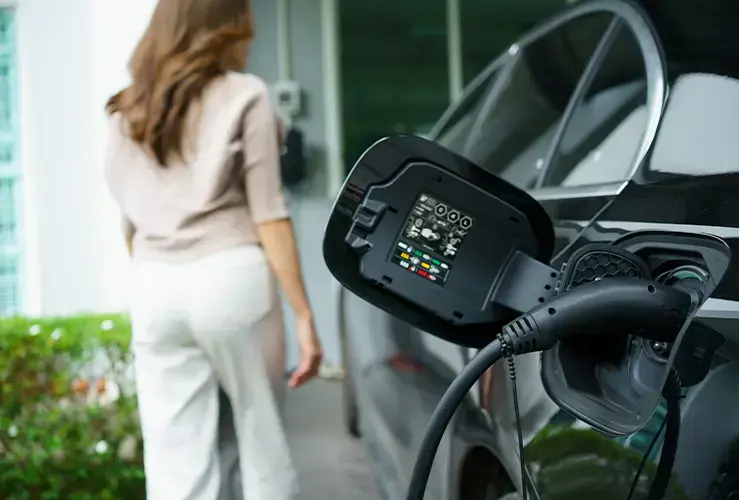
The driveway advantage: 7p vs 79p per kWh
The greatest benefits of EV ownership are felt by those who own detached or semi-detached homes, with off-street parking.
Being able to park up right outside your home and plug into a domestic electric car charging point means lower charging costs, more convenience, better battery management, and last but not least, less time spent waiting for chargers.
This ‘class divide’ is even bigger when you look at being able to access smart tariffs and overnight rates.
For example, a homeowner might be able to charge their vehicle at just 7p/kWh overnight, whereas someone using a public charger might have to pay as much as 79p/kWh.
EV charger installation woes for flat dwellers and terrace-house residents
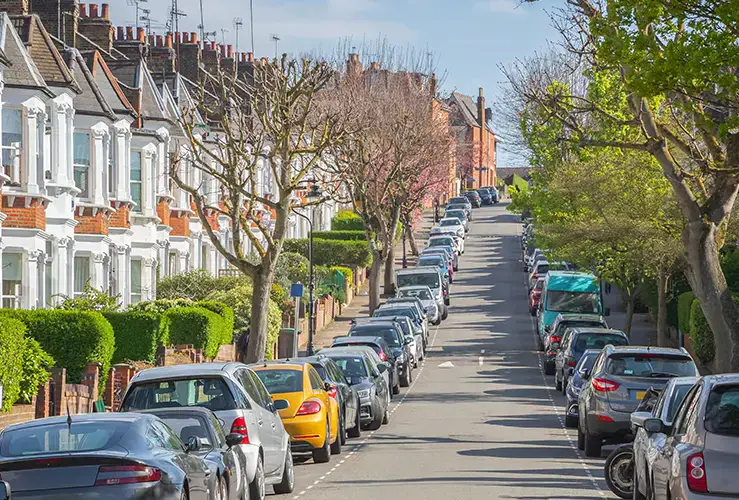
Millions of UK households simply do not have a driveway, making EV charger installation difficult or impossible.
Those living in urban environments often only have one option to charge their EV: the nearest public EV charging station. And with using public systems comes a host of other challenges - including availability (they’re often busy in city locations); reliability (they can develop faults); queuing (and the time spent doing so); safety worries when charging late at night; and of course, higher tariffs.
Some might reasonably wonder: is EV ownership actually cheaper for motorists like these?
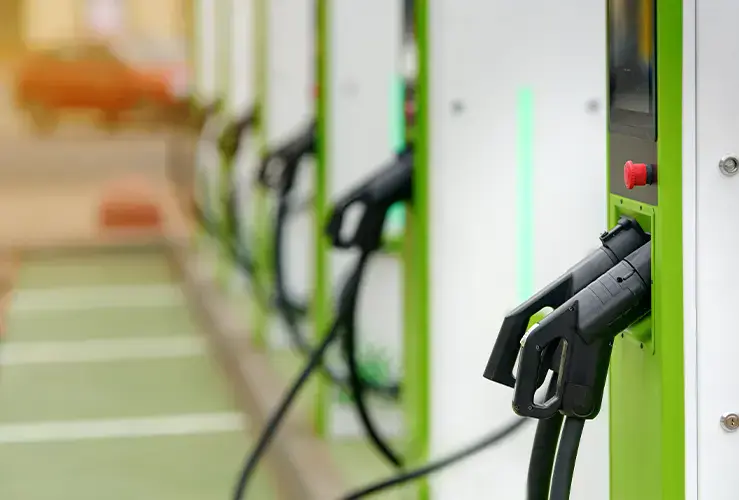
How public EV car chargers are creating a two-tier cost system
Because public charging rates are considerably higher than home charging tariffs, running an EV could come with dramatically different costs depending on where it is charged.
The following table looks at the costs of running a Tesla Model Y (the UK’s most popular EV) which typically achieves around 4 miles per kWh in mixed UK driving.
Assumptions:
- Annual mileage: 10,000 miles
- Efficiency: 4 miles/kWh
- Annual electricity required: 2,500 kWh
Charging Method | Typical Electricity Cost | Cost per Mile | Annual Cost |
Home charging (cheap overnight tariff) | 7p/kWh | 1.75p | £175 |
Home charging (standard EV tariff) | 15p/kWh | 3.75p | £375 |
Home charging (standard domestic tariff) | 25p/kWh | 6.25p | £625 |
On-street residential charger | 45p/kWh | 11.25p | £1,125 |
Public fast charger (50kW) | 65p/kWh | 16.25p | £1,625 |
Public ultra-rapid charger (150kW+) | 79p/kWh | 19.75p | £1,975 |
Public ultra-rapid charger (premium motorway sites) | 89p/kWh | 22.25p | £2,225 |
As this table shows, there’s a real risk of “fuel poverty” emerging with the realm of EV ownership; two drivers with the same vehicle can face dramatically different costs.
The social housing challenge
EV owners who live in social housing are often at a disadvantage when it comes to charging costs. Many social housing residents do not have dedicated parking that is close enough to their home to install an EV charger.
Additionally, retrofitting electric car chargers is often expensive, complicated and inconvenient. Further barriers can emerge if the landlord objects to any modifications.
The uncomfortable truth is that EV adoption may become the preserve of better-off households.
Public policy on EVs inadvertently winded up favouring property owners.
Why public charging feels more like using petrol stations
Being able to use a home electric vehicle charger is passive and convenient - it saves time.
On the other hand, public charging requires a driver to plan ahead, to travel to the charging location, to wait until a charger becomes available, and then to manage payment and associated membership schemes.
So there’s a real convenience gap developing, too: time is a cost in itself - it’s not all about paying for electricity.
The fairness problem for taxpayers
There’s no denying that government subsidies have accelerated the adoption of EVs across the UK. But the biggest benefits have been felt by people with higher incomes, who own their own home, and have private parking available.
With this in mind, does current public policy on EVs adequately serve the needs of those who rent or live in urban areas?
How other countries are addressing the gap
What can other countries teach the UK about giving more people access to convenient, affordable charging?
In Oslo, EV owners have access to more than 2,100 public charging points, and enjoy perks like toll extensions, free or discounted parking, and road tax subsidies.
In Amsterdam, there are many kerbside AC charging networks which allow residents without driveways to easily charge on-street.
The capitals of Norway and the Netherlands have shown that it is possible to increase access to public charging systems for those who don’t have off-street parking.
Things like lamp-post chargers, residential charging hubs, and community charging schemes can all be harnessed to great effect.
Can technology help solve the divide?
Technological developments, as ever, might provide some solutions.
One of the most exciting developments is wireless charging. Current systems are able to charge at 90-95% efficiency, while manufacturers have agreed standards to ensure compatibility. However, wireless charging is not yet mainstream or widely available, although some manufacturers are offering it as a premium or add-on service.
Then there's kerbside charging, where systems are installed on the street by the pavement.
Another potentially convenient development is battery swapping - where you sign up with a firm that offers Battery-as-a-Service (BaaS), enabling you to swap out a flat battery for a freshly charged one. However, while battery swapping is common in places like India and China, it has not been adopted in Europe (although some commercial and taxi firms do use it).
Then there are ultra-fast electric car chargers, which are widely available at UK motorway services, but as mentioned, can cost as much as 79p per kWh.
Finally, there’s vehicle-to-grid technology, where EVs draw power from the grid, and discharge stored energy back into it. While this tech could potentially cut charging costs dramatically, a huge amount of infrastructural investment would be required to make it happen.
In the short and medium term, these solutions may seem like distant possibilities, rather than realistic solutions that are just on the horizon.
Image credit: Jan - stock.adobe.com
The risk of an EV class divide
It’s clear that homeowners with chargers and off-street parking enjoy much lower charging costs, more convenience, and an overall better ownership experience.
Conversely, those who must use public chargers face higher costs, significantly more hassle, and a larger degree of uncertainty.
While there has been much talk of EVs versus petrol/diesel ownership, perhaps the real divide revolves around whether or not you have a driveway.
How the next phase of electrification could be fairer
For more motorists to enjoy the cost savings of electric vehicles, adoption cannot rely only on whether or not you have a driveway.
Instead, public policy might shift towards making public charging more affordable, more reliable, and more widespread.
For the EV transition to be considered a success, those who don’t own their own homes need to be able to access the same benefits as everyone else.
In short, the future of motoring is undoubtedly electric, but its success should not depend on whether you are able to park outside your front door.