


Buying a used car from a private seller is not as straightforward as it once was. From “clocking” to VIN fraud and car financing scams, there are various things to watch out for. In this guide you’ll learn how to tell if a car has been clocked or otherwise presented fraudulently, how to spot other car buying scams, and how to identify a fake car ad.
Demand for used cars in the UK continues to increase, with more than 4 million sold in the first half of 2025 - bringing figures to within touching distance of pre-pandemic levels.
Sadly, however, such a buoyant market also continues to attract criminals, keen to make a quick profit on unsuspecting used car buyers.
Car clocking - where criminals roll back a car’s mileage to make it more attractive to buyers and has become one of the main car scams in recent years.
Then there’s ‘title washing’ - where a car’s identity has been altered to disguise the fact it has been classed as a write off (often categories ‘S’ or ‘N’). Such vehicles may have been poorly repaired and may be extremely dangerous to drive (for example, because the crumple zones may fail to work as required in a collision).
VIN Cloning/identity fraud is another problem area - which often goes hand-in-hand with title washing; where thieves put the Vehicle Identification Number (VIN) from a legitimate, registered car onto a stolen or salvaged one.
Other issues facing today’s used car buyers include “hidden liens”, a car financing scam where a seller attempts to sell a car on which they still owe money on a loan with missing or forged paperwork.
In this article, we’ll reveal the telltale signs that a prospective used car isn’t quite what it’s being made out to be, and what you can do to verify its identity. We’ll also offer tips on how to spot car scam adverts which have been rising steadily with the advent of online marketplaces, and cover other common vehicle buying scams.

Clocking/car odometer tampering
Estimates suggest there could be between 2 to 2.6 million cars on UK roads that have had their odometers tampered with.
How to check the mileage of my car?
If you’ve come across a used car for sale and want to check its mileage, your first port of call is the gov.uk’s MOT History Checker (it’s free). Being able to find if the vehicle passed its last MOT, you’ll discover what the recorded mileage was at the time. Ensure this tallies with what the seller is saying the mileage is.
Additionally, alarm bells should ring if the car looks more worn than the mileage suggests. For example, if a vehicle has a very worn steering wheel, seats and pedals, yet has a purported mileage of just 50,000 miles, it may be too good to be true. UK cars average 10,000–12,000 miles/year, so ensure this tallies with the vehicle’s stated age.
Also take some time to scrutinise the car’s service history and look out for any suspicious entries. Ideally, you want to see real receipts, not stamps. It’s also a good idea to contact any listed garages and see if the reported service/maintenance work did actually take place.
Check the service book for consistent car odometer readings with each entry (ensure they increase as expected). Be suspicious if all the stamps look like they were written in the same ink, or in the same handwriting. If there’s no service history, it’s best to walk away, especially if the mileage is stated as being low.
You might also consider requesting a professional history check: this is a comprehensive history check using the vehicle registration number that can reveal mileage discrepancies from official sources like the DVLA, insurance companies, and finance firms.
You should also take a look under the bonnet - a car with a lot of grime on and around the engine bay is one that has likely been on the road for a while.
Also keep an eye out for premature wear. Be aware that components like the cambelt, clutch, and turbocharger usually need to be replaced around the 75,000 to 125,000 mile-mark. A clocked car may be sold by a car scammer to conceal the fact that these are due for replacement.
It’s also a good idea to test drive any car you are considering buying. Listen out for rattles and clunks that you wouldn’t expect with a younger car. Poor responsiveness may also be a sign the car is on the older side.
Title washing
‘Title washing’ is a key risk to be aware of when car buying. Frauds title-wash cars whose previous insurance write-off status or serious damage history has been concealed - often by moving it between countries or exploiting gaps in reporting. Despite the fact that the UK has relatively strong systems (HPI, DVLA, MIAFTR etc), title washing can and does still happen.
The first step is to carry out a HPI (Hire Purchase Investigation) check, which is a history report for a used vehicle that verifies it's not stolen, hasn't been written off, doesn't have outstanding finance, and other important details. A number of companies offer this service.
You’ll be able to see information such as:
- Insurance write-off history (Categories A, B, S, N)
- Mileage discrepancies
- Outstanding finance
- Previously scrapped or exported status
- Police theft markers
If a seller discourages a history check, you should treat it as a big red flag and walk away as it could be a car scam.
Check the MOT history carefully
You should also use the government’s MOT checker. Warning signs to look out for include sudden large mileage drops (which suggests odometer tampering), and any long gaps with no MOTs (which might mean possible time overseas or being off-road after damage). Also look out for repeated failures for structural corrosion, airbags, or suspension - all very bad signs.
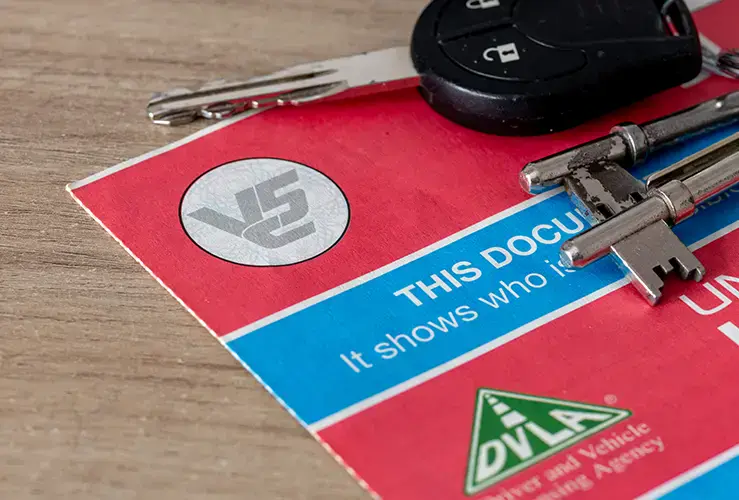
You should also examine the V5C logbook carefully. Things to look out for include a duplicate V5C (seller might claim they “lost the old one”), and different VIN or suspiciously altered VIN on the car. Also keep an eye out for any recent change of ownership where there has been a very short holding period, or if it was first registered abroad (which may indicate repairs overseas and title washing). Anything untoward related to the V5C could suggest a vehicle buying scam.
VIN Cloning/identity fraud
Ideally, you would also inspect the VIN in all locations, and check that VINs match in the windscreen plate, the driver’s side door frame (B-pillar) and the engine bay stamped chassis number. Signs of tampering include fresh weld marks, uneven or mismatched rivets, and of course scratched-off stamping, all of which mean you could well be dealing with a car scammer.
Heavy signs of repair is another clue that all is not as it should be. Look out for mismatching paint jobs, oversprays, and different panel gaps (left versus right).
It’s also worth noting that airbags usually deploy after a severe crash. There may be clues that airbags were replaced cheaply or not at all: the steering wheel or dashboard might look newer than surrounding materials; the airbag light might not illuminate upon ignition; and uneven seam lines may be visible where airbags deployed.
Other clues:
Is the car being sold especially cheap compared to similar models? Is the seller reluctant to let you view the car in daylight/good lighting? Does the seller refuse an independent inspection? Are they traders pretending to be independent sellers? Any of these should trigger alarm bells.
Biggest red flags at-a-glance
- The seller doesn’t want to show you the V5C
- No receipts for repairs
- Recently registered keeper
- Cheap price - and a seemingly rushed sale
- Mismatched VINs
- Clean history but the car shows obvious crash repair signs
- MOT mileage inconsistencies
Why do criminals “title wash” vehicles?
Criminals "title wash" vehicles to erase their history of damage, salvage, or theft so that they can sell them on, usually at a much higher price than they are worth. By manipulating or forging documents, they can create a "clean" title that hides major issues, making the vehicle appear more valuable and less risky to unsuspecting buyers.
Hidden liens
“Hidden liens” is a type of car financing scam and, in relation to a car, usually means there is outstanding finance, logbook loans, or a category of interest recorded by a creditor. If you unknowingly buy a car with finance owing, the lender can legally repossess it - even if you bought it in good faith. With this in mind, it's important to carry out an HPI check (or a similar service) that will be able to uncover such illegal activity.
If a seller is trying to hide the fact there is outstanding finance on a vehicle, they are likely to get caught - eventually. Despite this, however, it does still happen.

How to spot a fake or suspicious car advert
Fake car adverts posted by car scammers have unfortunately become more prevalent in recent years. They are often placed on online market sites like Facebook Marketplace, Gumtree, and AutoTrader.
Telltale signs of a fake car ad include:
The price is too good to be true
Is it significantly lower than ads for similar models?
Stolen or very few photos
Fake ads may feature photos that have been lifted from Google or even stock photo sites. There may also only be a couple of photos - whereas a real ad often has several from different angles. You can run a reverse image check on most search engines if you’re unsure.
The seller won’t let you view the car
Common excuses include “I’m away with the military”, “the car is in storage / overseas” and “I can deliver it via a shipping company”. If you are given these excuses, it’s almost certainly a scam.
They ask you for a deposit or money upfront (take-deposit scam)
The ‘take-deposit scam’ is where someone posing as a real seller online asks for a holding deposit, payment, or transportation or insurance fees upfront, before the vehicle has been viewed.
So, if no in-person viewings are allowed, the seller claims to be abroad, or appears to be using stock photos instead of real photos, it’s likely to be a take-deposit scam.
You should never send a deposit for a car you haven’t seen in person.
Odd communication patterns
Look out for poor spelling, grammar, or scripted replies. If the seller avoids answering specific questions, it could be a red flag. If they are overly keen to make a sale, combined with being reluctant to provide certain information or arrange viewings, it could well be a scam.
Mismatched details
Check that the VIN matches on the V5C and chassis plate. Also ensure that the registration matches the model/colour on the DVLA checker, and that the mileage aligns with its MOT history.
No address given - or viewings in public car parks
A real seller will likely be fine with you coming to view the car outside their home - i.e. where the car “lives”. But a scammer will likely want to arrange a viewing in a public area, like a car park.
Quick checklist before you buy
- Run a HPI Check (or similar) to see if there are any mileage discrepancies, outstanding finance (suggesting a car financing scam), and write-off history.
- Check the MOT history online using the registration.
- Inspect the car in daylight and dry weather.
- Test drive and check for noises, tracking issues, or warning lights.
- If you can, bring a friend or mechanic along if unsure.