

Benjamin Franklin said “death and taxes are the only certain things in life”. However, it's also certain that “paying your traffic fines on time” is sensible. Learn what is likely to happen if you ignore a Penalty Charge Notice, Notice of Intended Prosecution, speeding ticket, Parking Charge Notice, and other notices, with our guide.
It’s not a pleasant feeling to be issued with a traffic fine, whether by post or in person by a police officer.
It can be especially galling if you make an honest error for example, getting a speeding ticket for going a little over the limit, forgetting to put on your seatbelt when you set off (both ‘driving offences’), or getting a parking fine for dropping someone off in the wrong place (a ‘civil traffic contravention’).
But unless you feel a fine was issued unfairly, it’s best to pay penalty charges as soon as you can.
After all, these laws are designed to protect you as a driver, as well as other road users and pedestrians.
But here’s what is likely to happen if you ignore traffic fines or otherwise fail to pay penalty changes on time.
Short answer: What “ignoring” really means in practice
Short term (2 to 4 weeks)
- Discount lost
- Fine increases
- Reminder or Charge Certificate is issued and sent registered keeper’s address
Medium term (1 to 3 months)
- Registered as a debt
- Court costs added (£50 to £100+)
- No appeal rights remaining
Long term
- Bailiffs (enforcement agents) involved
- Fees added rapidly
- Vehicle clamping or removal
- Driving ban (for point-related offences)
- Criminal conviction (for court offences)
- Insurance premiums rise sharply
Longer answer: What “ignoring” a traffic fine really means in practice
The fine increases if left unpaid
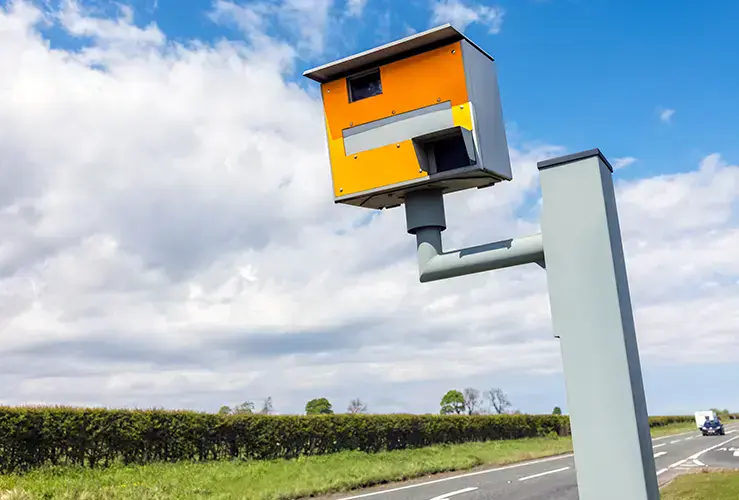
In the UK, and in many other countries, traffic fines such as parking fines and speeding tickets, increase if left unpaid or unchallenged by the deadline:
- The original amount usually increases
- Late payment penalties are added
- Discounts for early payment are lost
For example, a £100 fine can rise to £150 or more.
In most cases the easiest and least stressful option is to pay the penalty.
Enforcement action begins if fine remains unpaid
If you don’t pay the fine or respond (for example, by challenging it), authorities may:
- Send reminder notices
- Add administration or court fees
- Register the debt formally
At this stage, the fine is no longer just a ticket, it becomes a legal debt.
Court involvement
If you continue to ignore the fine, the case may be passed to a court (usually a Magistrates’ Court). You could receive a court summons, and additional costs would then be added automatically.
If you don’t respond to a court notice, you may have to deal with further penalties.
Bailiffs or debt collectors
If the bailiffs or debt collectors (also known as ‘enforcement agents’) get involved, costs and stress levels can increase a great deal. Courts can even take sums directly from your bank account, or seize/clamp your vehicle (rare, but possible).
This eventuality is best avoided; bailiff fees can be hundreds of pounds on top of the original fine. At this point (in hindsight) choosing to pay the penalty charges on time will have seemed like a very sensible move.
Driving consequences
Depending on the offence and jurisdiction:
- Licence points may be added automatically if or when the offence is finalised
- You could be disqualified from driving for a certain period
- Your vehicle may be clamped or impounded (fees will be payable to get the vehicle released)
Typical fees in England and Wales are around £150 to get your vehicle released, and £20 per day for storage (starting from midnight after seizure).
Impact on credit and travel
In the UK, being handed a Fixed Penalty Notice (tickets from parking enforcement etc.) won’t affect your credit rating. It’s the same story for fines handed out by a court; because they are not credit agreements, credit reference agencies are not informed.
However, if the debt escalates and a County Court Judgement (CCJ) is issued, then your credit score will take a hit.
Parking Charge Notice vs Penalty Charge Notice: What’s the difference?
It’s important to understand the difference between Parking Charge Notices and Penalty Charge Notices.
Parking Charge Notices are issued by private parking enforcement companies working for entities like retail parks, hospitals, supermarkets etc. It is pursued through contract law, and it is an invoice - not a fine. Discounts are often offered, but this is not mandatory. There is a different appeal process to Penalty Charge Notices.
Penalty Charge Notices, on the other hand, are based on statutory law and issued by councils or police (i.e. the state). These are ‘fines’ or ‘civil penalties’. A 50% discount is invariably offered for early payment. Appeals go from the council to an independent tribunal (TPT or London Tribunals).
Do I have to pay a Parking Charge Notice? (from a private firm)
In most cases, you should pay a Parking Charge Notice (PCN), but only if it’s valid and enforceable.
Unlike with council tickets, some private Parking Charge Notices can be challenged successfully.
Offence | Fine if paid promptly | If ignored for a few weeks | Longer-term consequences |
Parking Charge Notice (PCN) (council parking) | £30–£70 (50% discount if paid within 14 days) | Increases to £60–£140 (full amount) | Debt registered → bailiffs → extra fees (£75–£300+) → possible vehicle clamping |
Bus lane PCN | £30–£65 (discounted) | Rises to £60–£130 | Enforcement agents (bailiffs), credit impact if unpaid |
Congestion / Clean Air Zone charge | £12.50–£15 | Penalty of £60–£180 | Bailiff enforcement and added fees |
Speeding ticket (low-level FPN) | £100 + 3 points | Case sent to court | Fine up to £1,000 (£2,500 motorway), higher points or driving ban |
Speeding ticket (court banded fines) | 50–150% of weekly income | Costs + victim surcharge added | Disqualification, criminal conviction |
Using a mobile phone while driving | £200 + 6 points | Court summons | Unlimited fine, licence loss (new drivers) |
Not wearing a seatbelt | £100 | Court referral | Fine up to £500 |
Running a red light | £100 + 3 points | Court action | Fine up to £1,000 + higher insurance |
No insurance | £300 + 6 points | Vehicle seized | Unlimited fine, ban, criminal record |
No MOT | £100 | Court prosecution | Fine up to £1,000 |
Driving without due care | N/A (court only) | — | Unlimited fine, points or ban |
Failure to identify driver | N/A | Automatic court case | £1,000 fine + 6 points |
Do you get points for speeding?
Yes, if you are caught speeding, you generally get 3 points on your licence, plus £100 fine.
How are traffic fines issued?
By post
Most penalties are sent to the address of the vehicle’s registered keeper, particularly if the offence was camera-detected.
A Notice of Intended Prosecution (NIP) is sent to the registered keeper, usually within 14 days of the offence. It is often combined with a Section 172 notice, requiring you to identify the driver.
Even if the penalty was issued in person by a police officer, or with a parking ticket by a traffic warden, a penalty notice will still be sent by post to the registered keeper’s address.
In person
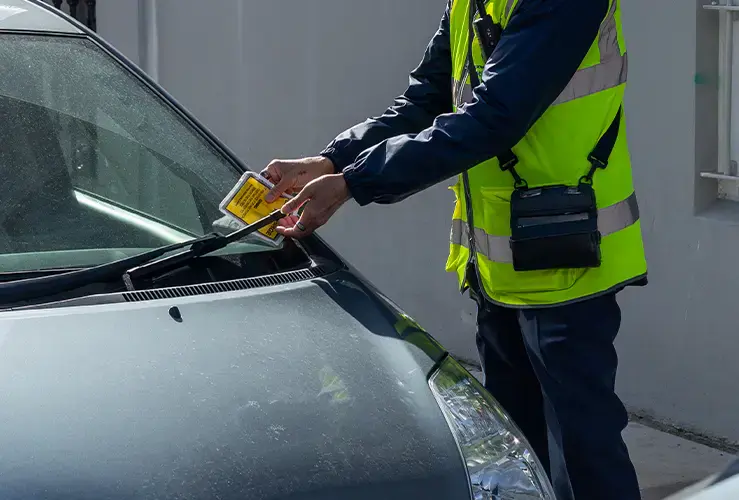
As mentioned, penalties can be issued by police officers for example, if you’re caught speeding, or you’re stopped for faulty lights, and of course, parking contraventions can be issued in person by traffic wardens.
In summary: Traffic fines - What’s the best course of action?
If you’ve received a traffic fine, it’s best to pay it on time (this is almost always the cheapest option).
However, you should challenge it if you believe it’s incorrect/issued in error.
If you cannot afford to pay the fine, ask about setting up an alternative payment plan.
But above all, do not ignore any penalty you receive. Doing nothing is almost always the worst option, and will lead to weeks or months of stress and problems.
A small fine issued today can quickly turn into a serious financial and legal issue later on if not taken care of promptly.