


Staying on top of car maintenance tasks will help you avoid breakdowns and unnecessarily large car repair bills. Learn about the hidden costs of not looking after your vehicle, and how you can minimise the chances of an unexpected fault.
Your car is a rather complex assembly of components, each playing a role in ensuring you stay safely, and comfortably, on the road. Some of these components are more important than others, and need to be carefully maintained as time goes on.
By staying on top of your car maintenance, you will reduce the chances of a sudden fault and potentially a breakdown. You should also be able to spot issues before they become more serious (and costly) to fix.
Additionally, if one area of your car’s maintenance is neglected, it can have a knock on effect on other components. For example, if you ignore worn suspension components, your tyres are likely to wear down faster.
In this article we’ll look at the key systems of your car, and what you can do to keep them in good working order. Applying these tips should result in fewer car repairs (and costs) when the time comes for your mechanic to carry out that all-important annual car service.
How much is a car service?
Getting your car serviced can vary a lot, from between £90 and £600. How much you’ll pay depends on the service type, vehicle size, and garage, with average prices around £110 - £210 for an interim check up, £170 - £400 for a full, and £250 - £500 for a major service. In most cases, costs to service a car are lower at independent garages compared to main dealerships.
Simply search ‘garage near me’ on Google and you’ll be presented with a range of local options with reviews.

Engine oil and oil filter
Neglecting your car’s engine is the simplest way to wind up with a massive car repair or replacement bill. If you don’t change your engine’s oil (as per manufacturers’ guidelines), then the old oil will break down and you’ll get metal-on-metal grinding, or a thrown rod.
If the engine seizes up due to old oil or an old oil filter, then you’re looking at a costly rebuild at best, and total engine replacement at worst.
Indeed, for some older and/or budget models, the cost to sort out the engine could be too high, leaving you with only one option: the scrapyard.
Engine rebuild/replacement: £4,000 - £10,000+
Can I do it myself?
Yes you can check and top up the oil yourself, although your mechanic/garage will do it as part of regular service.
Timing belt / chain
If your car has a timing belt, it should be replaced as per the manufacturers’ guidelines (usually between 60,000 and 100,000 miles). If the timing belt snaps on an interference engine (most common engine in today’s cars), the pistons will strike the valves and you’ll be looking at an engine rebuild or complete replacement.
Engine rebuild/replacement: £3,000–£8,000
If your vehicle has a timing chain, it should last longer but you’ll need to change the oil for it to last.
Can I do it myself?
If you have very good mechanical knowledge and experience, you might be able to replace the timing belt. However, it takes a while to do, and if you get it wrong, you could damage or destroy your engine. So on balance, it's probably best to take it to a professional mechanic!
Cooling system (coolant, radiator, water pump)
Your car’s engine coolant will need to be replaced periodically, usually every 30,000 to 50,000 miles (or 3 to 5 years). Check your user manual to find out the recommended interval. However, you may need to change the coolant more frequently if you do a lot of towing, stop-start driving, or a lot of motoring in colder months.
If you notice a rusty brown colour, debris, floating contaminants, a sweet smell from the engine, or that your car is running hot- it's time to replace the coolant.
Aside from overheating, failure to change your coolant could leave you with a warped cylinder head, or a blown head gasket, both of which are extremely costly to remedy. If your car is older and/or less valuable, it may make more sense to send your vehicle to the scrapyard.
Head gasket: £2,000 - £5,000
Engine replacement: £4,000+
Can I do it myself?
Yes, with some basic mechanical knowledge, and somewhere safe to get rid of the old coolant (it’s toxic to humans, animals and plants).
Transmission fluid (auto) or gearbox oil (manual)
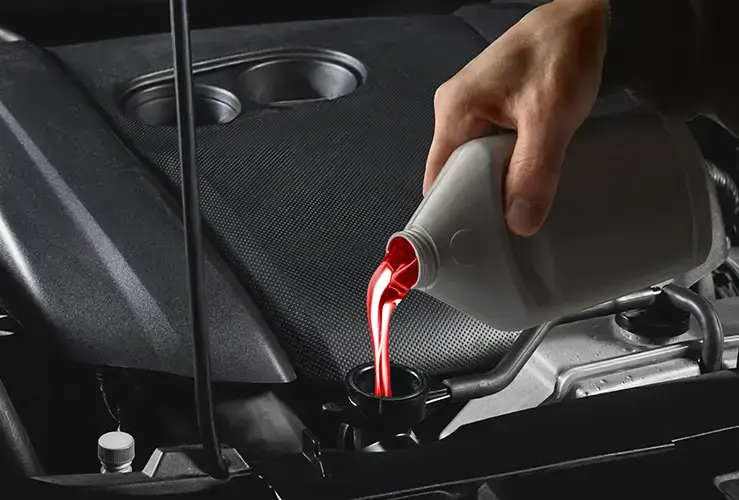
If you have an automatic car, you’ll need to ensure the transmission fluid is changed in line with the manufacturers’ guidelines. It’s a similar story if you have a manual vehicle, you’ll need to make sure the gear oil is changed in a timely manner.
Failure to swap out fluid/oil could lead to slipping gears, or total transmission failure.
Rebuild/replacement cost: £2,500 - £6,000
Can I do it myself?
Yes you can do both tasks yourself, but you’ll need the right tools, fluids, and understand the necessary safety measures. Note that changing the transmission fluid is more complex, because it’s a sealed system. However, if in doubt, get your local mechanic to do the job for you (easier and safer!).
Brake system (pads, rotors, fluid)
The importance of maintaining your car’s braking system cannot be overstated. To keep it in tip top working order, you’ll need to replace pads and rotors in line with the car’s manual or sooner if you notice something wrong with them (spongey feel or grinding/squealling noises). The dashboard ABS or brake light may also appear if something is up with your brakes.
You’ll also need to ensure brake fluid is changed as necessary.
If you don’t look after your brakes, your pads will wear through and you’ll get metal-on-metal grinding, leading to a hefty car repair bill.
A full brake system repair could cost: £1,000 - £3,000
Can I do it myself?
Yes, if you have a moderate level of mechanical knowledge/experience, you should be able to change the pads, rotors and fluid. However, you’ll need the right tools (including jack stand) and you'll need to bleed the hydraulic system to avoid brake failure. Again, take your car to the garage if unsure.
Suspension components (shocks, struts, bushings)
If you don’t keep your suspension system in good working order, and replace worn parts, you eventually have to deal with poor handling, uneven tyre wear, and longer braking distances.
Suspension rebuild: £1,000 - £3,000
Can I do it myself?
These tasks are best left to the professionals unless you have very advanced mechanical knowledge and experience.
Tyres
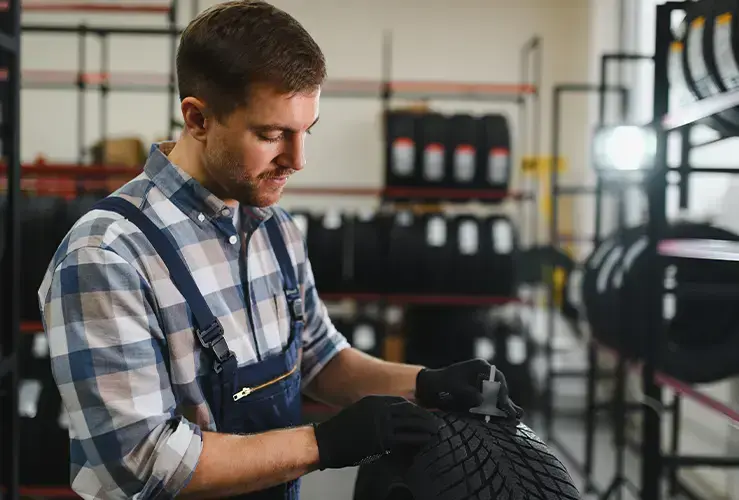
Needless to say, keeping your tyres in good working order is critical for safe driving. You’ll need to ensure tread depth is 1.6mm minimum and pressure is sufficient. You’ll also need to ensure your tyres are rotated.
If you don’t look after your tyres, the consequences could be very serious indeed. Having a blow out or otherwise losing control of your vehicle is unthinkable. Worn tyres also increase braking distances.
Tyre replacement: £400 - £1,200
Can I do it myself?
You can certainly check tread depth and pressure by yourself, and sort out any problem by yourself too. However, rotating the tyre might be a big job so best leave it to the car service professionals (unless you're feeling very energetic!)
Battery & charging system
It’s important to keep your battery and alternator in good health. If you don’t your car may not start, or may die while driving, neither of which are good for your stress levels.
Battery cost: £100 - £250
Alternator cost: £500 - £1,200
Can I do it myself?
You can check your battery with visual inspections of the battery itself (corrosion etc) and seeing if the headlights are dim. You can also use a multimeter (most accurate) to check battery health. You can also replace the battery in about 30 minutes if you have the right tools.
Spark plugs / ignition components
If you don’t replace plugs or coils as needed, your engine will misfire. You might also suffer from poor fuel economy, or damage your catalytic converter.
Plugs/coils: £40 - £150
Catalytic converter: £1,000 - £2,500
Can I do it myself?
Changing spark plugs is manageable for beginners, but swapping out a catalytic converter requires intermediate skill and knowledge - assuming it’s a ‘bolt-on’ unit.
Air filters (engine & cabin)
If you don’t replace your air filters periodically you’ll eventually face reduced performance, decreased fuel economy and extra strain on your air-con system.
Filters cost: £20–£80
Can I do it myself?
Yes, changing cabin and engine filters is easy enough and should take less than 30 minutes. Doing it yourself will save money on labour.
Belts & hoses (accessory belts, vacuum hoses)
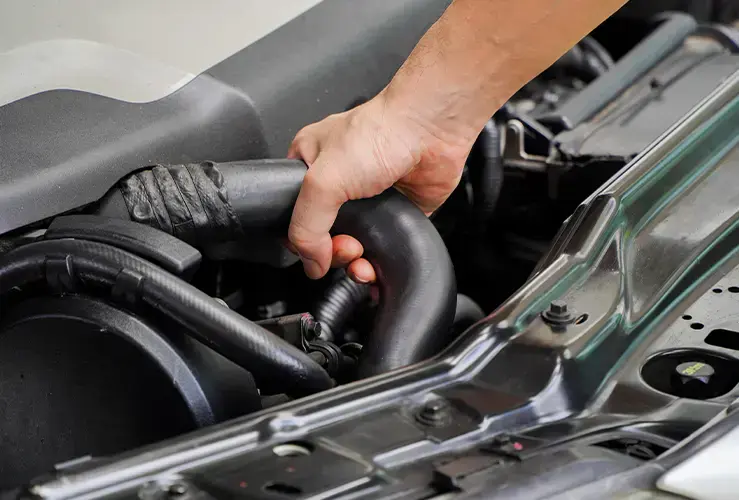
You can make visual inspections of your belts and hoses, and organise necessary replacements. A faulty belt or hose could result in power steering loss, overheating, and eventual breakdown.
Repairs: £150 - £600
Can I do it myself?
Yes, changing a vacuum hose is fairly straightforward assuming you have some basic tools to hand. It’s a similar story for replacing serpentine belts (takes around 1 to 2 hours).
Windshield wipers & washer fluid
You’re sure to notice if your wipers are not working as they should. Replace them as needed, and top up fluid regularly. If you don’t and the system fails, visibility will be drastically reduced in heavy rain or snow which could, of course, lead to an accident.
Replacement wipers: £20 - £50
Can I do it myself?
Yes. Fluid top up is a cinch, and replacing your windscreen wipers will take just a few minutes. Check your owners’ manual to find the right size wipers for your vehicle.