


In April of last year, the government ended Vehicle Excise Duty exemption for new electric vehicles, replacing it with a standard £195 annual charge from year two. To what degree has this, and other changes like EV charging cost fluctuations, impacted overall ownership bills in 2026? Find out with our guide.
Last April saw one of the biggest changes to road tax in 24 years: the scrapping of zero-rated Vehicle Excise Duty for EVs that have no CO2 exhaust emissions.
The UK government introduced the exemption back in 2001, as a way to encourage the development and take-up of electric vehicles, with a view to improving air quality across the UK. Decades later, the measure appears to have played a role in EV adoption. As of late 2024/early 2025, fully electric cars (BEVs) made up between 3.7% to 5.3% of all cars on UK roads, equating to over 1.3 to 1.8 million vehicles.
Taxing a new EV for the first year costs just £10, increasing to £195 annually thereafter. This means it costs the same to tax as most petrol and diesel cars.
But with full BEVs accounting for more than 23% of the new vehicle market in 2025, the public have clearly not been put off by the change.
How much road tax will I pay for my used EV?
EVs registered between 2017 and 2025 will also pay the £195 standard rate from April 2025.
What about the “Expensive Car Supplement”?
For electric vehicles with a forecourt price tag of £40,000 or more (registered between April 2025 and March 2026), there’s an "Expensive Car Supplement" to pay of £425 per year for five years. However, this policy has been softened slightly by raising the threshold to £50,000 from April 1, 2026.
How much does it cost to charge an electric car?
This is the big one. While zero-rated VED was a nice little bonus for those willing to “go electric”, it was nowhere near as compelling as the lower running bills, particularly in terms of EV charging costs. Since their introduction, low charging costs have been vaunted as one of the key advantages of electric car ownership.
Why home charging is a no-brainer
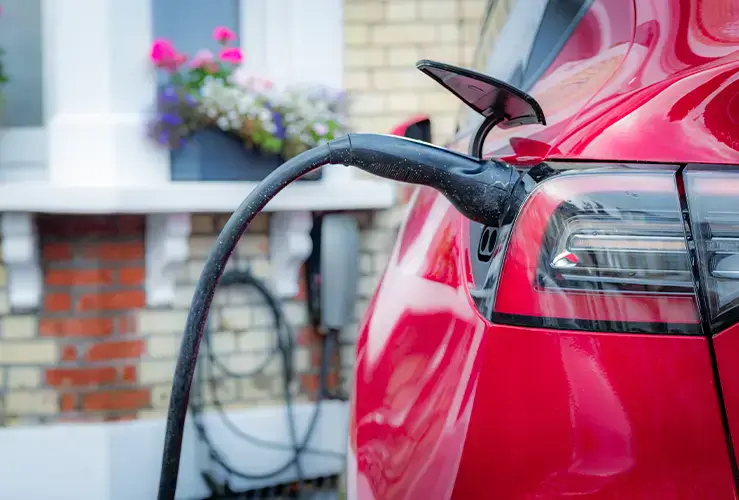
Investing in a home charger is non-negotiable if you really want to unlock the savings that can come with EV ownership. Indeed, if you take advantage of off-peak overnight rates, you might pay as little as 8p per KWh.
Conversely, if you simply use commercial charge points to top up your battery, you’ll be paying around 80p per kWh.
This means you could end up paying ten times more on EV charging costs if you don’t get a home charger. Worse still, it means you’ll be forking out about the same as a petrol or diesel driver pays for fuel.
Indeed, not investing in a home EV charger is rendered even more imprudent since you can get a UK government grant for one if you live in a flat or rent your property, covering up to 75% (max £350) of installation costs!
Energy cost rises
The UK government increased energy price caps in 2022 and again in 2024/5, which saw electricity prices rise across the country. While those who charge their EVs at home were certainly affected, those who use public chargepoints really felt the pain, prompted by soaring operator costs. This had the effect of narrowing the cost gap between EVs and petrol/diesel vehicles: electric vehicles are still cheaper to run than ICE (Internal Combustion Engine) vehicles, but by a smaller margin than before.
How do EV insurance costs stack up?
Insurance is often the biggest cost for EV owners. This is because EVs are generally higher in value, with components that cost a lot to replace (e.g. battery packs).
According to Nimblefins, the average cost of EV car insurance is around £654. However, quotes range from £400 to £1,000 per annum (and sometimes even more) particularly in relation to premium models like the Tesla Model Y.
Cheapest electric cars to insure?
Which electric cars attract the lowest insurance premiums? Some of the cheapest electric cars to insure include the Dacia Spring, Renault Twizy, Fiat 500e, and Volkswagen e-Up!. These are, unsurprisingly, among the cheapest electric cars to buy in the first place, too.
Beware fluctuations
The worst aspect of EV car insurance is perhaps its unpredictability as premiums can fluctuate unexpectedly, which can be a real pain if you’re on a budget.
What about maintenance costs?
Electric vehicles are much simpler ‘under the bonnet’ than even the simplest petrol or diesel car. Fewer moving parts means fewer things that can go wrong which translates to fewer faults and related repairs. Indeed, EV maintenance costs are around 30% lower, on average, than ICE vehicles.

Cost of Ownership Comparison
The table below gives a general impression of electric car costs compared to petrol and diesel outlays. Actual costs can vary depending on model choice, driving habits, access to home charging, and other factors.
Cost Category | Petrol | Diesel | Battery Electric (BEV) |
Initial Outlay (new vehicle) | £22k–£25k (based on the average price of a petrol car) | £24k–£27k (based on the average price of a diesel car) | £30k–£35k (based on the average price of an electric car) |
Insurance (annual) | £550–£620 | £580–£650 | £650–£750 |
Road Tax – First Year | £200–£1,000+ (CO₂-based) | £250–£1,500+ | £0–£10 |
Road Tax – Following Years | ~£190 | ~£220 | ~£195 (no emissions penalty) |
Fuel / Energy Cost (annual) | ~£1,700–£1,900 | ~£1,450–£1,600 | ~£200–£700 |
Maintenance & Servicing | £300–£350 | £330–£380 | £230–£300 |
Depreciation (early years) | Moderate | Often highest | High (improving over time) |
Impact of Energy Price Rises Since 2021 | Large increase (fuel volatility) | Large increase (fuel volatility) | Moderate increase (still cheapest per mile) |
Total Annual Running Costs | ~£2,500+ | ~£2,300–£2,400 | ~£1,700–£1,900 |
Electric car costs: True cost of running an EV in 2026 - Conclusion
Despite energy cost rises, changes to Vehicle Excise Duty, bigger insurance premiums, and the higher average price of an electric car, owning and running an electric vehicle can deliver substantial savings compared to petrol and diesel models. Most of these savings relate to lower maintenance costs, favourable road tax, and of course, low charging costs.
However, in order to unlock the biggest EV savings you should invest in a home charger (taking advantage of the government grant if possible), then harness overnight off-peak charge rates. Conversely, you should avoid public charge points if at all possible.
Overall, if you’re a well-informed EV driver, you still have a lot to smile about.