


The most common broken coil spring symptoms are a clunking or knocking noise over bumps, one corner of the car sitting lower than the others, and uneven tyre wear. Can you drive with a broken coil spring? No, other than, at most, a short, slow journey to the nearest garage, and only if a mechanic has confirmed it's safe to do so. This guide covers how to spot a broken suspension spring, what causes one to break, and roughly what a coil spring replacement cost looks like.
What Do Coil Springs Do?
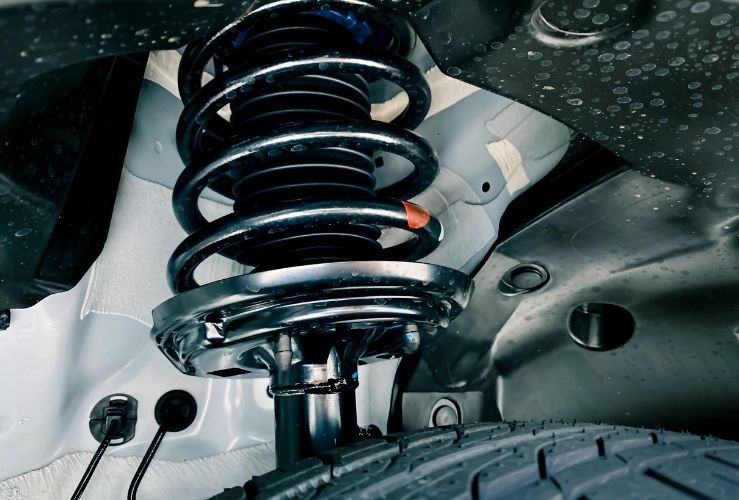
Coil springs are integral to your car's suspension system.
Your vehicle has four coil springs - two front coil springs and two rear coil springs (one for each wheel).
Suspension springs for cars are important in ensuring the smooth, safe handling of your car.
Coil suspension springs are designed to absorb the impact of driving over rough terrain, and also help keep your vehicle at the correct height so damaged coil springs on a vehicle are not good news for any motorist.
In this article we will look at broken suspension spring symptoms, what causes coil springs to break in the first place, and whether you can still drive your car with a broken coil spring.
Can you drive with a broken coil spring?
No, you should not drive with a broken coil spring. You should get it fixed as soon as possible.
Some drivers may decide to drive on a broken coil spring in order to reach a garage or home. But is it ever safe to do so? Only for a short, slow journey to the nearest garage, and only if a mechanic has confirmed it's safe.
What happens if you drive with a broken car coil spring?
When driving with broken coil springs, the ride is likely to be rough and controlling the car in an emergency will be more difficult.
A broken coil suspension spring will put extra pressure on the adjacent shock absorber and may cause serious damage to it if you drive the car in that condition.
How serious is a broken car coil spring?
If one of your car coil springs breaks, your vehicle will sit at an angle, with the lower corner over where the broken spring coil is.
A broken coil spring will mean pressure on the tyres is uneven, causing the affected tyre to wear out more quickly on one side.
A broken coil spring could also result in your car suffering a puncture, rendering your car undriveable; having comprehensive breakdown cover in place will enable you to call on assistance in such scenarios.
And if the coil spring falls out of the vehicle it obviously creates a hazard for other road users.
How to tell if you have a broken coil spring?
Think that you may have a broken coil spring?
Symptoms of a broken coil spring which may indicate a bad coil spring in your car's suspension system to look out for include:
- Loud suspension: If your car has a broken coil spring you'll probably hear clunking, knocking noises when you drive over rough or uneven ground.
- Poor handling: Broken coil springs cause misalignment, which changes how the suspension moves and can make components scrape or knock against each other. Your vehicle may sway or bounce more than usual.
- Uneven ride height: With a coil spring failure, a visual inspection of your car will likely show one corner is lower than the others. If you're unsure, use a tape measure to see how far each wheel arch is off the ground.
- Excessive tyre wear: A broken coil spring can cause uneven pressure on the tyres, leading to accelerated wear.
- Increased braking distance: Due to poor handling and misalignment, stopping your car in time becomes more difficult if you have a broken car coil spring, potentially increasing your braking distance.
- Visible damage to the springs: In some cases, you may notice visible damage to the springs upon inspecting the suspension. This is often a clear indicator of a damaged or broken suspension spring.
Will a Broken Coil Spring Fail an MOT?
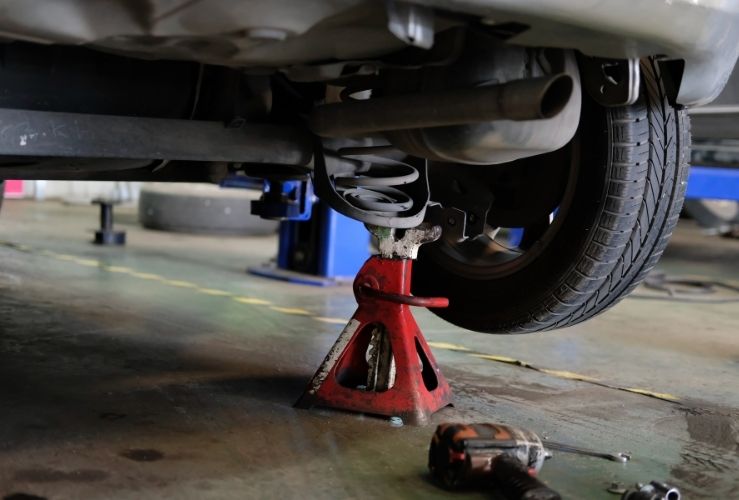
A broken or fractured coil spring is an MOT failure, testers check for visible cracks, breaks, and signs that a spring is no longer seated or functioning correctly. Driving a car with a known dangerous fault, including a broken coil spring, can also have legal and insurance implications: it may be classed as driving a vehicle in a dangerous condition, and an insurer could refuse a claim if the car wasn't roadworthy at the time of an incident.
What to Do If You Think a Coil Spring Is Broken
If you suspect a broken coil spring:
- Avoid driving the car if at all possible, call for roadside assistance or recovery instead
- If you must move the car, keep the journey as short and slow as possible, and only after a mechanic has confirmed it's safe to do so
- Check for an obvious lean, uneven ride height, or a visible gap/crack in the spring before setting off
- Book an inspection with a garage as soon as possible, a broken spring won't repair itself and often damages nearby components (shock absorbers, brake lines) the longer it's left
- Have breakdown cover in place so recovery is sorted quickly if the car becomes undriveable
What causes a spring coil to break?
Have a broken spring on your car? You may be wondering what has caused you coil spring to break.
Car suspension system coil springs can break for a variety of reasons:
Coating damage and corrosion
Coil springs are covered in a flexible plastic coating to help protect the metal from corrosion. However, over time, with constant compression and being hit by stones from the road, this coating can get damaged, allowing rust to form on the coil. Once this happens, coil springs can weaken and potentially break.
Driving over rough terrain regularly will make a coil spring breakage more likely.
In many cases, damage to car coil springs are a result of road conditions, such as potholes.
Blown tyres/wheel imbalances
Wheel imbalances can cause your suspension system to wear out unevenly, potentially leading to a broken coil.
A flat or blown tyre meanwhile can put huge pressure on your suspension system and can cause a coil to break.
A broken coil spring could also cause damage to your steering and braking systems.
Fluid leaks in struts/shock absorbers
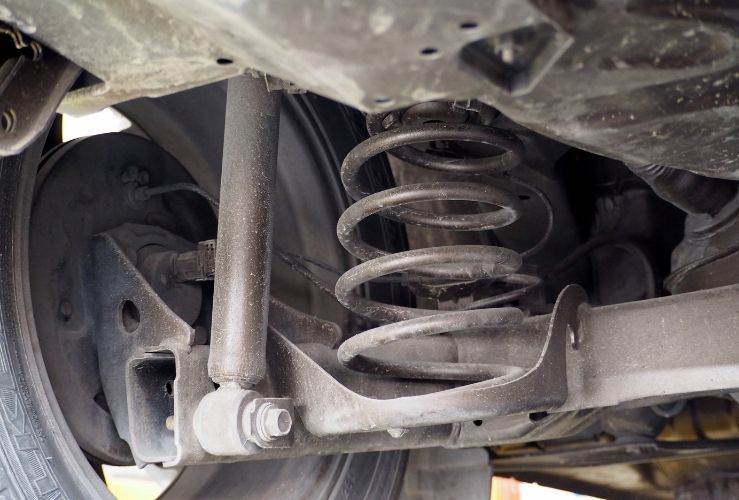
If a strut - which usually comprises a shock absorber and spring - leaks hydraulic fluid, it won’t work effectively, placing more pressure on the adjacent coil, increasing the chances of a break.
Additional noise when driving over dips and bumps could mean you have a hydraulic fluid leak.
Lower hydraulic pressure could mean coil springs connect with other suspension components, causing damage to brake lines or even the exhaust system.
Age and Metal Fatigue
Like any metal component under constant load, coil springs weaken with age through repeated flexing, known as metal fatigue. Even a spring with no visible damage can eventually fail simply from years of normal use.
Potholes and Speed Bumps
A hard impact from a pothole or speed bump can crack or fracture a coil spring instantly, even if the rest of the suspension seems fine afterwards. [EDITORIAL: link to the potholes article here.]
Road Salt in Winter
Road salt used to grit roads in winter accelerates corrosion on exposed metal, including coil springs, another reason winter driving conditions are harder on suspension components.
Overloading or Towing Beyond Limits
Carrying more weight than your car is rated for, or towing beyond its towing limit, puts sustained extra stress on the coil springs and can cause premature failure.
Aftermarket Lowering Springs or Modifications
Lowering springs and other suspension modifications not matched correctly to the vehicle can place uneven or excessive load on the springs, increasing the risk of breakage.
How much does it cost to replace a coil spring on a car in the UK?
How much are coil springs? Well, the cost of a coil spring depends on the make and model of your car and whether you need new coil springs on the front axle or rear axle of your car.
A coil spring replacement cost of £100 per spring is a rough guide price. There is also the need to factor in the installation costs for labour for replacing the coil springs.
Generally speaking, front coil springs cost more to replace than rear coil springs.
If you need to replace one spring it's advisable to replace the one on the other side. It's also a good idea to have all your car's coil springs inspected for damage.
How long should a car suspension last?
If your car's coil springs are properly sized for the vehicle, they're designed to last for the lifetime of the car, though, as above, they can still wear out or fail early due to age, road conditions, corrosion or overloading.
A car suspension system typically lasts for 50,000 to 100,000 miles, however, many factors can impact how long the suspension system of your car lasts, such as driving habits or road conditions, vehicle maintenance checks and the quality of the parts.
Find out more on car suspension issues you may experience and how to keep your suspension in good shape.
If you're concerned about your car failing you on a journey, for ultimate peace of mind, consider getting appropriate breakdown cover, purchasing online from Start Rescue is simple, just click here to get a quote in seconds. Already covered elsewhere? Sign up now to lock in the latest Start Rescue deals and discounts ahead of your current policy expiring.