



A flat tyre can throw your schedule off course, making you late for work and other commitments. But, with a little preparation, you can be ready with the tools to get you back on the road fairly quickly.
Note: You should always check your vehicle handbook for any fault remedy before carrying out any work on your vehicle. If you are unsure of what is required to fix any problems, please consult a professional.
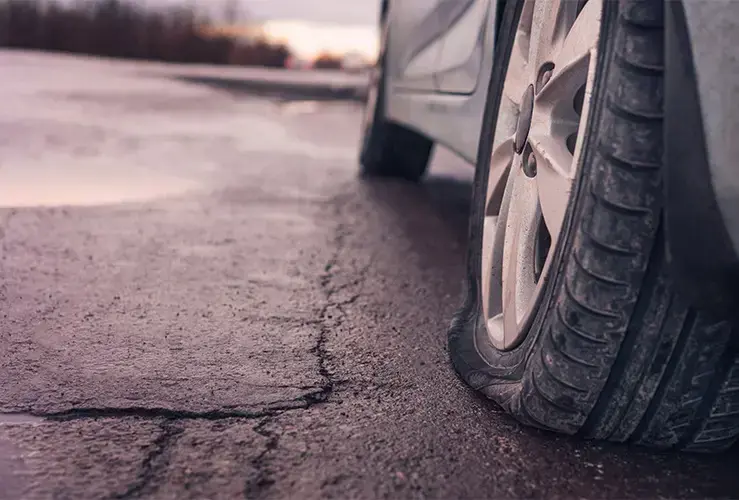
Here we look at the easiest and fastest ways to fix a flat tyre - at least well enough to drive to the nearest garage for a longer-term patch-up.
Identifying and Assessing Punctured Tyres
A puncture is not always obvious until you inspect the tyre. Common signs include:
- The vehicle pulling to one side.
- A noticeable drop in tyre pressure.
- Thumping or flapping noises while driving.
- Vibration through the steering wheel.
Once stopped in a safe location, visually check the tyre for embedded objects, bulges, or cuts. If possible, use a tyre pressure gauge to confirm underinflation. Damage on the tyre tread may be repairable, but cuts or bulges on the sidewall usually mean the tyre must be replaced.
Approximately 47.6% of all breakdowns on UK motorways and A-roads over the past three years are caused by tyre issues, highlighting how common puncture-related incidents truly are.
1. Pump up the tyre so you can reach a garage
If you have an air compressor in your boot, you can use this to pump up your tyre temporarily so you can drive safely to a garage.
These are plugged into your car's cigarette lighter, with the hose screwed into the wheel's valve stem. Turn it on and watch the pressure gauge rise to the manufacturer's recommended PSI. This should only take a few minutes.
You may wish to pump the tyre a little over the recommended pressure level, giving you extra air for the ride.
A key benefit of using an air compressor in the event of a punctured tyre, is you don't need to jack the car off the ground.
Before setting off, wait a few minutes to make sure the tyre doesn’t deflate quickly, since that would pose a safety risk on the road.
2. Fit the spare tyre
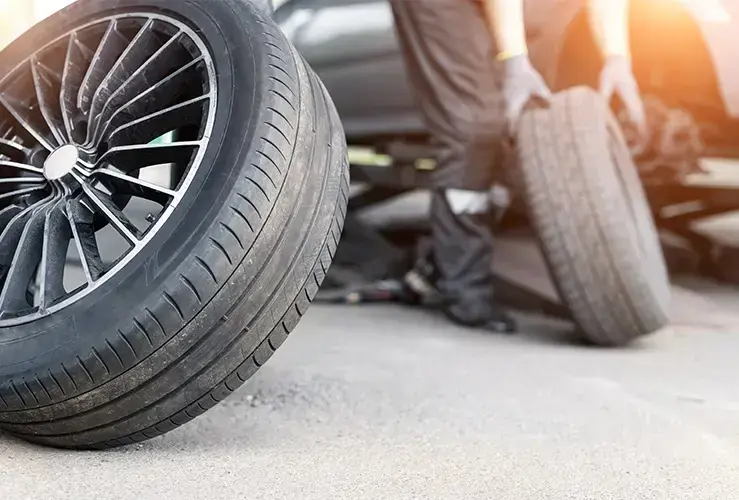
Swapping out the deflated tyre for your spare one is your next option.
You will need a scissor jack, a tyre iron, and a key for any locking lug nuts.
Loosen the lug nuts (so the wheel doesn’t spin) and block off the rear wheels.
Jack up the car and use a jack stand if you have one - for added safety. Remove the lug nuts and take off the wheel. Next, fit the new wheel, making sure the lug nuts are tight.
3. Fixing the damaged tyre
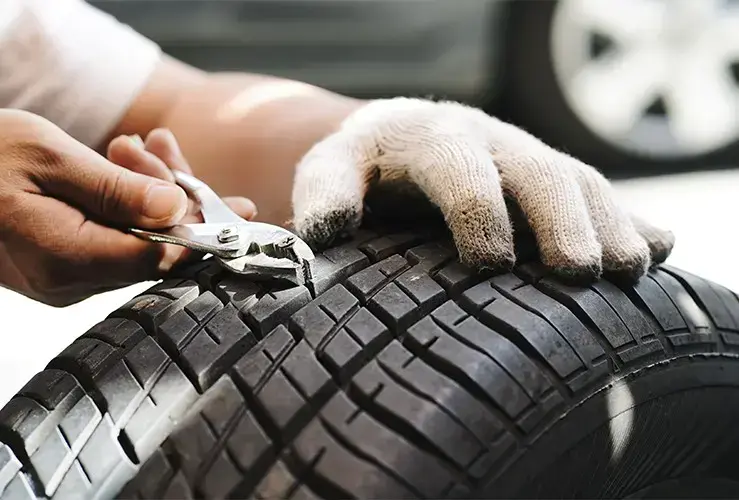
When searching for the puncture, it's important to wear eye protection in case something flies out of the tyre (eg a nail).
With the damaged wheel off the car, look for the leak by spinning the tyre.
Most tyre punctures are in the tread area.
Any damage to the tyre wall or shoulder means the whole tyre needs to be replaced.
If you can’t find the puncture, spray soapy water on the rubber. Bubbles will come out here the hole is. Also spray the valve stem, where punctures are common.
Repairing the tyre with a rubber plug
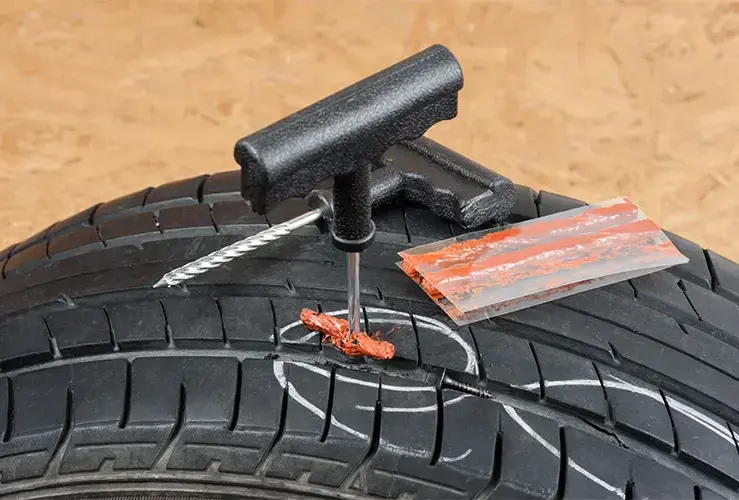
You can plug the puncture with a rubber plug. These are bought in a set containing rubber plugs, a plug pusher and a reamer (and sometimes rubber cement).
Take a rubber plug and thread it into the plug pusher, with an equal length of rubber on each side of the pushing tool. Next, use the reamer to widen the puncture, then use the pusher tool to insert the rubber plug into the tyre.
Many punctures are caused by nails and screws; remove this object from the tyre, then use the reamer to smooth the hole. If you have it, add rubber cement to the plug. This is not essential, but it will lubricate the plug as it's inserted, and will harden later to make the repair more sound.
Force the plug into the hole with the pusher tool; this may take some effort. Don’t force the plug all the way in; leave a quarter poking out of the hole. Pull the plug out quickly, and the rubber will stay in the hole (the end of the plug tool breaks to allow this).
Wait 10 minutes and then cut off the excess rubber on the plug.
Pump up the tyres to the right pressure, then re-fit the tyre, making sure to fully tighten the lug nuts.
Note: Plugged tyres are not a permanent solution. Your tyre shop/garage will be able to make a permanent repair.
4. Compressed air/sealer: for emergencies only
You can buy a can of compressed air with sealer. This can be pumped into your punctured tyre to inflate it.
The sealer liquid in the can should plug any small leaks and help you get back on the road. However, the sealer damages the tyre material, so it’s only a temporary measure.
It also means the tyre will need to be replaced, and therefore should only be used in emergencies.
Common Tyre Repairs
Aside from replacing the tyre entirely, there are several repair options:
Plug repairs – Inserting a rubber plug into the puncture hole using a reamer and plug tool.
- Patch repairs – Applying a patch to the inside of the tyre, usually done by a professional.
- Sealants – Liquid or aerosol solutions that temporarily block small holes; ideal for emergencies.
- Combination plug/patch kits – Offering a longer-lasting DIY solution than sealants alone.
Typical tools include a plug kit, tyre levers, valve core tool, air compressor, and safety gloves.
Breakdown Cover
If you do suffer from a puncture to your tyre, your breakdown cover provider should be able to assist you.
Join Start Rescue, for peace of mind of assistance when you are on the road, with the benefit of unlimited call outs* included as standard with all our breakdown cover policies.
*If you have the same reoccurring issue with your vehicle, you must have this checked, see policy terms and conditions.
Frequently Asked Questions
Common signs include:
- A sudden drop in tyre pressure.
- Difficulty steering or pulling to one side.
- Thumping or vibration while driving.
- Visible embedded object or tear in the tyre.
- Warning from tyre pressure monitoring system (if fitted).
A tyre can usually be repaired if:
- The puncture is within the central tread area.
- The hole is less than 6mm in diameter.
- There is no sidewall or shoulder damage.
- The tyre has not been driven on while flat.
If the damage is on the sidewall, too large, or the tyre is significantly worn, replacement is the safest option.