



Your car's radiator is essential for the ongoing cooling of your engine.
If you suffer a car radiator leak, your engine could overheat. Breakdown cover from Start Rescue can help you in such situations.
However, if you think that your car radiator may have a leak, it is best – and usually much cheaper – to deal with a car leak repair as soon as possible.
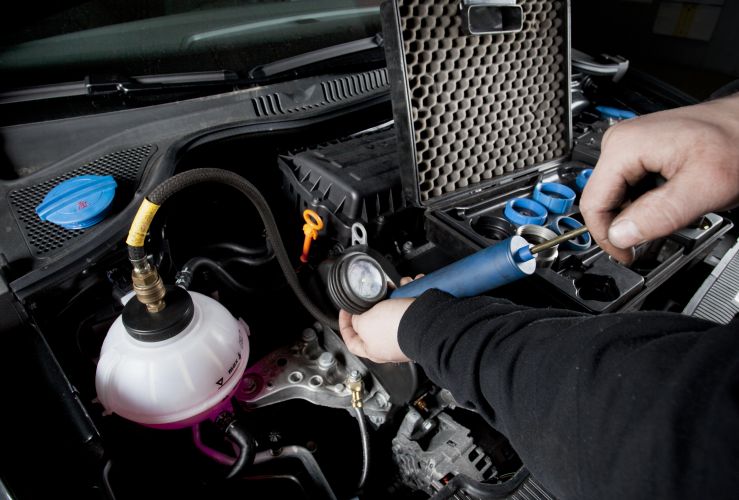
What Causes Engine Coolant Leaks?
Engine coolant leaks can be caused by a number of factors, many of which develop over time due to wear and tear. Common causes include:
- A cracked or damaged radiator, often due to age or corrosion
- Worn or split radiator hoses that allow coolant to escape
- A faulty radiator cap that fails to hold proper pressure
- Internal damage to the head gasket, allowing coolant to leak into the engine
- Poor maintenance, such as infrequent coolant changes or using the wrong coolant type
- Physical damage from road debris impacting parts of the cooling system
Identifying the cause early can prevent further damage and reduce the cost of repairs.
Car Radiator Repair Costs
Labour costs for car radiator repairs involve a mechanic checking for leaks, removing the radiator, a whole system flush and the installation of a new radiator.
With costs this high it may be tempting to ignore the leaking radiator while the car is still functioning. But this can have dangerous consequences.
If left for a long time, the resulting engine damage from car fluid leaking from the radiator could cost you a lot more money, or even - in a worst-case scenario - write off your vehicle.
What does a car radiator do?
Car engines generate a huge amount of heat. Most of this escapes through the exhaust system, but a good deal lingers around the engine itself. The radiator system dissipates this heat, but if the engine coolant contained within starts to leak, the cooling system may fail and the engine may overheat.
It's important to carry out regular checks on your vehicle radiator to spot any leaks as soon as they occur.
Signs your car radiator is leaking
A classic tell-tale sign of a car radiator leaking is a patch of coolant fluid appearing on the ground under your car after it has been parked up - if it's petrol on the ground, you might have a fuel leak.
How to tell if it's coolant on the ground beneath my car or oil
Coolant is a sticky fluid, often of green or orange colouration. Oil, by contrast, is either yellowish if it's new, or brown/black if it has been in the system for a while.
Models with air-conditioning systems may also leak water from condensation - but this, of course, is easy to distinguish from coolant or oil.
The main reason for car radiator failure is a coolant leak, which can lead to the cooling system failing.
How to check the coolant reservoir for a leak
If you think your vehicle is leaking, make a note of the fluid level in your coolant reservoir - you can do this with a pen or take a photo.
Check back after a while driving and see if the coolant level has reduced. If you initially check the coolant level when the engine is cool, be sure it is cool when you re-check (as the fluid can expand when hot).
If the fluid level is lower on the second inspection, you do have a coolant leak and will require a coolant leak repair.
Can rust cause a leak in a car radiator?
If you spot rust or discolouration around the radiator, there could be a leak in that area.
Rust can appear in many parts of your car, but a concentrated zone of rust around your radiator suggests a leak.
Risks of Driving with a Coolant Leak
Driving with a leaking radiator can cause big engine damage. As the coolant level drops your car can’t regulate temperature. This can cause:
- Engine overheating which can warp or crack important engine parts
- Blown head gaskets which can be expensive to fix
- Poor engine performance which affects fuel efficiency
- Engine failure if the cooling system is left neglected for too long
- Breakdowns which can be dangerous and inconvenient
Even short trips with an unresolved coolant leak can shorten your car’s life. Act fast.
How to fix a car radiator leak
The simplest way to remedy a suspected radiator leak is to take your car to your local garage to undertake the required car radiator repairs.
If you want to tackle the job yourself, follow the safety advice below as to how to undertake a car radiator leak repair.
Allow the engine to cool before inspections begin
When hot, your radiator system is highly pressurised. As such, you must wait several hours for the engine and radiator to cool down before attempting to locate the leak.
Wear safety glasses
Even after the engine has cooled, the system could remain under pressure and expel gas when the radiator cap is opened. As such, it is important to wear safety glasses.
As an additional safety measure, you may wish to wear gloves.
Clean the radiator
It will be much easier to identify a leak if your radiator is clean. Use a hose to spray off any grease and grime. Wipe down with paper towels.
Start the engine
Turn over the engine and inspect the car radiator for any leaking radiator signs like fluid or steam escaping.
Use a coolant system pressure tester
To undertake your coolant leak repair, you may decide to use a coolant system pressure tester to find leaks. These are available from car parts stores and garages.
Remove your radiator cap and fit the pressure tester to the hole. Use the tester to pump pressure into the coolant system. Locate the sound of leaking air to find the fracture.
Use a leak sealant
For a quick fix car radiator repair you can buy a commercial leak sealant to repair any crack, which must be applied when the engine is cool.
This is added directly into the cooling system, topped off with a coolant/water mixture.
Fixing the problem with sealant is unlikely to be as effective or long-lasting as a professional radiator repair or Epoxy.
Seal visible cracks with epoxy
Epoxy is more effective for a car radiator repair than leak sealant.
You can buy Epoxy from any garage or car parts shop.
Ensure the area is clean and dry before application and leave overnight to set.
Types of Engine Coolant
There are several types of engine coolant available, each designed to protect your engine from corrosion and regulate temperature effectively. These include:
- Inorganic Additive Technology (IAT): Common in older vehicles and usually green in colour.
- Organic Acid Technology (OAT): Longer-lasting and typically orange or red.
- Hybrid Organic Acid Technology (HOAT): Combines features of IAT and OAT, offering robust protection.
Always refer to your vehicle manufacturer’s manual to determine which coolant is best suited for your car. Mixing types can reduce effectiveness and harm the radiator or cooling system.
If after reading our tips, you've put yourself off attempting to fix your car radiator leak yourself, you can always enlist your local garage to address the problem. This will be the most costly option, but you’ll save time (compared to fixing it yourself) and you’ll know the repair will last a long time.
Frequently Asked Questions
Radiator leaks can arise from various different issues, including corrosion, rust build-up, and wear in hoses or seals. Temperature fluctuations and pressure within the cooling system may also lead to cracks, especially in older vehicles.