



Noticed your engine running unevenly or vibrating at idle? Rough idling can be more than just annoying - it’s often a sign of an underlying issue that needs attention. In this guide, we break down what causes it, how to fix it, and when to call in a pro.
Is your car engine idling rough? If so, it’s important to address the problem promptly. Rough idling rarely goes away by itself, and if left unchecked can lead to engine damage, reduced fuel economy, and even a breakdown.
Rough running can be caused by a range of issues, some of which aren’t always easy to pinpoint.
In this guide we’ll define the phenomenon, then run through the 9 main causes of rough idle issues. We’ll also look at steps you can take to fix each problem - and whether or not it’s better to call a mechanic.
What is a rough idle?
“Rough idling” or “rough running” occurs when the engine is running, but the vehicle isn’t moving - such as when paused at the traffic lights.
If your car is rough idling, you’ll likely notice:
- Vibrations or shaking
- Erratic engine sounds
- Fluctuating RPMs (revs per minute)
- Excessively high or low RPMs
- Stalling or misfiring
Here are the most common causes of rough engine idling
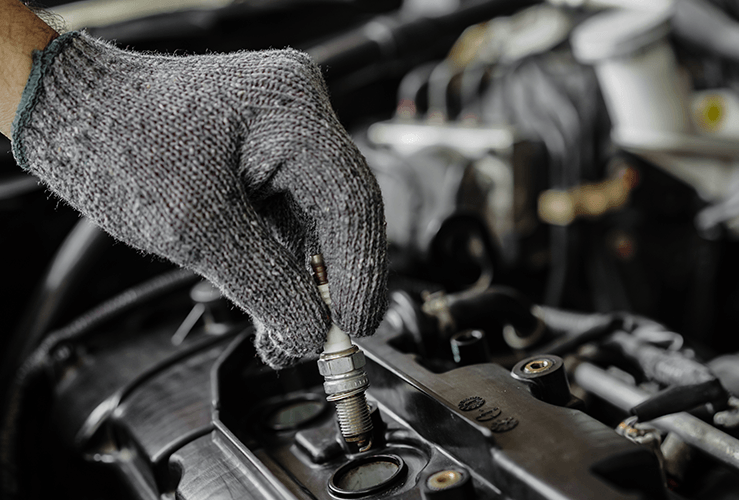
1. Dirty or faulty spark plugs
If your spark plugs are dirty or faulty, you’ll probably experience incomplete combustion - which will make your engine run unevenly. It’s one of the leading causes of rough idle problems.
How to fix it: Either clean your car’s spark plugs, or swap them out for new ones. If they are black and sooty, oily, or have white/ash deposits, they should be cleaned. To clean them yourself, you’ll need a wire brush and carb cleaner.
- Let the engine cool completely - to avoid getting burned.
- Remove the spark plug with a spark plug socket.
- Spray cleaner on the electrode area.
- Gently scrub with a wire brush until it’s clean.
- Let it dry then reinstall (or gap/check it first).
However, if they look worn or damaged, you should replace them. You’ll need new spark plugs, sockets and a wrench to do it yourself. But it’s a relatively simple job for your local garage to do, too.
2. Clogged air filter or intake
This reduces airflow, impacting the all-important fuel-air balance. It can cause your engine to idle rough.
How to fix it: If you have the knowledge and feel confident enough, you can clean or replace the air filter yourself. If you can see light through it, it’s clogged.
You’ll need a screwdriver or socket wrench, and a new air filter if replacing. If you’re just cleaning, access to compressed air will be useful.
- Turn off the engine and let it cool. Locate the air filter box (this is usually a black plastic box near the front or side of the engine bay, connected to the intake hose).
- Open the box - using clips, screws, or latches.
- Remove the old filter.
- Hold it up to the light - if you can’t see light through it, it is clogged.
- Either:
- Replace it with a new one (this is recommended in most cases) or clean it by tapping it out or blowing from the clean side with compressed air (this is a temporary fix, suitable only for reusable filters - Close up the box, and double-check it’s secure
- Start your engine and listen - the idle should improve/reduce straight away if this was the issue.
What if you have a dirty air intake? Unless you have a good deal of mechanical experience, you’re probably best off asking your local mechanic to solve this (and indeed diagnose it in the first place).
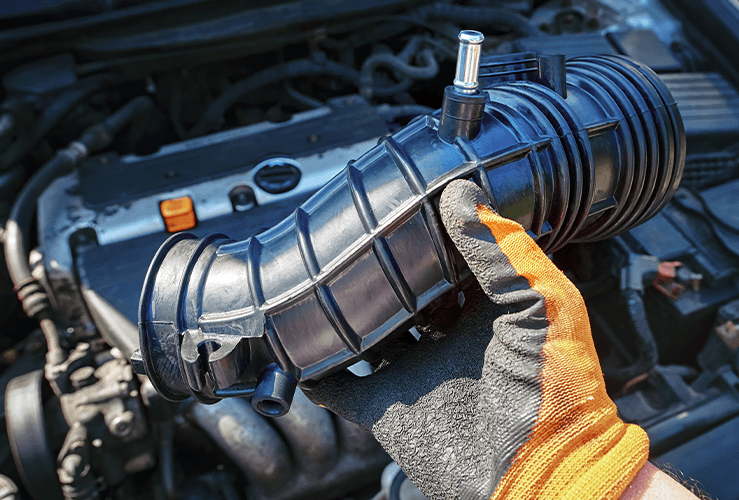
3. Vacuum leaks
Any cracks or disconnected hoses will let in unmetered air, which can disrupt the proper functioning of your engine - making it idle rough.
How to fix it: Most car owners get their local garage to address this, but it’s possible to fix it yourself if you have some understanding of car mechanics.
Cracked or loose vacuum hoses
- Look for cracked rubber hoses - and swap them out for new ones.
- Listen out for a hissing sound while the engine is running.
- You can use carb cleaner or soapy water to pinpoint leaks (engine sound will change if there's a leak)
Loose hose clamps or fittings
- Tighten them - or reposition them.
How to diagnose and fix:
- Let the engine cool - critical for safety.
- Look at the vacuum lines (small rubber tubes).
- Check for any cracks, splits, or disconnections.
- Replace any damaged hoses with vacuum line of the same-diameter (these are low cost and can be bought from your local car parts store)
- Secure the new hose with zip ties, if needed.
If this doesn’t result in improved idling, your best bet is your local mechanic; there might be a leak inside the intake manifold or throttle body, for example, or there could be gasket or sensor issues.
4. Dirty fuel injectors
Poor spray fuel injector patterns can lead to misfires or inconsistent fuel delivery - which can cause your car engine to idling rough.
How to fix it: You can buy a fuel injector cleaning additive and pour this into your fuel tank. Your fuel injectors should be cleaned as you drive. These additives cost £15 or less, and can also be used as a preventive maintenance measure.
Experienced car DIY-ers might consider manually cleaning the fuel injectors. However, most drivers enlist the services of a reputable garage to get this fixed. Indeed, if you have an OBD (on board diagnostic) scanner and you're getting codes like P0201 - P0204, you’ll probably need a mechanic’s help.

5. Faulty oxygen sensor or MAF sensor
A faulty oxygen or MAF sensor is another cause of rough idling (although they can cause other symptoms, too). These faults can result in incorrect data being sent to the engine computer, affecting the fuel mixture.
How to fix it: In most cases, such faults are diagnosed by trained mechanics during service checks, or after a vehicle is taken in due to a problem (like rough idling).
However, if you have an OBD2 scanner, and it returns codes like P0130 - P0167, your oxygen sensor has a problem. In most cases, you’ll need to replace it.
A faulty MAF sensor, meanwhile, will return codes like P0100 - P0104. Try disconnecting the sensor briefly - if the engine runs better without it, it’s probably faulty. You might consider using special MAF sensor cleaner spray to address the problem. If this doesn’t work, you’ll need a new one.
6. Worn ignition components
If coils or wires are worn, spark effectiveness will likely be reduced - which can cause rough idling.
How to fix it: Again, in most cases, this is a job for a mechanic. But if you have some basic car maintenance experience, you can do it yourself.
Spark plugs are fairly easy to clean/replace, but ignition coil replacement is a little more tricky.
If you think you have wiring issues or ECU faults, it’s best to call the professionals.
7. Low fuel pressure
This is caused by a weak fuel pump or clogged fuel filter - and can result in rough running.
How to fix it: Your first port-of-call is the fuel cap - is it loose? If so, it could be causing low fuel pressure.
If re-securing this doesn't work, the issue may be more tricky to address. However, a trained mechanic will be able to diagnose and fix any problems promptly. Other likely culprits include filter, pump and fuse faults, as well as trouble with pressure regulators and injectors.
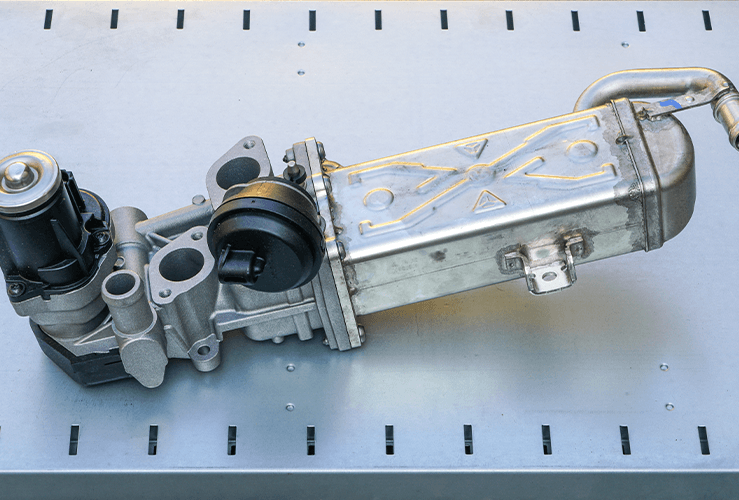
8. EGR valve problems
If the Exhaust Gas Recirculation (EGR) gets stuck open, it allows exhaust gases into the intake at the wrong time, often causing rough idling.
This important valve recirculates some exhaust gases back into the engine to reduce emissions, and improve efficiency.
How to fix it: If you have some basic knowledge of how cars work, you might try cleaning the EGR valve. However, EGR replacement is best left to a trusted mechanic.
9. PCV valve issues
A bad PCV (positive crankcase ventilation) valve can lead to vacuum leaks or excess oil vapour - often leading to a rough engine idle.
Your car’s PCV controls ventilation of gases from the engine crankcase back into the intake, thereby reducing emissions and preventing pressure buildup.
How to fix it: Locating and removing the PCV is fairly straightforward - so you should be able to save yourself the cost of a mechanic - unless bigger issues are afoot.
Pull out the old valve (this is sometimes just a push/pull fit, or held by a clamp), then replace it with a new one (costing £5 - £20). In most cases, no special tools are needed.