



What are the bushings on a car? What happens when they get worn out? How much does it cost to replace them? Find out the answers to these and other related questions, with our guide.
To those new to motoring, suspension bushes might sound like something you’d buy at a garden centre. However, bushes are critical parts of your suspension system, helping to reduce noise and vibration, and to optimise handling and ride comfort - not to mention safety.
So what are car bushes, exactly?
Suspension bushings - or suspension bushes - are used to dampen the noise and vibration that would otherwise travel from suspension components to the chassis. They essentially act as a cushion between metal components.
Where are bushings located in my car?
Bushings are found in the following locations:
- Control arms / wishbones
- Sway bar (anti-roll bar)
- Trailing arms / radius arms
- Shock absorbers / struts
- Steering rack
- Engine & transmission mounts
- Differential & subframe
Note that most of these relate to the suspension system, but two relate to the steering rack and engine mount.
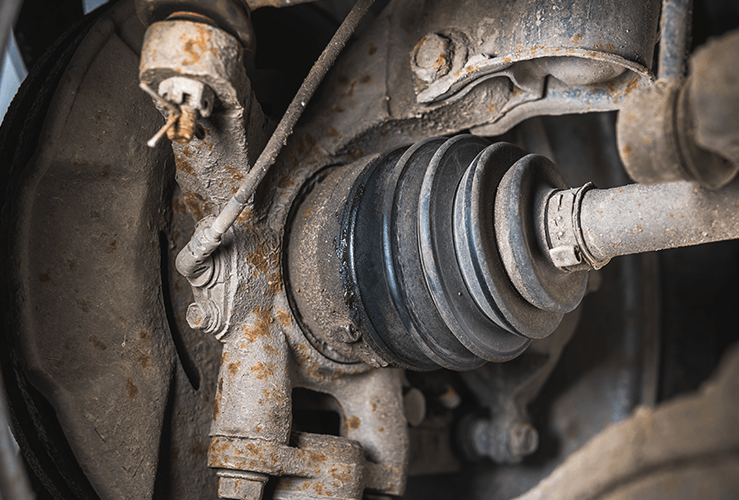
What happens if my bushings wear out?
If your vehicle’s bushings wear out, you may experience the following issues:
- A noisier, bumpier ride
- Looser steering and overall handling
- Damaged suspension - due to the increased metal-on-metal contact (shocks, struts, ball joints, and tyres may wear out more quickly)
- Compromised ride height and geometry
7 common signs of worn bushes
If you experience one or some of the following issues, it might be a sign you have a worn suspension bush or bushes. However, these issues may have other causes. For example, clunking noises might also be caused by worn ball joints, shock absorbers, or loose suspension bolts.
- Clunking or knocking noises over bumps or when turning
- Excessive vibration felt in the steering wheel or chassis
- Loose or imprecise steering - feeling “wandery” or sloppy
- Uneven or rapid tire wear
- Poor handling or stability during cornering or braking
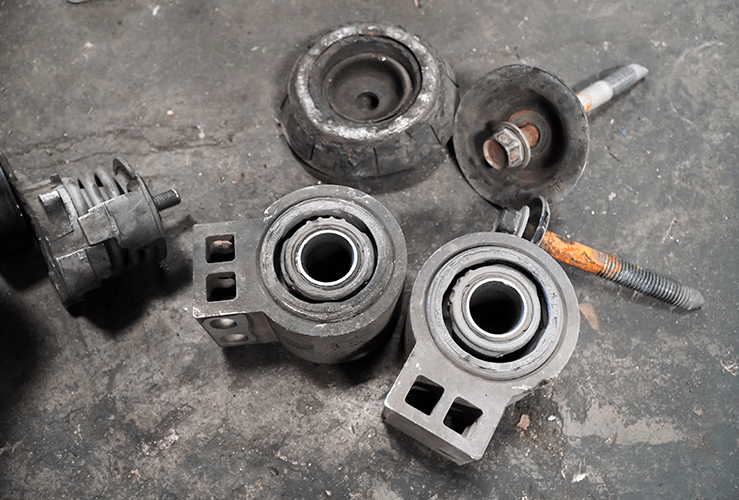
- Visible cracks, splits, or deterioration on rubber bushings
- Suspension feels harsher or bouncier than usual
The cost of replacing worn out suspension bushings
Replacing your car’s bushings is a relatively inexpensive task. If you have the knowledge and equipment, you might even consider replacing them yourself. However, it’s far simpler and quicker (and possibly more effective) to get a trusted garage to complete the job for you.
How much replacing your bushings costs will depend on the make and model of your vehicle, which bushings need replacing, and local labour rates. Getting new bushings for a McLaren at a London garage will cost a lot more than swapping out bushings on a Ford in Hull, for instance.
It’s important to note that if you let your bushings wear out it could damage other suspension components, eventually resulting in a much larger repair bill. So, as with most car components, having replacements (and maintenance tasks) done ahead of time will likely save money in the long run.
Rough guide to bushings replacement costs
The following table gives an idea of costs related to replacing vehicle bushings. Figures are inclusive of labour. Note that sway bar and control arm bushings tend to wear out more quickly than other types.
Bushing Type | Regular Cars (e.g. Ford, VW, Toyota) | Premium Cars (e.g. BMW, Audi, Jaguar) |
Sway bar bushings | £50 – £120 | £100 – £180 |
Control arm bushings | £150 – £300 | £250 – £500+ |
Trailing arm bushings | £150 – £350 | £300 – £600 |
Strut/shock bushings | £100 – £200 | £180 – £400 |
Steering rack bushings | £150 – £250 | £250 – £450 |
Subframe bushings | £300 – £500 | £500 – £900+ |
Diff mount bushings | £250 – £450 | £400 – £800+ |
Full bushing overhaul | £700 – £1,200 | £1,200 – £2,000+ |
How long will it take to get my bushings replaced?
Replacing car bushings usually takes between 1 to 4 hours, depending on:
- Which bushings are being replaced (e.g., sway bar bushings take less time than control arm or subframe bushings)
- Car make and model complexity
- Condition of bolts and components (rust or damage can add time)
- Whether an alignment is required after replacement (could take up to an hour more)
- Where you live (labour rates can vary)
- How busy the garage is
What are the main components of bushings?
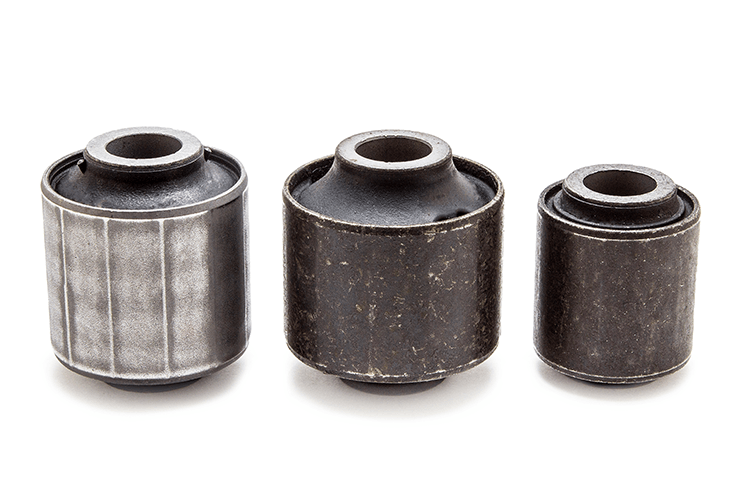
Bushings comprise inner and outer sleeves, both made of metal. In between these sleeves sits a ring of rubber, which softens the interaction between the metal parts, and by extension the elements they are attached to.
In some sports cars, polyurethane is used instead of rubber, due to its better durability. However, rubber provides a much more comfortable ride, which is why you’ll never find polyurethane bushings on a Rolls Royce or a Bentley!
Frequently Asked Questions
Suspension bushings typically last 50,000 to 100,000 miles, but lifespan varies based on driving conditions, vehicle type, and material quality.
Yes, but it's not recommended - worn bushings can affect handling, safety, and cause further suspension damage if ignored.
Yes - worn bushings can cause poor alignment, leading to uneven tyre wear and reduced handling performance. Alignment work may be done at the same time as you get your bushing swapped out.
Bushings can be replaced individually, but if several are worn, it may well be more cost-effective to replace them as a set.
Yes - worn bushings can cause poor alignment, leading to uneven tyre wear and reduced handling performance. Alignment work may be done at the same time as you get your bushing swapped out.
“Bush” originally meant a metal sleeve or lining inserted into a hole or around a shaft to provide a smooth bearing surface. The word is related to “busk” or “bushel” in older English, meaning a small container or protective casing.