


Concerned your battery is on the way out? Discover the 10 most common signs that your car battery is dying, with our guide.
If there was a Premier League of car breakdown causes, ‘battery failure’ would be top of the table. It comes in ahead of other common issues like tyre faults and alternator problems.
Indeed, according to UK breakdown recovery data, about 18–19% of annual call-outs relate to battery failure - leaving millions of motorists and their passengers being side-lined on the British road network.
Of course, the best way to avoid finding yourself in such an awkward position is to watch out for the warning signs.
Here’s how to know if your battery is nearly dead…
10 common signs of a dying battery
Slow engine crank
If your car takes longer than usual to start, your battery may be losing its spark - and it may be time for a substitute. This is one of the more common signs of a dying car battery.
Dim headlights
When your car’s lights are dim, your visibility and safety drop significantly. So if your headlamps aren’t as bright as usual, it could be a symptom of a dying car battery - and possibly time for a new acquisition.
Dashboard warning light
Seeing the dashboard warning light means your battery just got the equivalent of a yellow card. It’s not a sending-off yet, but it’s your car’s way of telling you something’s not right. It could be time to take a look at the bench - i.e. a reputable car battery retailer.
Electrical issues (radio, windows, etc.)
If electric systems like the audio setup and windows are giving a less-than-electrifying performance, it could be time to make some changes up front.
Clicking sound when turning the key
The main goal of your car battery is to start the engine. Hearing a clicking sound when you turn the key means it’s time to consider retiring your battery.
Frequent need for jump starts
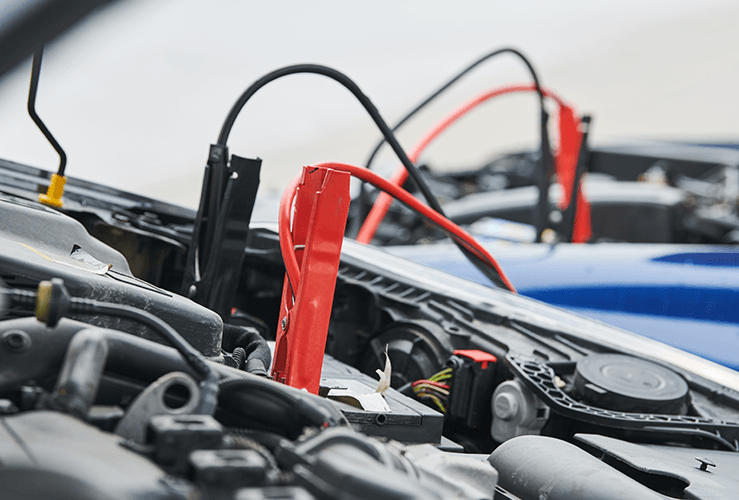
If your battery needs a jump start occasionally - e.g. during winter or if the lights were left on overnight - it’s usually nothing to worry about and a top-up is normally sufficient. However, needing regular jump starts is a bad sign. Aside from using up your extra time, it could mean curtains for your starting 12-volt.
Corroded battery terminals
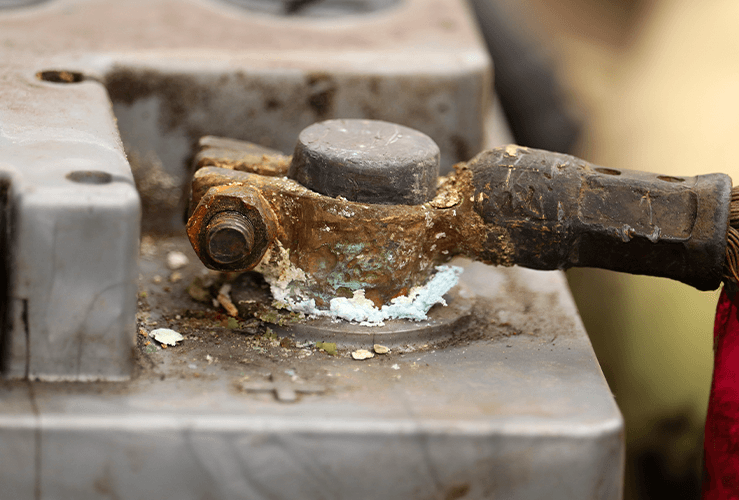
A corroded battery means power won’t be as fluid and dynamic as your car needs. Blue, white or greenish colouring around the terminals is a telltale sign. It could mean your battery needs to be helped off (or indeed, out).
Swollen or bloated battery case
Excessive heat and pressure can cause bulging and bloating. If your battery has lost its form, it could be time to look for a new deal at your local automotive parts store.
Unusual smells (like rotten eggs)
If you smell sulphur, your battery might be leaking or overcharging - meaning its very probably reached the end of its lifespan. This is a near-certain sign a car battery is dying.
Old age (3–5+ years)
Under normal conditions, your battery should last between 3 and 5 years. However, replacing your car battery every 3 years is a good rule of thumb to stay on the safe side, particularly if you make a lot of short trips (which can wear out the battery more quickly). If your battery is over this age, and showing signs of flagging performance… it could be all over.
What to do if your car battery dies
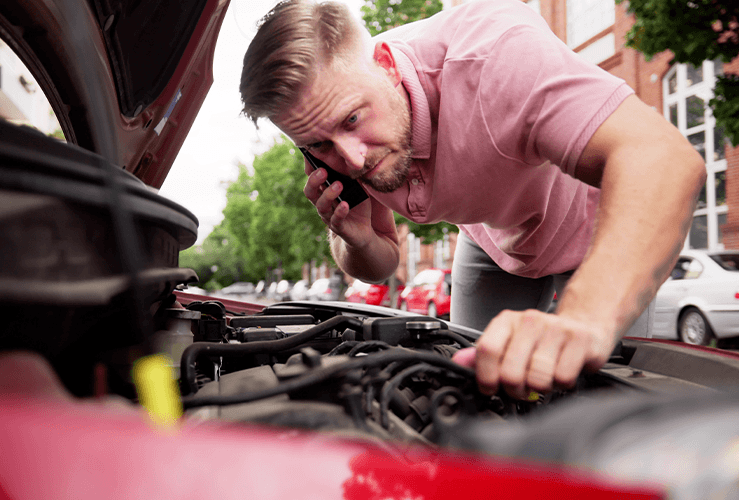
If your car battery fails, here’s what to do:
- Try a jump start - Use jumper cables and another vehicle or a portable jump starter to get your car going temporarily.
- Check for obvious issues - Look for corroded battery terminals, loose connections, or visible damage - these are among the most common signs your car battery is dying.
- Drive to recharge - After jump-starting, drive for at least 20-30 minutes to recharge the battery if possible.
- Get the battery tested - Visit a garage or auto shop to check the battery’s health and charging system.
- Replace the battery if needed - If tests show the battery is faulty or old, get a new one installed.
- Consider professional help - If jump-starting doesn’t work or you’re unsure, call roadside assistance or a mechanic.
If you find yourself stranded, stay safe, turn on hazard lights, and seek help promptly.