

Is it illegal to smoke and drive?
Smoking has long been known to cause serious health problems, but can you smoke while driving your own car - legally?
The short answer is yes, it is legal to smoke in your own vehicle - but if doing so distracts you from the road or leads to an accident, you could still find yourself on the wrong side of the law.
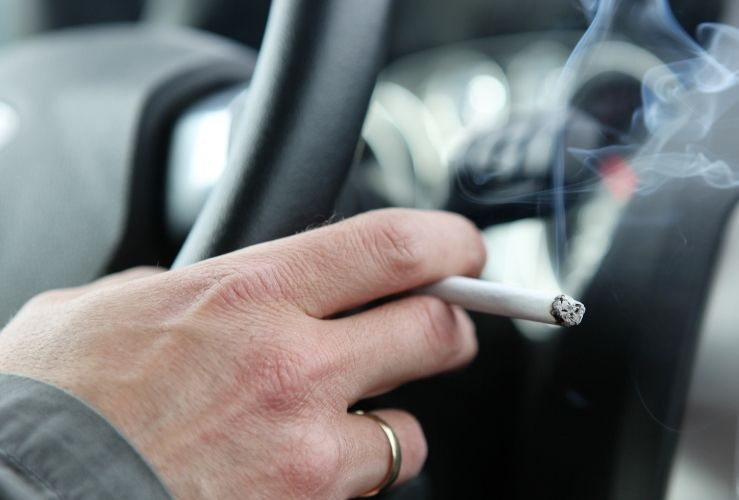
According to ONS data, around 14.1% of UK adults smoke - equating to about 6.9 million people.
Considering that 74% of the population has a driving licence, understanding how the law approaches smoking in cars is relevant to more than five million people.
Research suggests smoking in an enclosed vehicle pollutes the environment with nicotine and other chemicals, while smoking in a vehicle affects other occupants with second hand smoke, even the residue left behind after smoking can affect the health of passengers - especially children.
While legally you can smoke and drive, second-hand smoke releases 50 known human carcinogens into the atmosphere, which can cause disease and premature death in children and adults. According to research, there is no safe level of second-hand smoke.
Smoking in a car can leave “residual second-hand smoke” in a car’s microenvironment - known as third-hand smoking.
Car smoking: What the Highway Code states
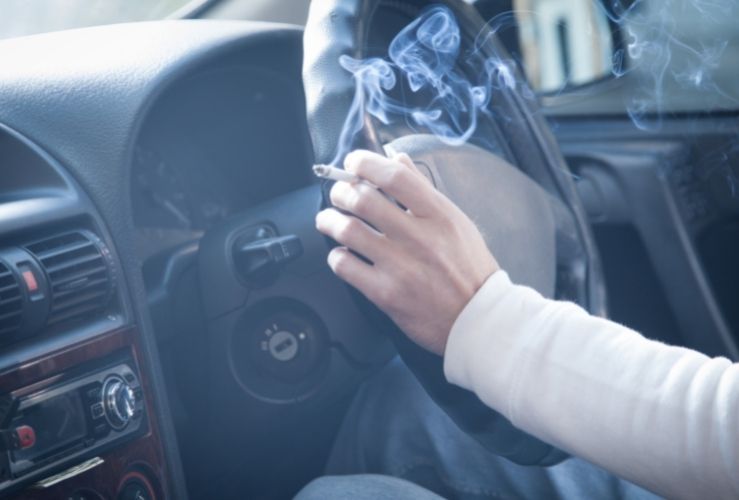
According to The Highway Code, it is not an offence to smoke in a private car, in the same way that it is not an offence to eat a snack or check a map while behind the wheel.
But if carrying out these activities impedes your ability to drive and contributes to an accident, you may be prosecuted for careless driving or not being in proper control of a vehicle. You must always have full control and have a clear view of the road.
If the police believe you have engaged in dangerous driving - particularly if someone is hurt or killed - you could face a jail sentence. Causing death by dangerous driving carries a maximum jail sentence of 14 years.
The Highway Code's Rule 148 lists a number of activities that should be avoided if driving or riding a motorcycle.
- Loud music (this may mask other sounds)
- Trying to read maps
- Inserting a cassette or CD or tuning a radio
- Arguing with your passengers or other road users
- Eating and drinking
- Smoking
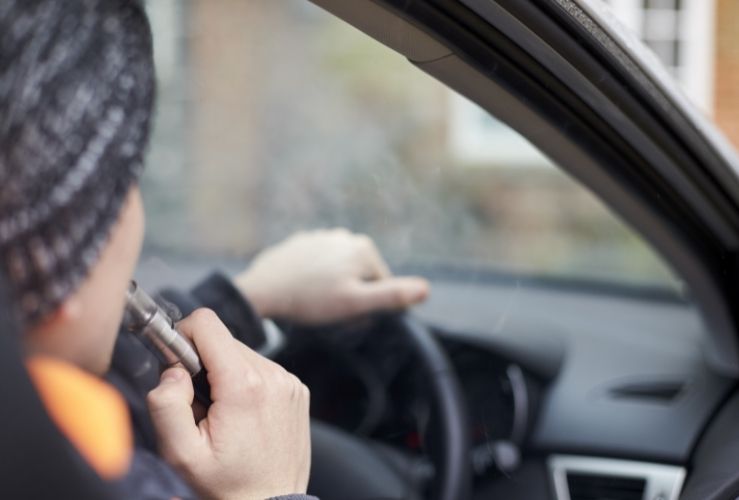
What about vaping in your private vehicle?
There are no laws against vaping in a private vehicle. However, as mentioned, you must be in control of the vehicle and have a clear view ahead - so vaping while driving may not be wise.
Since vaping is a relatively new phenomenon, some argue long-term health risks are yet to be understood.
Second hand vape aerosol can expose others to the same levels of nicotine as second hand smoke does. Vape aerosol can contain lead, formaldehyde and toluene. However, at present there is no law against vaping while driving, or vaping with under-18s in your vehicle.
Is it illegal to smoke and drive in company vehicles?
In England, smoking is not allowed in company vehicles if they're used to transport the public, or are used for paid or voluntary work by more than one person (the law applies whether or not those individuals are in the vehicle at the same time).
Legislation in Scotland, Wales and Northern Ireland does not allow smoking in work vehicles such as vans, although there is no law against smoking in cars used for work.
The international no smoking sign (minimum 70mm diameter) must be displayed in each compartment where people are carried.
Your company may have additional rules as regards smoking in work vehicles.
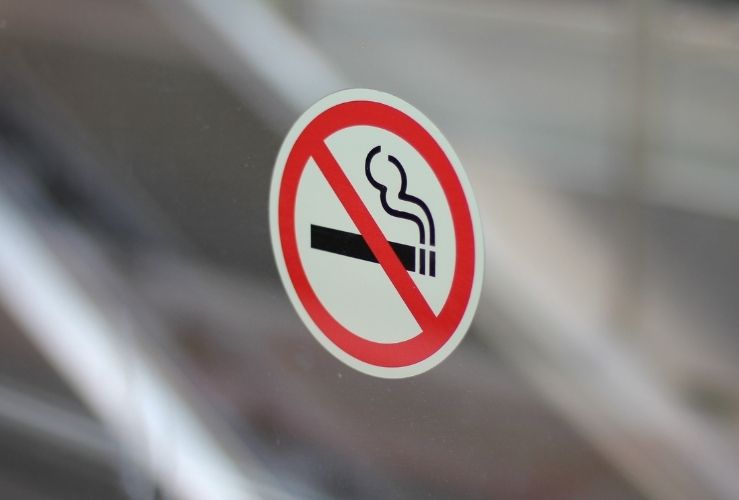
What's the penalty for smoking in a smoke-free work vehicle?
The same £50 penalty applies if you're caught smoking in a vehicle classed as a ‘no smoking area’.
It might also land you in hot water with your employer.
What about smoking in public transport vehicles?
Companies that operate buses, coaches, trains and planes all place clearly visible no smoking (nor vaping) signs inside their cabins and compartments. This is not merley company policy - the law states it is illegal to smoke in any type of public transport.
Besides this, the UK Government banned all smoking in enclosed public places in 2007.
Is smoking bad for your car?
Whether you smoke and drive, or light up while parked, tobacco smoke isn’t just bad for you and your passengers - it could hit your vehicle’s resale value, too.
Research by University of California, San Diego, and San Diego State University, shed light on the impact of smoking on a car's interior. The study found that despite cleaning regimens, nicotine and other chemicals remained in upholstery, dashboard and on dust in the air.
Smokers' cars also had more ash and burn marks in their interior.
It’s no surprise that a used car previously owned by a smoker may fetch less than one that has been smoke-free.
According to research by the National Centre for Biotechnology Information (NCBI), on average, the value of a car decreases by 7.7% if it has been smoked in, compared to a smoke-free vehicle.
Health Risks of Smoking in Cars
Smoking in cars is more than just a distraction. The enclosed space makes the effects of tobacco smoke much more intense.
- Second-hand smoke in cars is deadly. The confined space increases exposure to toxic chemicals, making the air several times more polluted than a smoky pub.
- Children are most at risk. Exposure in vehicles has been linked to asthma attacks, bronchitis, ear infections and SIDS (Sudden Infant Death Syndrome).
- Third-hand smoke lingers long after smoking stops. Toxic residue settles on seats, carpets and surfaces and can remain in the vehicle’s micro-environment for weeks.
- Even short exposure has measurable effects. Public health experts say no level of second-hand smoke is safe, especially in enclosed spaces like cars.
Eating and Driving: What’s Legal?
Eating while driving is not illegal. But if eating distracts you and you drive carelessly or dangerously, you can get penalised.
Moreover, research from Brunel University found that eating at the wheel increases a driver’s chances of being involved in a crash.
Conclusion
It’s clear that in-car smoking comes with a host of drawbacks,
Including first-, second- and third-hand smoke, harm to your vehicle’s resale value, and of course, potential fines or prosecution if you’re found to have broken the law.
Frequently Asked Questions
Yes, both smoking and eating while driving are legal. However, if either activity prevents you from being in proper control of your car, you can be penalised. Drivers distracted by smoking or eating may face fines, points on their licence, or more serious charges if an accident occurs.
Children are at a much higher risk from second-hand smoke in vehicles. Their lungs are still developing, and exposure increases the risk of asthma, bronchitis, ear infections, and sudden infant death syndrome (SIDS). Because cars are enclosed spaces, smoke particles accumulate quickly, making even short journeys hazardous to young passengers.
As a driver, you must not allow smoking to take place if anyone aged under 18 is inside the cabin.
In England and Wales, the relevant legislation includes motor caravans.
In Scotland, smoking is not allowed in a private motor vehicle in a public space with occupants aged under 18, unless the vehicle is parked and being used as accommodation.
It is not illegal to smoke with under-18s in a convertible if the roof is completely down.
You are not allowed to smoke in a private vehicle with under-18s inside even if the sunroof is open.
The same is true if you smoke in an open doorway of such a vehicle, or with the air conditioner on.
You could be handed a £50 fixed penalty notice if you fail to prevent smoking in a smoke-free private vehicle. The fine is reduced to £30 if paid within 15 days of issue. If prosecuted by court the maximum fine is £200.