



Thinking about buying a car with LEDs, or upgrading from your old halogens? In this article we shine a light on the benefits and drawbacks of LED headlights on cars.
Back in 2004, Audi unveiled its A8 model. Among the many things that made the car notable was the fact it had LED daytime running lights. These delivered a bright white light that was most unlike halogen bulbs, and as far as many owners were concerned, improved both visibility and their vehicle’s aesthetics.
Skip forward over two decades, and LED lights are no longer the preserve of luxury cars like the A8. Today, cars with LED headlamps are everywhere; you’re as likely to find LEDs in a mid-range vehicle as you are in a premium model.
But as bright and futuristic as LED lights are, not everyone is a fan. Notably, some motorists find that LEDs on approaching cars can dazzle them, especially if they have been incorrectly installed or configured.
In this article we’ll shine a light on the pros and cons of LED headlights for cars, and how they compare to halogen bulbs, which are the most common bulb type in vehicles.

The pros of bright LED headlights
They help you see the road better
The most obvious advantage of LED headlights is the visibility they provide. Car LED headlights emit a cleaner, whiter light compared to the yellowish glow of halogen bulbs. As far as many drivers are concerned, this improves a driver’s ability to see road markings, obstacles, and potential hazards in low-light conditions. On poorly lit rural roads, the difference can be dramatic, giving drivers more confidence and reducing eye strain during night driving.
However, not everyone is so taken with LEDs. Some drivers say they prefer halogen bulbs since they emit a warmer light that reduces eye fatigue. Conversely, those drivers tend to find the sharp white light tires out their eyes, especially if they often undergo longer journeys (e.g. lorry drivers on night runs).
They save energy (and money)
Another key and much-lauded advantage of LEDs is that they consume significantly less power than halogen bulbs. This efficiency reduces strain on the vehicle’s electrical system, which can lead to fuel savings in conventional (combustion engine) vehicles and improved battery range in electric vehicles (always a concern among EV owners). While the savings might be modest on an individual level, they add up over time.
They can last the lifespan of your car
Unlike halogen bulbs, which often need replacing every couple of years, LED-light car headlights can last tens of thousands of hours. Indeed, many are designed to last the lifetime of the vehicle itself. This results in fewer trips to your garage, and money saved on maintenance. Another benefit of this is that it’s much better for the environment since fewer bulbs get disposed of (recycling halogen bulbs is notoriously difficult and therefore not economically feasible).
They look fabulous
While the sensible and morally fibrous reasons for using LEDs include improved safety, saving money and helping the environment, many car owners simply like the way they look! LED headlights allow for sleek, sharp, and innovative designs. From thin, angular beams to signature light patterns (think the Mini Cooper Union Jack LED light setup), they can add a futuristic look to vehicles, which is part of why they’ve become a hallmark of higher-end models.
The cons of bright LED headlights
1. The glare can dazzle other drivers
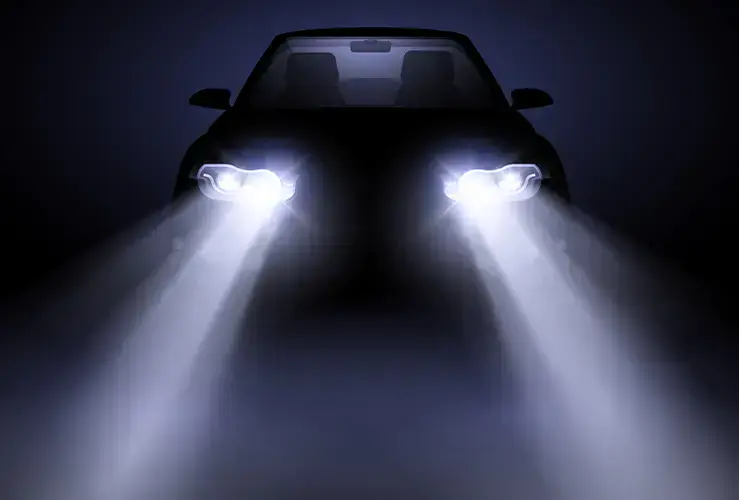
Browse any car forum or relevant Reddit posts, and you’ll find plenty of people who don’t like LEDs. One of the most frequently raised complaints about bright car headlight LEDs is the glare they cause for oncoming traffic. Because LEDs are intense and focused, improperly aimed or overly bright lights can dazzle other drivers, especially at night. This increases the risk of accidents, which is pretty ironic because LEDs are meant to make driving safer!
2. They cost more
While LEDs do last longer, their upfront cost is higher than traditional bulbs (adding to forecourt prices). Replacement can also be expensive, particularly if the entire headlight unit must be changed rather than just the bulb. For those on a budget, this is a big drawback.
3. Questionable performance in snow and fog
Halogen bulbs emit more heat, which can melt snow or ice on the headlight lens, keeping them clear. LEDs, by contrast, generate very little heat, so in snowy or icy conditions, LED lenses may become covered, reducing visibility (again creating a safety hazard). Some vehicles have built-in heating elements to counteract this, but for owners of those that don’t, some scraping is required before starting a journey (and even then, they can become covered during snowfall).
When it comes to foggy conditions, LED headlights on cars can offer great performance but only if they project yellow or amber light downwards. Conversely, most white or blue LED fog lights are less effective and can cause glare due to light scattering.
4. Doing a retrofit is not always easy
Drivers looking to upgrade from halogen to snazzy new LED headlights may find that it isn’t as simple as swapping out bulbs. Retrofitting often requires additional equipment or complete headlight assembly replacements. Without professional installation, poorly fitted LEDs can scatter light improperly, worsening glare issues, and annoy - or even endanger - other road users.
Striking the balance
Undeniably, bright LED headlights on cars can improve road visibility, energy efficiency, and make a vehicle look rather fetching, that’s why carmakers and car buyers love them so.
However, there are some glaring downsides, and they are not insignificant. Much of the controversy surrounding them comes down to how they are installed and aimed. Well-designed LED systems, correctly calibrated, can deliver safety benefits without blinding other drivers. On the other hand, poorly installed or excessively bright aftermarket units (some of which may not be legal) are a genuine hazard.
For would-be car buyers (or those seeking to upgrade to LEDs), awareness is key. If you’re buying a new car, it’s worth testing, if you can, the headlights at night to ensure they are comfortable for your eyes. For those thinking about retrofits, professional installation and compliance with UK law are both essential. LED headlights are a useful and visually attractive innovation, but like any tool, their benefits depend on how responsibly they are used.