



Flat spots may not be as easy to identify as other problems with your car, but it’s important to keep an eye out for them, and get any issues sorted as soon as possible. Learn more about flat spots on tyres, with our guide.
Your tyres connect your car to the road, so keeping them in good condition is critical for safe braking and handling - and a comfortable ride!
‘Flat spots’ are an area of tyre maintenance that can get overlooked. But while flat spots may not appear as dangerous or dramatic as a cracked sidewall, worn tread, or a plain-old flat tyre, they can reduce your ability to control your vehicle. So it's important to remedy them as soon as possible.
What is a flat spot?
A flat spot occurs when a patch of a tyre becomes worn or flattened, resulting in an uneven surface. Flat spots can cause vibration and noise, and as mentioned may reduce your ability to stay in control of your vehicle.
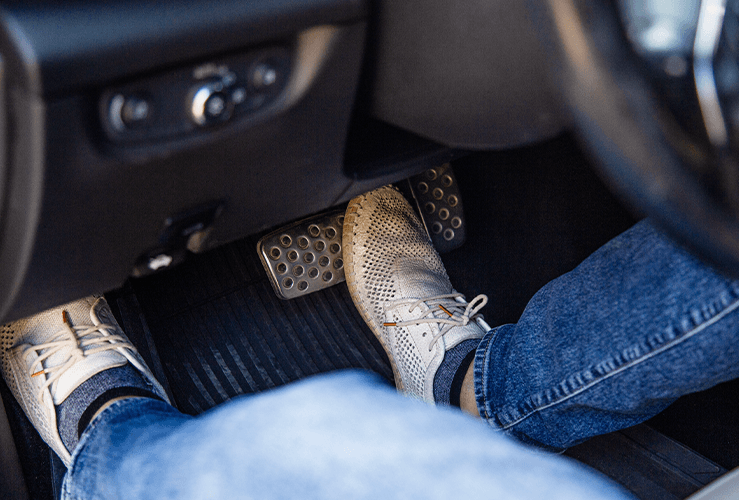
Flatspot tyres: What causes them?
Tyre flat spots usually develop due to one of two reasons: driving-related wear, or parking-related issues.
Hard braking
Performing an emergency stop, or undertaking regular hard braking, can result in flat spotted tyres. This occurs because the tyre stops rotating (i.e. locks up completely) once the brakes are applied, instead of rolling slightly. The friction caused by such a manoeuvre grinds away the rubber, leaving a flattened area. This flat spot will be permanent, and is more common with high performance cars, lorry trailers, or during a ‘panic’ stop.
Prolonged parking
Leaving your car parked for a long period can also result in a flat spot developing. This is due to the pressure of the vehicle on the tyre rubber. It can be especially pronounced during cold weather, when rubber tends to stiffen. The good news is that, in most cases, driving the vehicle for a while will resolve the issue as the rubber heats up and regains its original shape.
However, if you were to leave your vehicle parked for a very long time (such as a year) the tyres may well develop flat spots that result in permanent deformation to the tyre material. In such cases, you would need to replace the tyres. Being exposed to damp ground or ultra-violet light (sunlight) can also cause permanent damage to tyres.
But most cases of prolonged parking only last weeks - for example due to being away on holiday, suffering an illness, or poor weather.
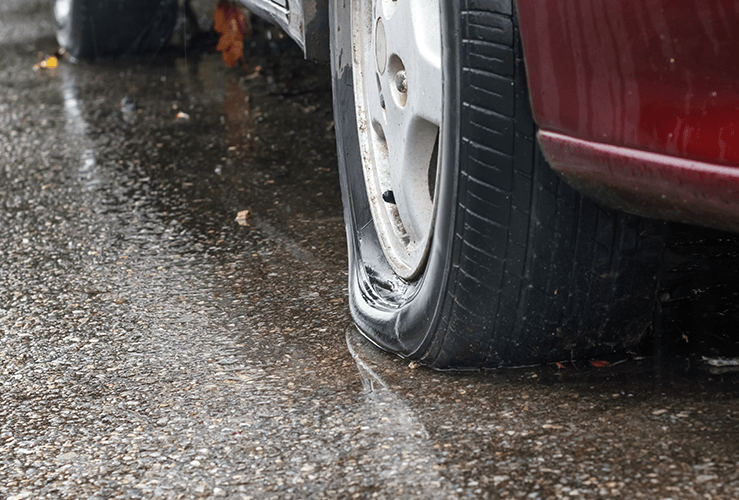
Mechanical Problems
Occasionally, issues with the car’s suspension, brakes, or alignment can result in uneven tyre contact with the road. This irregular contact causes certain areas of the tyre to wear out, eventually creating flat spots.
Symptoms of flat spots on tyres?
You may not be able to visually identify flat spots simply by examining the tyre/tyres, but they usually make themselves known when driving. Common symptoms include:
- Vibrations: The steering wheel or seat may shake - especially when driving at higher speeds.
- Thumping noise: A rhythmic thud - that increases with speed - may suggest you’re getting some uneven rotation.
- Poor ride comfort: Your car may feel bumpy or unsettled, even when motoring on smooth roads.
- Reduced performance: Handling and braking distances can be reduced if tyre contact has become uneven.

Temporary vs. permanent tyre flat spots
It’s important to distinguish between temporary and permanent flat spots - not least because the former probably won’t cost you anything to sort out, while the latter could cost you hundreds of pounds (although this would of course be money well spent!).
- Temporary flat spots: These are usually caused by parking for a few days or weeks (due to travel, ill-health etc.). These tend to “iron out” after 20 - 30 minutes of driving, as the tyre warms up and regains its flexibility.
- Permanent flat spots: These are much more serious, and are caused by hard braking or mechanical wear. These do not go away and typically require replacing the affected tyre/tyres.
Fixing and preventing flat spots
Think you might have a flat spot? If so, the first step is to have your tyres looked at by a professional. Depending on what they find, they may suggest:
- Driving the car: If your vehicle has only been parked for a while, taking it for a drive often solves the issue.
- Tyre balancing and alignment: Sometimes a mechanic can rebalance the tyre or correct alignment problems in order to reduce vibrations.
- Replacing the tyre/tyres: In the case of severe or permanent flat spots, replacement is the only safe solution; it’s important not to take risks with your tyres.
Flat spot prevention
To prevent flat spots, consider these tips:
- Avoid hard braking unless it's really necessary: Brake smoothly whenever possible, and allow your car’s ABS (Anti-lock Braking System) to do its job.
- Don’t let your vehicle sit parked for long periods: If a car will be parked for weeks, drive it briefly every few days (or ask someone else to do it - if you are away, for example).
- Increase tyre pressure for storage: Slightly over-inflating tyres (within safe limits) can reduce deformation during long storage periods.
- Use tyre cradles or blocks: For vehicles stored long-term, special curved blocks can help distribute weight evenly. You can find sets of these online for under £10.
Could a flat spot result in an MOT fail?
If any of your tyres have permanent flat spots, then yes, you could be looking at an MOT fail. However, it depends on the severity. If a flat spot has precipitated exposed cords, bulges, or lumps, your tyres may need to be replaced before your car gets the MOT “thumbs-up”.
On the other hand, if there's just a little vibration, but no damage to the tread or general structure, then your car should still pass its MOT.
Final thoughts
If you suspect your tyres have flat spots, it’s important to get them checked over by a trained mechanic and, in the case of permanent flat spots, get the damaged tyre/tyres swapped out for new ones. Keeping your tyres in good condition gives you the best chance of staying in control of your vehicle and enjoying a comfortable ride.