



What are shock absorbers on a car? True to their name, shock absorbers ‘absorb’ the bumps and dips in the road, helping to ensure you have a comfortable and above all safe ride. Learn more about shock absorbers, with our guide.
What is a shock absorber?
Your car’s shock absorbers are critical suspension system components. In short, they control and dampen the movement of the springs, which continually compress and expand as you drive. Your ‘shocks’ essentially minimise the effect of bumps both large and small.
Without shock absorbers, your vehicle would keep bouncing up and down, resulting in a bumpy, uncomfortable - and potentially unsafe - ride.
Shock absorbers dissipate energy by converting the kinetic energy of suspension movement into heat, which is subsequently released through hydraulic fluid - or gas.
They also control motion, by ensuring your tyres remain in contact with the road, by way of reducing excessive bouncing, swaying, or dipping.
Shock absorbers also improve handling and comfort by making the ride smoother and the car more stable during braking, cornering, and acceleration.
In short, what is the shock absorber’s purpose?
While springs absorb the bump, shock absorbers stop the bounce.
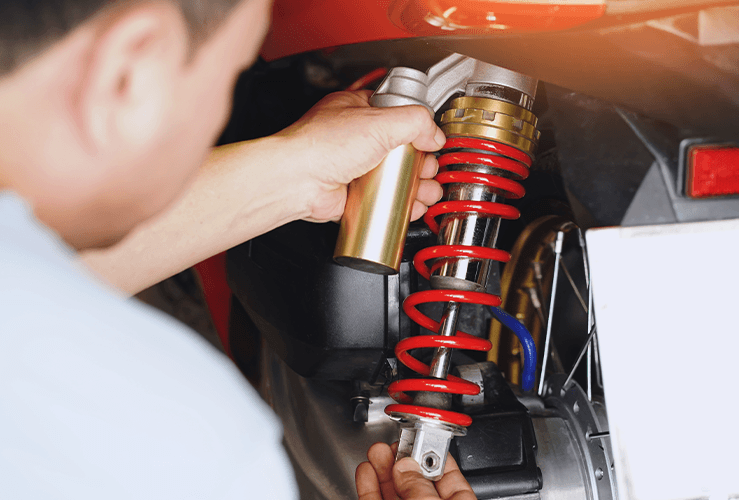
What would happen if my shock absorbers got damaged?
If one or more of your shock absorbers become faulty, you’ll almost certainly notice some excessive bouncing. After hitting a bump or pothole, for instance, the springs would keep oscillating, making the car bounce up and down repeatedly.
Without working shocks, you’ll also experience poor stability: Your vehicle will sway and lean more in corners, and “nose-dive” heavily when braking. It goes without saying that such behaviour is unpleasant, uncomfortable, and moreover, dangerous.
Damaged or faulty shocks would also reduce traction: Since your tyres wouldn’t stay firmly planted on the road, you’d experience inconsistent grip. This means longer braking distances and poor control, especially on uneven or rough surfaces. Again, this has serious implications with regards to safety.
Both you and your passengers would feel every bump. Instead of being absorbed, vibrations and jolts would be amplified.
Then there’s the increased wear that comes with faulty shocks: Other suspension and steering parts would take more stress, wearing out faster. This, of course, means that you'll be paying more for repairs and maintenance over the long term.
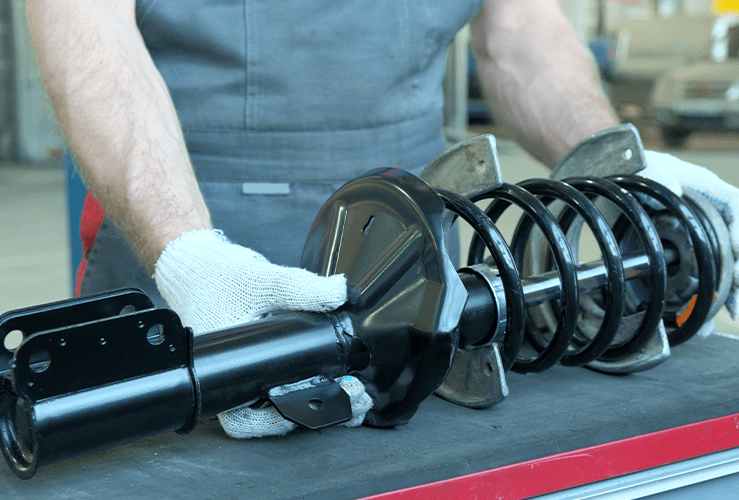
What should I do if I have faulty shock absorbers?
If you think your vehicle has faulty shock absorbers, don’t ignore the issue. Without working shocks, the safety of you and your passengers could be compromised.
Follow these steps:
1. Confirm the symptoms
Common signs of bad shocks:
- Excessive bouncing after hitting a bump
- “Nose-diving” when braking
- Car leaning or swaying into corners
- Uneven or faster tyre wear
- Knocking/clunking noises from suspension
- Longer stopping distances
2. Get an inspection
If you’re not mechanically inclined, book a mechanic to check the suspension. They can confirm whether it’s the shocks, struts, or something else (such as bushings or springs).
3. Replace (don’t repair)
- Unlike other components on your vehicle, shocks can’t be repaired - because they’re sealed units.
- They must be replaced, usually in pairs (both front or both rear) so that your handling stays balanced.
4. Costs and options: What are shock absorber replacement prices?
- Replacement costs vary depending on the car.
- Standard cars: £150–£300 per pair (parts + labour).
- Premium/sports cars: substantially higher.
- If you know your way around a car, you might be able to effect a DIY job with the right tools, but most people get a mechanic to do it. There’s also a risk that you wind up causing more harm than good, which could mean you’d waste time and money trying to do the fix, and also have to pay a professional to remedy the situation later.
5. Don’t delay
Driving with bad ‘shocks’ means:
- Less control in emergencies
- Increased braking distance
- More wear on tyres and suspension

Can damaged shocks be mistaken for any other issue?
Yes, faulty or damaged shocks can feel like other problems, which is why they’re sometimes misdiagnosed (even by professionals!). Here are a few issues they can be mistaken for:
- Worn suspension bushings - this also causes clunks, poor handling, and instability.
- Broken or sagging springs - resulting in a car that sits low on one side, and feels bouncy.
- Bad struts (these are like shocks but with springs integrated) - this can give you the same symptoms: nose-diving, swaying, and rough ride.
- Wheel alignment issues - signalled by uneven tyre wear, pulling to one side.
- Tyre problems (worn or underinflated) - this gives you vibrations, poor grip, and longer stopping distances.
- Loose steering components (tie rods, ball joints) - wandering steering, knocking noises.
As you can see, there are various issues that might seem like broken shock absorbers. The overlap is why your mechanic will probably perform a “bounce test” and visual inspection (looking for leaking fluid, damaged mounts, uneven tyre wear) before diagnosing issues with shocks.
As with all car maintenance issues, knowing an experienced and reputable car mechanic is essential when it comes to all things shock absorber-related.