
How do I change the registered keeper of a car? It’s a common question. Whether you’re buying or selling, it’s important to understand how to change ownership of a car smoothly and legally. Here we explain how to do it, step-by-step.
If you’re thinking of transferring the ownership of your vehicle to someone else, the DVLA wants to know about it. Indeed, you could face a fine of up to £1,000 if you don’t tell them. You might also continue to be held responsible for things like speeding tickets, fines, and road tax issues even if you aren’t behind the wheel.
Thankfully, however, transferring ownership of a vehicle is pretty straightforward and won’t cost you a penny.
The DVLA needs to be informed if:
- You’re selling your vehicle
- You’re buying a used vehicle (although this is the responsibility of the seller)
- You’re gifting a vehicle a friend
- You’re gifting a vehicle to a relative
In this article we’ll explain how to change the owner of a car with the DVLA. There are also some useful frequently-asked-questions at the end.
What’s the difference between ‘keeper’ and ‘owner’?
In most cases, the ‘keeper’ and the ‘owner’ are the same person. However, in some cases, they may be different people. The ’keeper’ is responsible for things like road tax, insurance and maintenance, while the ‘owner’ is the person who owns the vehicle from a legal standpoint.
For example, a parent may ‘own’ a vehicle, but register their adult child as the ‘keeper’. But as mentioned, having separate owners and keepers is the exception, not the rule.
Transfer of ownership for a car in the UK
In order to transfer ownership of a car you’re selling in the UK, you’ll need to find your V5C logbook. This document details the keeper, as well as key vehicle information.
Option 1: Transfer online
As with so many tasks these days, the quickest and easiest way to transfer keeper information is online through the official DVLA website:
- Go to www.gov.uk/vehicle-log-book.
- Enter the 11-digit document reference number from your V5C.
- Provide the buyer’s full name and address.
- Click “Submit”.
- Tear off the famous “green slip” from the V5C and give it to the new owner.
The great thing about this method is that the records are updated immediately so you won’t have to wait for any kind of confirmation or approval from the DVLA for the change to come into effect. What’s more, both you and the buyer will receive confirmation emails. In terms of the V5C hard copy, the new keeper usually receives this by post within 3 to 5 working days.
However, do note that the “green slip” on the V5C should still be given to the new owner. But this is more of a backup measure than something that’s essential for the transfer to take place.
Option 2: Transfer by post
If you can’t do it online, you can do it the old fashioned way - by post.
- Fill in Section 2 of the V5C (the “new keeper” section).
- This must be signed by both you and the buyer.
- Send it to: DVLA, Swansea, SA99 1BA.
- Give the green “new keeper” slip (V5C/2) to the buyer.
The DVLA will then post a new logbook to the new keeper’s address. This can take as little as two weeks, or as many as four weeks. Needless to say, the new owner cannot sell the vehicle (in the unlikely event that they would want to do so) until they have the new V5C in their possession or at least, they shouldn’t.
Without the V5C present, any further buyer won’t know if the seller is legally permitted to sell the vehicle.
How to change vehicle ownership when you’re buying a car
If you’re buying a car, there are a few things you’ll need to get in order for the transaction to occur smoothly (and legally). Ensure sure the seller provides you with:
- The V5C/2 green slip from the logbook.
- A receipt showing the seller’s name, signature, and sale details. (This is commonly a hand-written slip of paper).
- The MOT certificate (if applicable).
Before completing the purchase, it’s a good idea to check the car’s MOT history and tax status (for free) at www.gov.uk/check-mot-history
You must also ensure the vehicle is taxed before driving it home as car tax does not transfer between owners. Car tax is automatically cancelled when the transfer goes through with the DVLA. As the new owner, you can get the car taxed straight away, even if the previous owner has not cancelled the car tax that was in their name.
So, in short, you must tax your ‘new’ vehicle before driving on public roads.
How to buy your car tax:
- Online: using the 12-digit reference number from the green slip (V5C/2)
- At a Post Office: that deals with vehicle tax
- By phone: with the DVLA’s 24-hour service
How to change vehicle ownership to a family member or friend
It’s not uncommon to give a vehicle to a relative or friend. If you’re doing this, the process is exactly the same as selling it to a member of the public. You can still use the online system (easiest and quickest) or complete Section 2 of the V5C and post it to the DVLA. When filling out the details, just put “gift” or “no payment” in the price section for your own records.
When selling to a dealer or scrapping your car
Selling your car to a motor trader or scrapyard works in a different way to selling it to a member of the public or gifting it. In this case, you should complete Section 4 of your V5C (look for the “selling or transferring your vehicle to a motor trader, insurer or dismantler” section). You can also report this online via the DVLA website.
Once submitted, you’ll receive confirmation that you’re no longer the registered keeper, and you’ll automatically get a refund for any remaining full months of road tax (partial months are not refunded).
Change ownership of a car: Common mistakes to avoid
- Not notifying the DVLA: You remain legally responsible until the transfer is confirmed. Until the DVLA are notified, you could be held liable for any fines accrued by the new “owner” as well as other issues that affect the car. Additionally, you won’t get any automatic refund on car tax until this has been done.
- Forgetting to remove private plates: If you have a personalised registration, make sure you transfer it before selling.
- Failing to cancel insurance: Always contact your insurer once the ownership transfer is complete.
- Forgetting to hand over the “green slip” from the old V5C logbook. This is more of a backup measure, but should be done.
Frequently Asked Questions
The seller is responsible for notifying the DVLA that the vehicle in question has a new keeper. This must be done immediately after the sale - either online or by post. Until the DVLA has been updated, the seller remains legally responsible for the vehicle (including tax, fines, and insurance liabilities). When it comes to how to change vehicle ownership, this is rule number 1.
You technically can sell a car without a V5C logbook, but it’s not a good idea. The V5C proves you’re the registered keeper, and without it, the buyer has no assurance that you’re legally entitled to sell the car. You should apply for a replacement V5C (cost: £25) before selling. Indeed, any prospective buyer will likely be put off if there is no V5C present.
Even if the transfer has been sorted out online, the seller should still give the green slip to the buyer. It acts as temporary proof of ownership until the buyer’s new logbook arrives, which should be within 3 to 5 working days.
No. You don’t need to cancel it manually. When the DVLA is notified of the ownership change, your tax is automatically cancelled, and you’ll receive a refund for any full unused months. The new owner must tax the car in their own name before driving it, but this of course their responsibility.
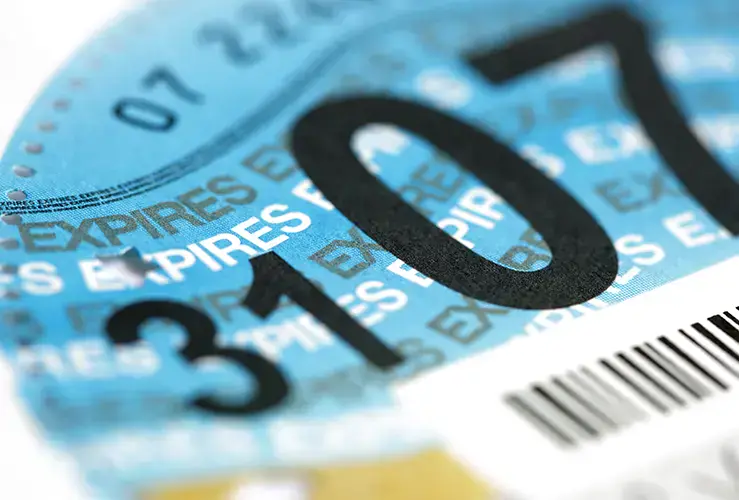
Image caption: The paper tax disc was discontinued in 2014. The DVLA and police now use automatic number plate recognition (ANPR) to enforce car tax.
No - car tax doesn’t transfer between owners. As soon as the DVLA records the new keeper, the previous tax is void. The buyer must tax the car themselves, in their name, before driving it away.
Yes. As the buyer you can tax it immediately using the 12-digit reference number on the green slip (V5C/2). This will cancel the car tax being paid for by the seller: the moment the DVLA processes the change of keeper, the previous owner’s tax is automatically cancelled, so you can safely tax and drive the car on public roads.
Once you’ve told the DVLA and received confirmation that you’re no longer the keeper, you can recycle or shred your old logbook. It’s no longer valid, and the DVLA will issue a new one to the buyer.
Yes - a handwritten receipt is perfectly valid, and is actually the most common form. It should include the buyer’s and seller’s names, addresses, the date of sale, vehicle details (make, model, registration, VIN, mileage), the sale price, and both signatures. Include the phrase “sold as seen” to make it clear the sale is final (and the buyer accepts the car in its current condition, without guarantee).
If the transfer is done online, the new V5C usually arrives within 3 to 5 working days. If you send it by post, it typically takes 2 to 4 weeks.
It’s critical you tell the DVLA that you’ve sold your car. If you don’t, you could face a fine of up to £1,000, and you’ll still be legally responsible for the vehicle. That means any speeding tickets, parking fines, or tax issues linked to the car could come to you, even if you no longer own the vehicle.